

2026 Designer's Guide to Kitchen Countertop Materials

The kitchen countertop is one of the highest-investment, lowest-reversibility decisions in your entire home, and most women make it without the full picture. Today, that changes.
“But you, beloved, are not in the dark, for you are not of this world’s system that keeps you in the dark, since you are all children of the light and children of the day.”
This verse anchors everything I want to teach you today.
So many of the biggest home decisions get made in the dark — under showroom pressure, trend influence, or deadline urgency — and God calls us to something different. He calls us to wisdom, clarity, and intentional purpose. In this post, we are going to walk through all eight major countertop materials ranked from lowest to highest installed cost, with the honest designer perspective that equips you to choose in the light.
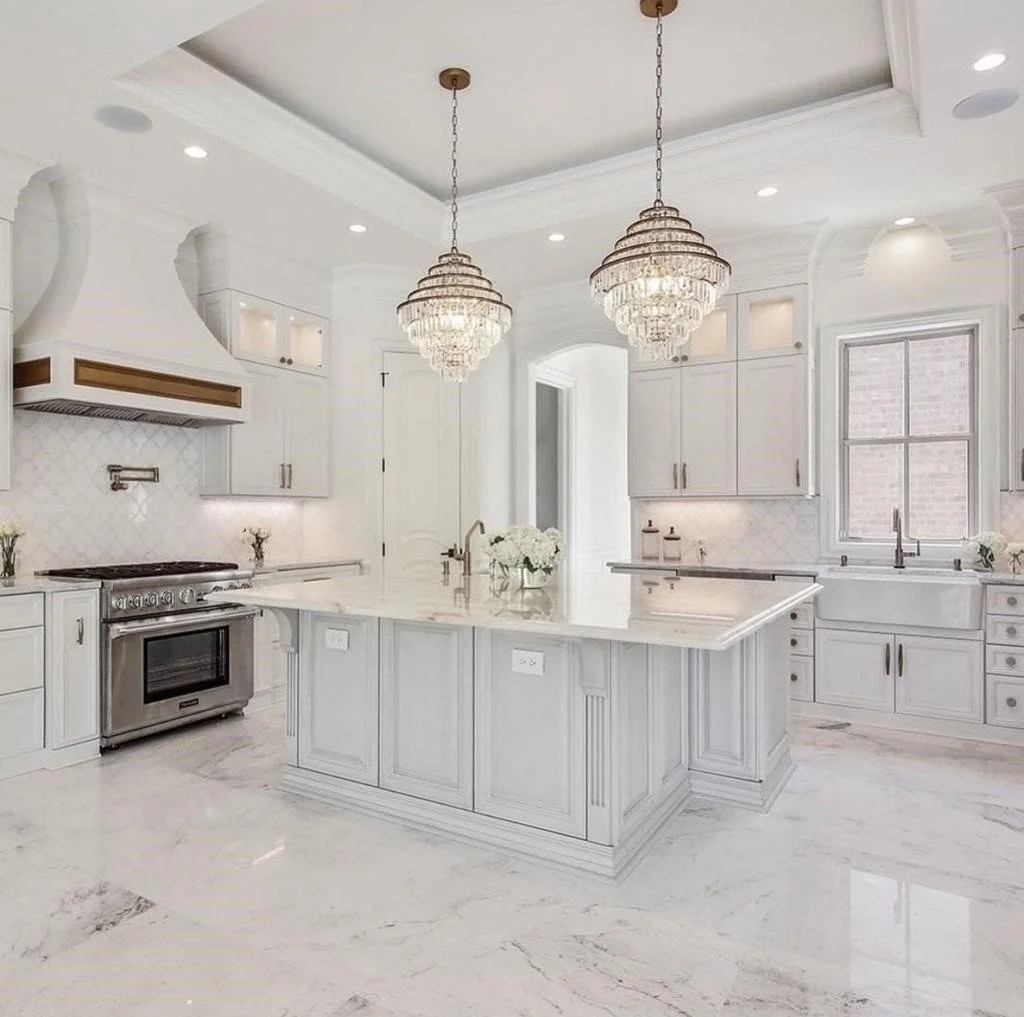
The countertop decision is about far more than beauty. It is about how you want to live.
Why the Countertop Decision Feels So Overwhelming
There is a reason this decision paralyzes so many intelligent, capable, taste-filled women — and it has nothing to do with a lack of design ability. It is because the countertop market is genuinely complex, the stakes are genuinely high, and the information available is frequently incomplete, contradictory, or delivered by someone with a product to sell.
Walk into any stone showroom, and every slab is stunning.
Visit a manufacturer's website, and every engineered surface promises low maintenance and forever beauty.
Browse design social media, and a different material is trending every six months.
It is genuinely difficult to find a clear, honest, expert-informed perspective that is also grounded in the reality of how you actually cook, how you actually clean, and how you actually live in your home.
And here is the dimension that never gets enough attention: your kitchen countertop is not just a practical surface. It is the largest uninterrupted horizontal surface in your home.
When you walk into your kitchen — or when any guest walks into your kitchen — the eye goes to the countertop first. Not the backsplash. Not the light fixture. The countertop. It is the visual baseline that every cabinet, every appliance, every design decision in that kitchen must relate to. When it is right, it settles the entire room. When it is wrong, no amount of beautiful styling around it will fully compensate.
As an interior designer with more than thirty years of experience, I have watched countertop decisions transform kitchens and drain them.
I have seen clients choose marble and fall in love with its evolution over time.
I have watched others choose the same material and feel anxious about it every single day.
I have seen women purchase what seemed like the "safe" choice and feel quietly dissatisfied for years because the surface never resonated with who they are.
This decision touches beauty, maintenance, durability, resale value, and — perhaps most importantly — how peaceful your kitchen feels to live in every single day. It deserves your full attention. And it deserves the truth.

Your countertop affects how your kitchen feels to live in every single day.
When the Surface Finally Matched the Soul
Diane, my client, came to me after moving into a newly built home in Orange County with beautiful, builder-grade white quartz countertops throughout her kitchen. From a practical standpoint, they were excellent. From an aesthetic standpoint, in isolation, they were perfectly attractive. But Diane called me because she couldn't shake the feeling that her kitchen didn't feel like hers — that she was living in someone else's space every time she walked in.
When we sat down together, I asked her not what she wanted her kitchen to look like, but how she wanted it to feel. Her answer came immediately and without hesitation: warm, welcoming, organic. Like the kitchen was pulling her toward it rather than holding her at a distance.
That single answer told me everything. Diane is a woman whose entire life speaks warmth, depth, and organic texture. Her clothing, her living room, her garden — all of it carries the same layered, soulful quality. And white engineered quartz, however beautiful and practical it is for the right person, was communicating the exact opposite of who she was. The surface was speaking a language her spirit didn't recognize.
We redesigned her kitchen with a warm, earthy quartzite on the perimeter counters — a stone with gorgeous organic movement and creamy depth — and added a live-edge walnut island top alongside unlacquered brass fixtures and a soft plaster hood. The kitchen was transformed without a single cabinet being moved. Diane told me later she cried the first morning she stood at her new island making coffee, because the kitchen finally felt like coming home. That is the power of getting this decision right.

When the surface finally matches the soul of the woman who lives there, everything shifts.
8 Kitchen Countertop Materials, Ranked Lowest to Highest Cost
Here is your complete, honest guide to every major countertop material available today.
Pricing ranges reflect typical installed costs per square foot and can vary significantly based on slab rarity, edge profile complexity, fabrication quality, and your local labor market.
1. Butcher Block and Wood — $35–$100 Per Square Foot
Wood countertops are the most budget-accessible option in this entire lineup, and they deliver something no stone surface can offer: genuine, irreplaceable warmth. There is an organic softness and a natural, living quality to wood — whether butcher block, live-edge slab, or milled hardwood — that makes a kitchen feel deeply inhabited and beautifully human.
Wood is gorgeous in farmhouse, coastal, organic, and European-inspired kitchens, and one of its most underappreciated advantages is its repairability. If it scratches or dents over the years of use, it can be sanded and refinished. That is a gift no stone surface offers.
The honest tradeoffs matter: wood requires regular oiling and sealing to stay healthy and beautiful. It can scratch and dent. Water near the sink must be managed carefully, and bacteria can develop in neglected, unsealed surfaces.
As a full perimeter kitchen countertop for a high-use family kitchen, wood demands real commitment. As an island top or accent surface within a larger stone-dominant kitchen, however, a beautiful walnut or maple surface creates a textural warmth and contrast that is simply extraordinary — and often becomes the most-commented-upon surface in the entire home.
Wood is best for homeowners who want warmth, charm, and a kitchen that feels lived-in and genuinely welcoming.
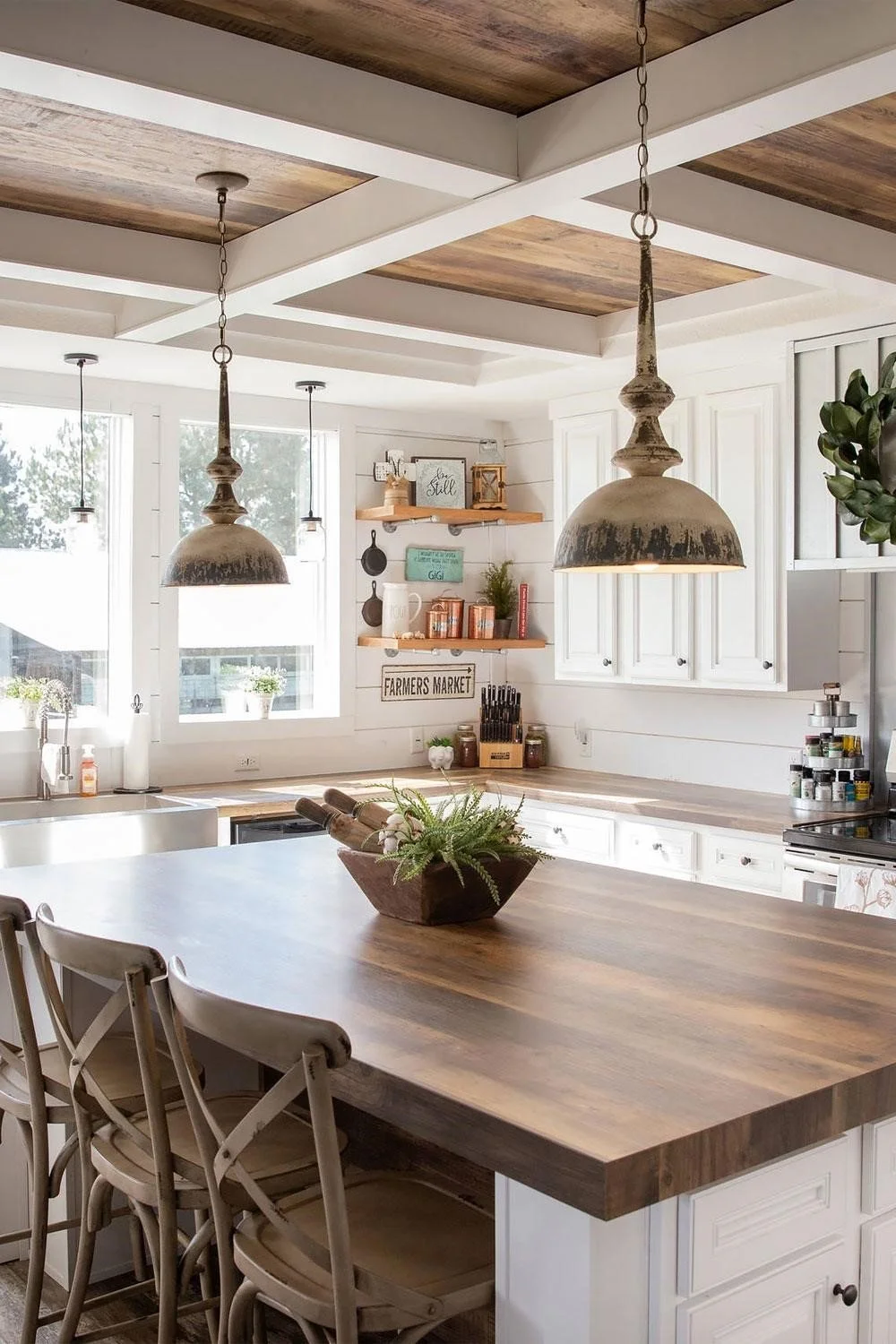
Wood brings a warmth and organic soul that no stone surface on earth can replicate.
2. Limestone — $40–$100 Per Square Foot
If marble has glamour and quartzite has drama, limestone has something rarer: serenity. It is a soft, matte, quietly extraordinary surface with warm natural tones, an understated organic movement, and a calm that feels deeply European and utterly timeless. In the right kitchen — particularly alongside natural wood cabinetry in a home with an Old World or traditional character — limestone creates an elegance that is as sophisticated as it is peaceful.
The truth about limestone in a working kitchen is that it requires your respect and your attention. It is more porous than most other stones. It etches easily from acidic foods — lemon juice, vinegar, tomato sauce — and scratches more readily than granite or quartzite. It requires regular sealing and careful, consistent maintenance.
I recommend limestone primarily in kitchens with a quieter pace of daily use, or for clients who are genuinely committed to caring for it. In a high-traffic, chaotic kitchen with children and constant cooking, limestone will show the wear in a way that may distress rather than delight. But in the right environment, nothing has quite its quiet grandeur.
Limestone is best for luxury homes that want soft, understated, Old World elegance — a surface that whispers rather than announces.
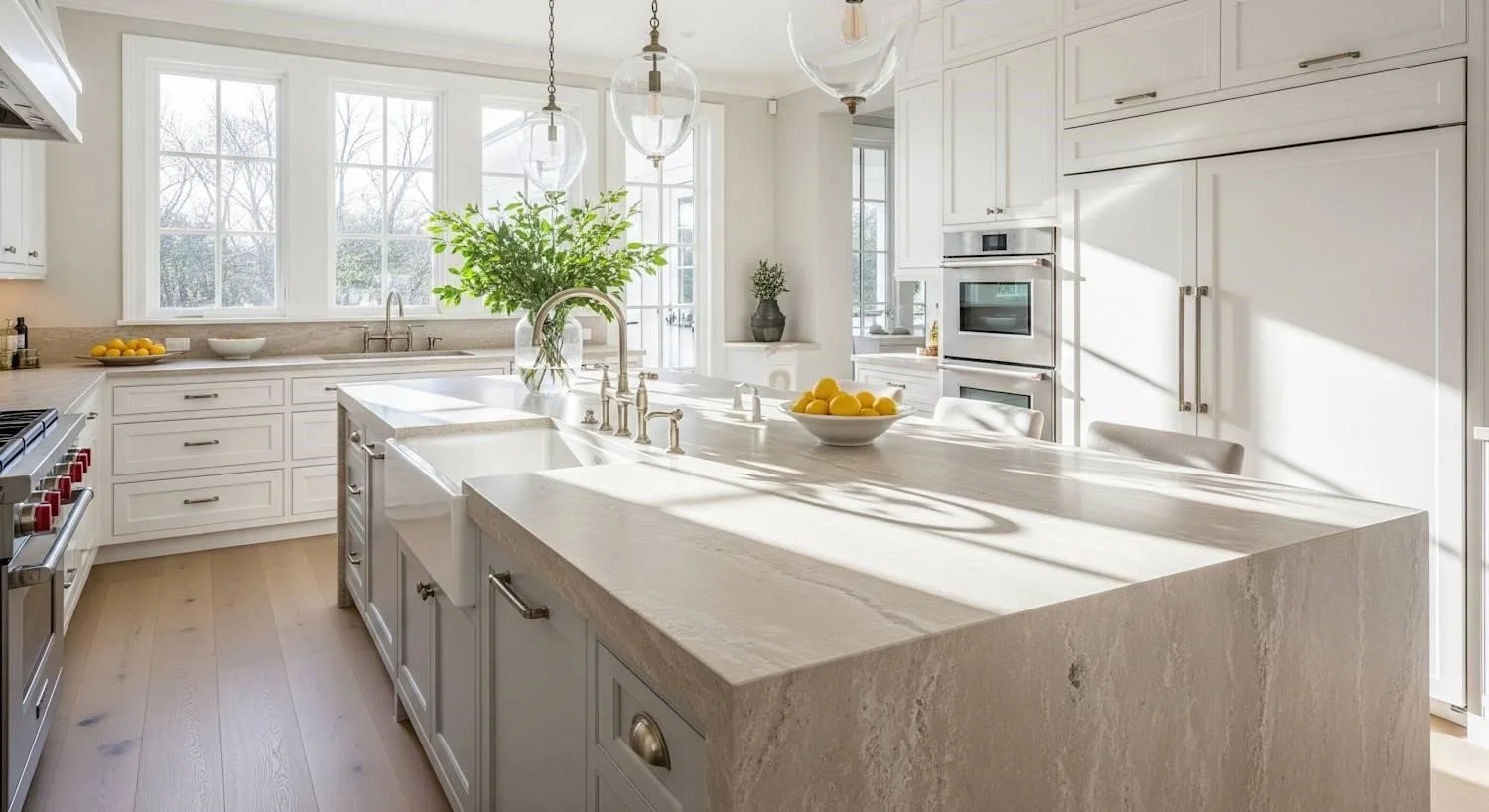
Limestone is one of the most quietly beautiful surfaces in all of residential design.
3. Granite — $40–$150 Per Square Foot
Granite has served as the benchmark of kitchen luxury for decades, and its longevity in the design world is entirely warranted. It is an extremely durable, highly heat-resistant natural stone — one of the strongest performers in a genuinely working kitchen — and it carries some of the most consistent long-term resale appeal of any countertop material. Every slab is unique, which means your kitchen gets a surface that exists nowhere else in the world. The range of patterns, colors, and movement in granite is breathtaking, from quietly earthy and subtle to bold and dramatically veined.
The tradeoffs are real but manageable. Granite requires periodic sealing. Some slabs carry bold, visually busy patterns that can be genuinely difficult to design around — slab selection matters enormously here, and seeing your specific slab before committing is non-negotiable. Seams can be more visible in granite than in engineered surfaces. And quality varies significantly from slab to slab and quarry to quarry.
Granite is best for homeowners who want natural stone durability and a rich, established luxury feel that will serve them beautifully for decades.
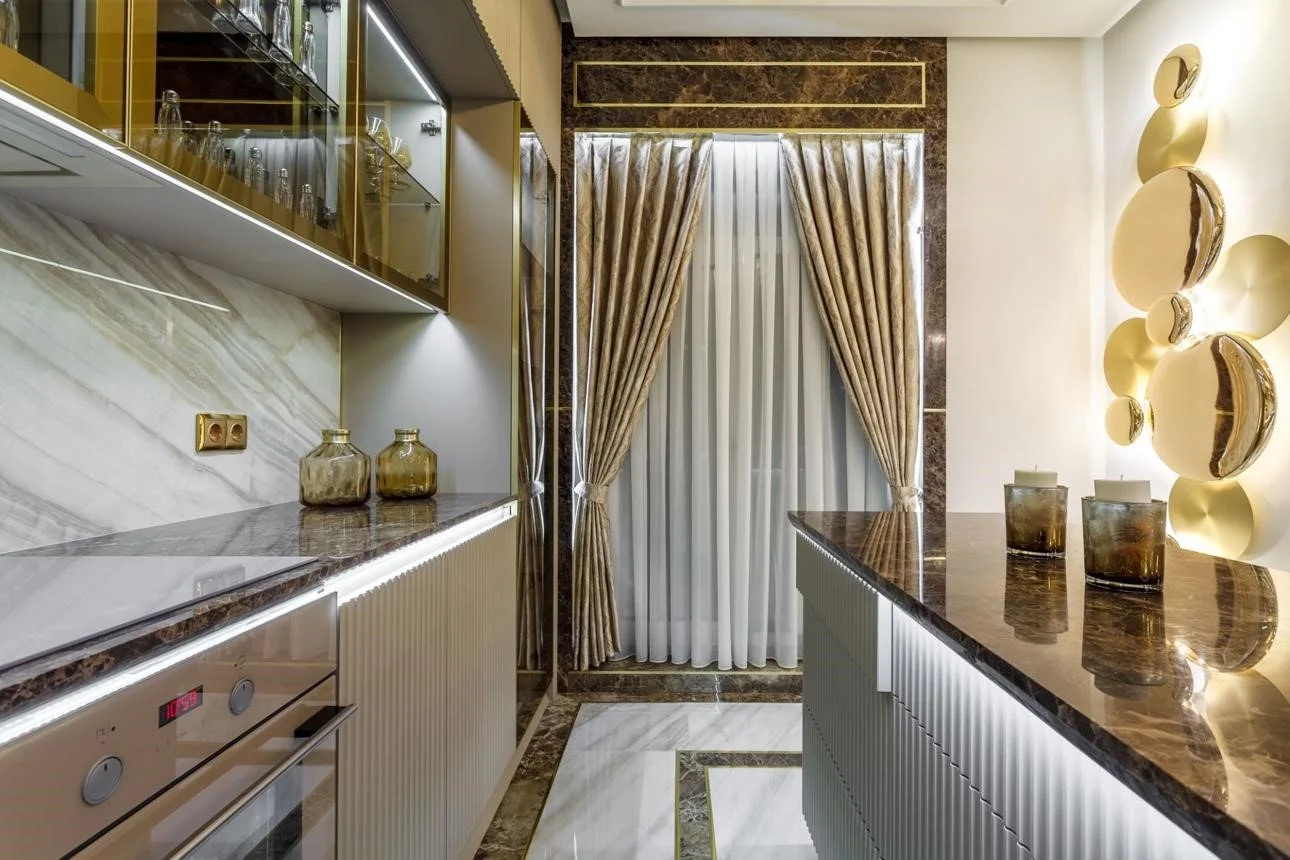
Granite has earned its decades-long place in the luxury kitchen — and it delivers every time.
4. Quartz — $50–$200+ Per Square Foot
Quartz is the most popular countertop material among designers and homeowners today in 2026, and the reasons are genuinely compelling.
As an engineered stone — crushed natural quartz crystals combined with resin and pigment — it is completely non-porous, requires no sealing, resists staining exceptionally well, and offers an extraordinary visual consistency that natural stone cannot match. For the woman who wants a beautiful, serene, low-maintenance kitchen that looks stunning and requires very little weekend upkeep, quartz is often the strongest overall lifestyle choice.
The limitations are worth knowing, honestly. Quartz is less heat-resistant than natural stone — always use a trivet, without exception — and prolonged UV exposure near large windows can discolor some products over time. To a trained design eye, quartz can read as slightly flat compared to the organic depth of natural stone. Some styles look genuinely magnificent and extremely convincing. Others, in the wrong architectural context, can feel too engineered, too perfect — particularly in homes with an organic or European design character. Choosing the right quartz for the right kitchen is an art, and the range of quality and beauty across brands is significant.
Quartz is best for homeowners wanting beauty with easy maintenance — women who want a kitchen that is serene, clean, and calm in both appearance and upkeep.
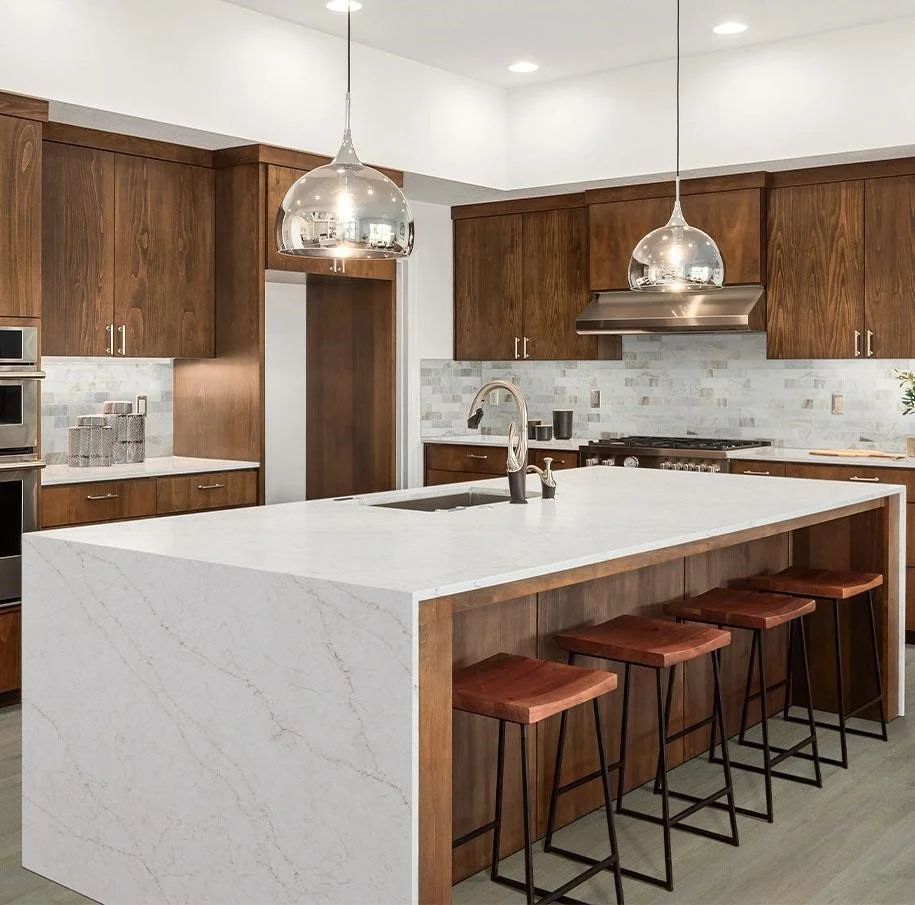
Quartz offers the easiest beautiful lifestyle in the countertop market — and that is genuinely valuable.
5. Porcelain — $55–$150 Per Square Foot
Porcelain slabs have arrived in the luxury design conversation with real conviction, and they belong there. These large-format slabs are extraordinarily heat-resistant, UV-resistant — making them exceptional near large windows or in indoor-outdoor kitchen applications — virtually stain-proof, and lighter in weight than many natural stones.
Many of today's porcelain slabs beautifully replicate the visual quality of marble and quartzite, giving a kitchen a high-end natural stone aesthetic with dramatically lower maintenance demands. For the modern luxury homeowner who wants a sleek, refined, virtually indestructible surface, porcelain is a genuinely compelling option.
The tradeoffs require honest attention. Porcelain edges can chip on impact — this is the material's most significant practical vulnerability — and installation quality is absolutely critical. Finding an experienced fabricator who has worked extensively with large-format porcelain is not optional. It is essential.
The other honest consideration is that the pattern in porcelain is digitally printed and therefore repeats across slabs — something a trained design eye will detect and that matters to the woman for whom the authenticity of natural stone variation is a priority.
Porcelain is best for modern luxury homes, kitchens with large windows, and indoor-outdoor applications where durability, UV-resistance, and a refined designer aesthetic are the priority.
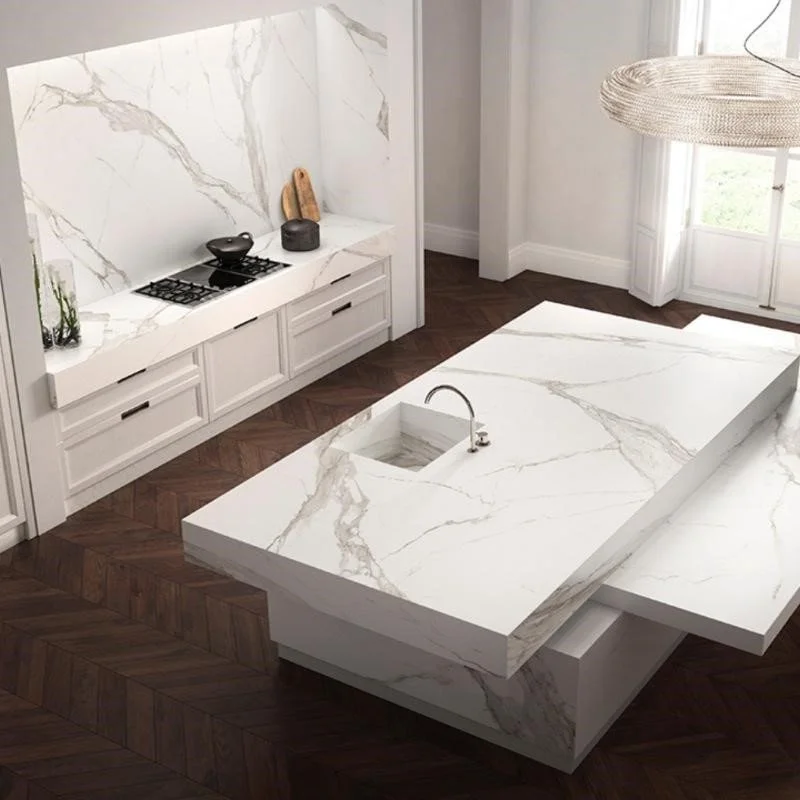
Porcelain are extraordinarily heat-resistant, UV-resistant — which makes them exceptional near large windows or in indoor-outdoor kitchens.
6. Concrete — $65–$135 Per Square Foot
Concrete countertops speak to a very specific design sensibility, and in the right context, they are genuinely extraordinary.
Poured and cast to custom specifications, concrete can be shaped to any dimension, tinted to virtually any tone, textured, and embedded with decorative elements that are impossible in any other material.
In contemporary, industrial, and minimalist kitchens — or in homes with a strong architectural identity — a beautifully crafted concrete countertop has an artistic, grounded quality that feels almost boutique. Like a modern European retreat. Like a kitchen that was designed rather than assembled.
Concrete does require sealing and ongoing care. It can crack over time with settling or temperature fluctuation, and it will stain if neglected. It is heavy, which can be a structural consideration. And installation quality makes or breaks the result — this is a material where the skill and experience of the fabricator will be visible in the finished surface for as long as you own the home.
Concrete is best for contemporary, industrial, and minimalist interiors where the homeowner wants a completely custom architectural feeling and is committed to proper long-term care.
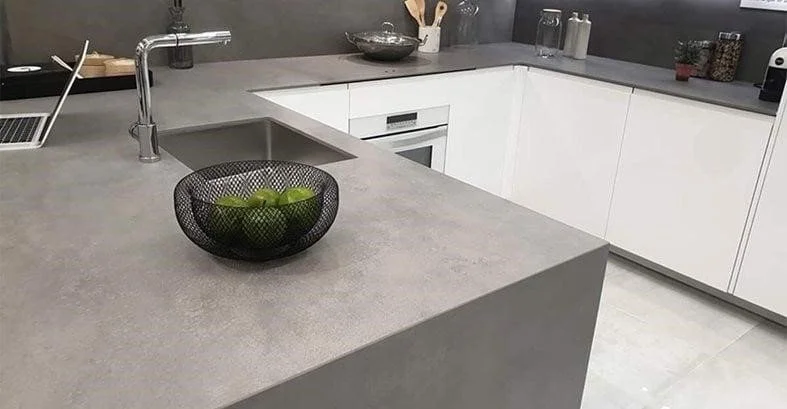
Concrete gives a kitchen a custom, one-of-a-kind quality that feels almost like a piece of architecture.
7. Marble — $65–$250 Per Square Foot
Marble is in a category entirely its own, and I will never stop advocating for it in the right context. The luminous depth of white Carrara, the bold golden drama of Calacatta Gold, the soft organic warmth of Statuario — marble is one of the most beautiful materials in the history of architecture and design. It carries an aesthetic history and a physical presence that elevates the entire home. It is naturally cool, which makes it extraordinary for baking. And it ages with a patina, a softening, and a character over time that genuinely cannot be manufactured — it is the mark of a life beautifully lived in a kitchen that has truly been used and loved.
Here is my thirty-year truth about marble in a working kitchen, and I say this as someone who loves it deeply: marble is a porous stone that will etch from acids — lemon, vinegar, tomato — and will scratch more easily than quartz or granite. It requires sealing. It will change over time.
For the woman who has genuinely made peace with this, who sees her kitchen as a living space rather than a showroom, marble is magnificent.
For the woman who will feel anxious every time someone sets a glass on her counter — and I mean that with complete compassion — marble may cost more in daily peace than it gives in daily beauty. Know yourself before you choose this material.
Marble is best for clients who love Old World elegance, European-inspired kitchens, and the kind of natural beauty that deepens rather than diminishes over time.
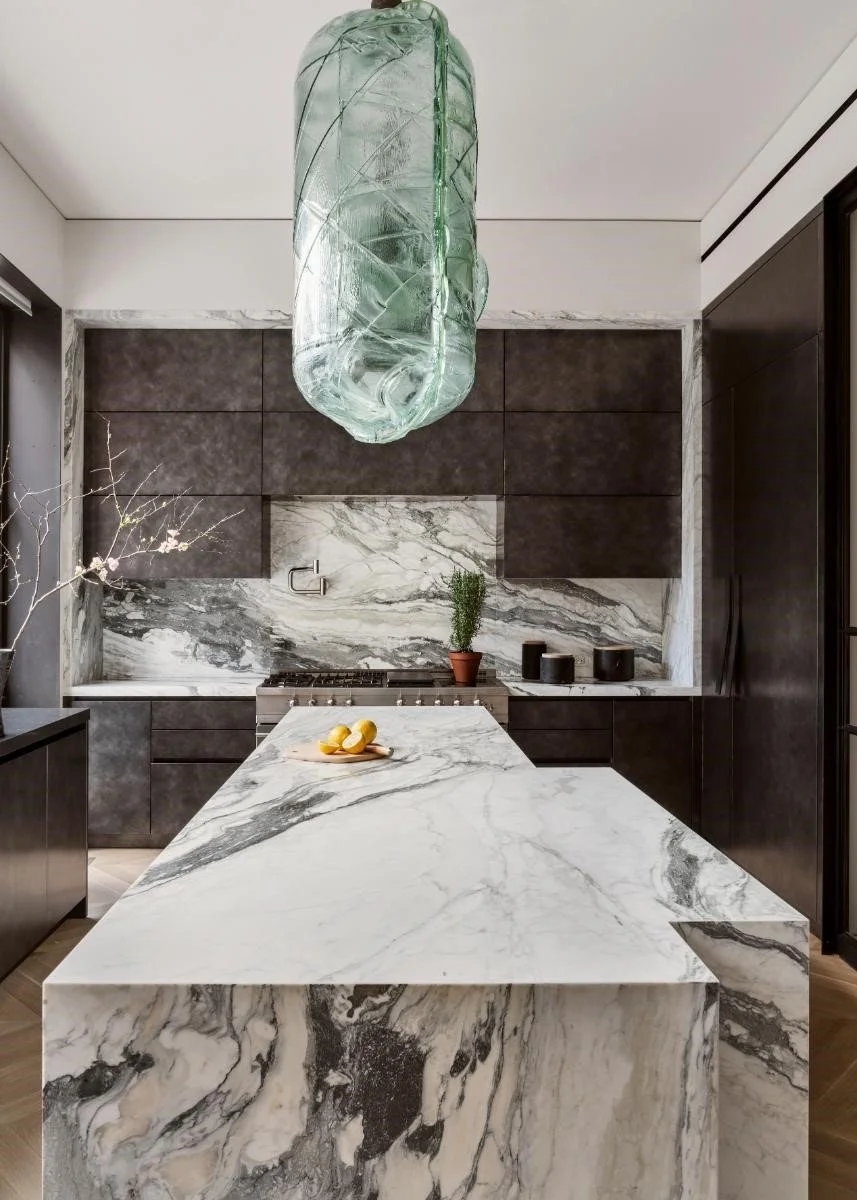
Nothing in residential design carries the timeless beauty and romance of marble. Know yourself before you choose it.
8. Quartzite — $70–$200+ Per Square Foot
Quartzite sits at the top of the cost range, and in my professional opinion, it is the most exciting and most misunderstood material in the luxury countertop world right now. I need to be clear about what quartzite actually is, because it is constantly and consequently confused with quartz, and that confusion is expensive.
Quartzite is a naturally occurring metamorphic rock, formed when sandstone is subjected to extreme heat and pressure deep within the earth over millions of years. It is quarried from the earth, not engineered in a factory. It is completely natural, and it is one of the hardest natural stones available — approaching granite in durability while offering a luminous, organic, marble-like visual beauty that designers and their clients have always dreamed of.
Super White quartzite is frequently mistaken for marble in showrooms and is dramatically more resilient in daily use.
Taj Mahal quartzite has a warm, creamy, breathtaking depth. Sea Pearl quartzite carries a movement and organic life that reads as genuinely extraordinary in the right kitchen.
Quartzite requires sealing, and installation demands skilled fabricators who understand that porosity can vary from slab to slab within the same material. It is a meaningful investment. But for the woman who wants the soul and beauty of natural stone with far greater practical resilience than marble can offer, quartzite is rapidly becoming the luxury designer favorite — and this trend is only accelerating.
Quartzite is best for luxury kitchens where the homeowner wants the softness and beauty of a natural stone with significantly greater durability, uniqueness, and long-term value.
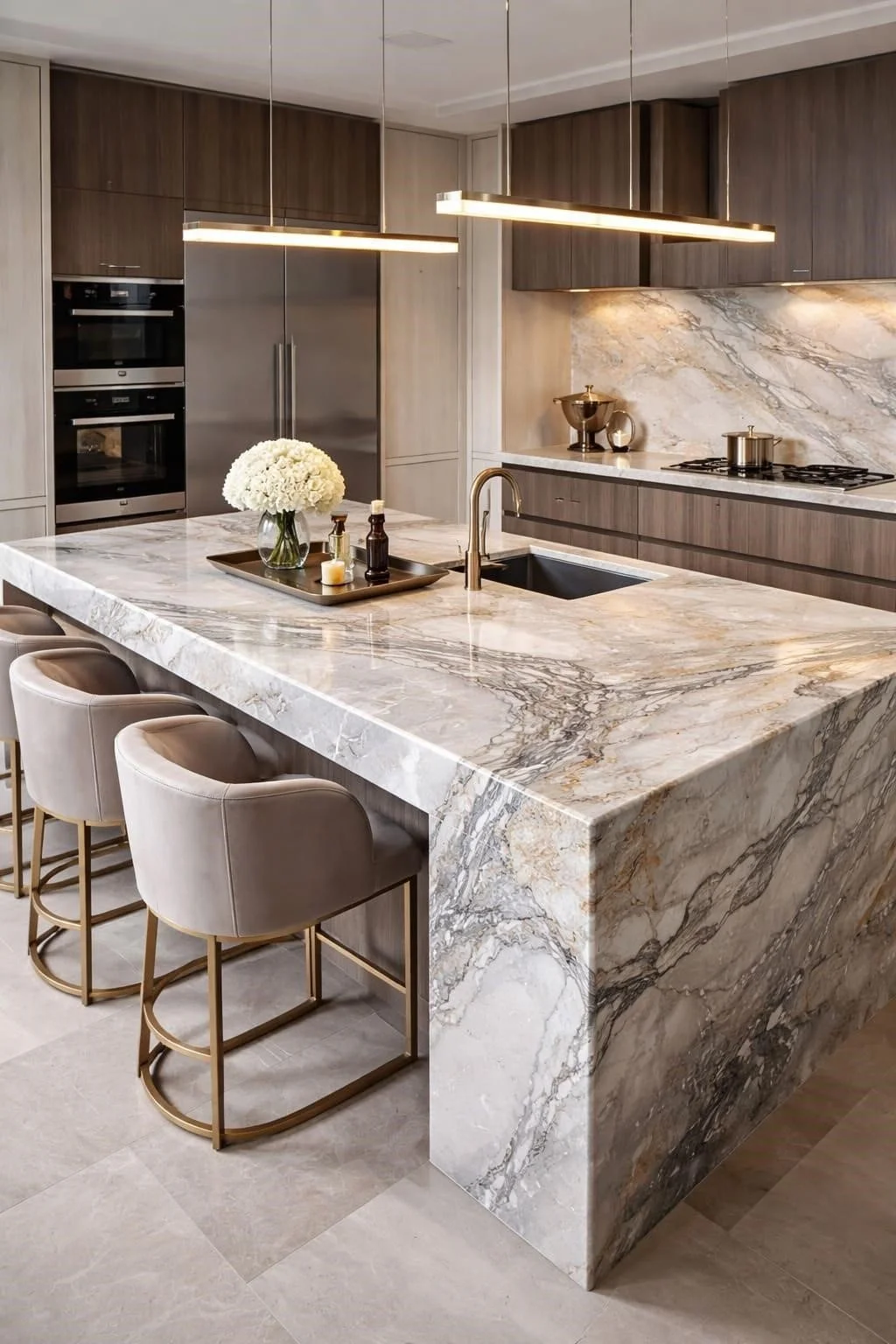
Quartzite is the luxury designer favorite for 2026 — natural marble-like beauty with the durability to match your life.
“But you, beloved, are not in the dark, for you are not of this world’s system that keeps you in the dark, since you are all children of the light and children of the day.”
I want to bring us back to this verse, because I believe it is directly relevant to the way you approach your home.
The world's system — the trend cycle, the slab yard sales floor, the Instagram algorithm, the builder's upgrade sheet — operates in a way that keeps you reactive, pressured, and choosing from a place of confusion rather than clarity. It wants you to decide quickly, decide emotionally, and decide based on what looks beautiful in someone else's kitchen rather than what is true for yours.
But that is not who you are. You are called to choose with wisdom, with self-knowledge, and with an intentionality that reflects good stewardship of the home and the resources God has entrusted to you.
When you walk into a countertop decision knowing exactly who you are, knowing how you genuinely live, and knowing what will serve your family and your peace for the next twenty years, you are choosing in the light. That is not a small thing. That is exactly what your home deserves.
CONCLUSION
The best countertop is rarely the most expensive one, or the most popular one, or the one that photographs best on social media.
The most beautiful kitchens are rarely about the highest-budget material. They are about choosing the material that matches the architecture of the home, the style of the cabinetry, the quality of the light, the personality of the homeowner, and the reality of how the family actually lives. Those five things, in alignment, create a kitchen that feels deeply right — every morning, for decades.
FAQ
What is the most durable kitchen countertop material?
Quartzite and porcelain slabs rank among the hardest and most durable options in today's market. Quartzite is a naturally occurring metamorphic rock that approaches granite in hardness while offering a luminous, marble-like aesthetic. Porcelain slabs are virtually scratch and stain-proof and perform exceptionally well even in high-UV environments. For natural stone with exceptional durability, granite is also a long-proven performer. The right choice depends on your specific kitchen, your lifestyle, and the aesthetic you're creating.
Is quartz or quartzite better for a kitchen?
This is one of the most important questions in kitchen design right now — and the answer depends entirely on your priorities. Quartz is engineered, non-porous, requires no sealing, and offers a consistent appearance ideal for a low-maintenance lifestyle. Quartzite is natural, harder than marble, requires sealing, and offers organic depth and uniqueness that engineered surfaces cannot replicate. If low maintenance and consistency are paramount, quartz excels. If natural beauty and the depth of a stone with a geological history matter more to you, quartzite is extraordinary. A professional designer can help you make this decision with full clarity.
Does marble hold up in a kitchen?
Marble absolutely holds up in kitchens when the homeowner understands its nature and has made peace with it. Marble is a porous stone that will etch from acidic substances, scratch more easily than granite or quartzite, and develop a patina over time. For the homeowner who values organic beauty, Old World elegance, and the character that comes from a natural surface that evolves with life — marble is magnificent. For the homeowner who needs a pristine, low-maintenance surface, quartzite or a high-quality marble-look quartz or porcelain will serve far better.
What countertop material has the best resale value?
Quartz and quartzite consistently perform well in today's resale market. Quartz is broadly appealing for its beauty and low maintenance. Quartzite signals a luxury, design-forward kitchen that attracts discerning buyers. Granite retains strong resale appeal and has a long, trusted track record. In general, high-quality natural stone or premium engineered stone will serve resale value well — but the quality of the design, the craftsmanship of the installation, and the overall coherence of the kitchen matter as much as the material itself.
Resource
Take the Interior Design Personality Quiz to create a home that reflects your story with clarity and confidence at shereedouglasbrock.com (scroll down to take the quiz)
Book a Beautiful Home Makeover Experience and transform your space in just a few hours—often using what you already own.