

Make Your Home Feel Safe and Protected — Designing Peace into Every Space

Every woman feels, but few ever name — the difference between a house that looks beautiful and a home that lets your body finally rest. So many women live in spaces that photograph beautifully and still leave them lying awake at night, listening to every sound the house makes. This article is about closing that gap.
“Now I can lie down and sleep in perfect peace, for you alone, Lord, will keep me safe!”
Just as God offers a peace that doesn't depend on our own effort, our homes have the power to either reflect that peace or quietly work against it. By the end of this post, you'll understand exactly which design elements create a felt sense of safety and how one client transformed a picture-perfect home into a genuine refuge.
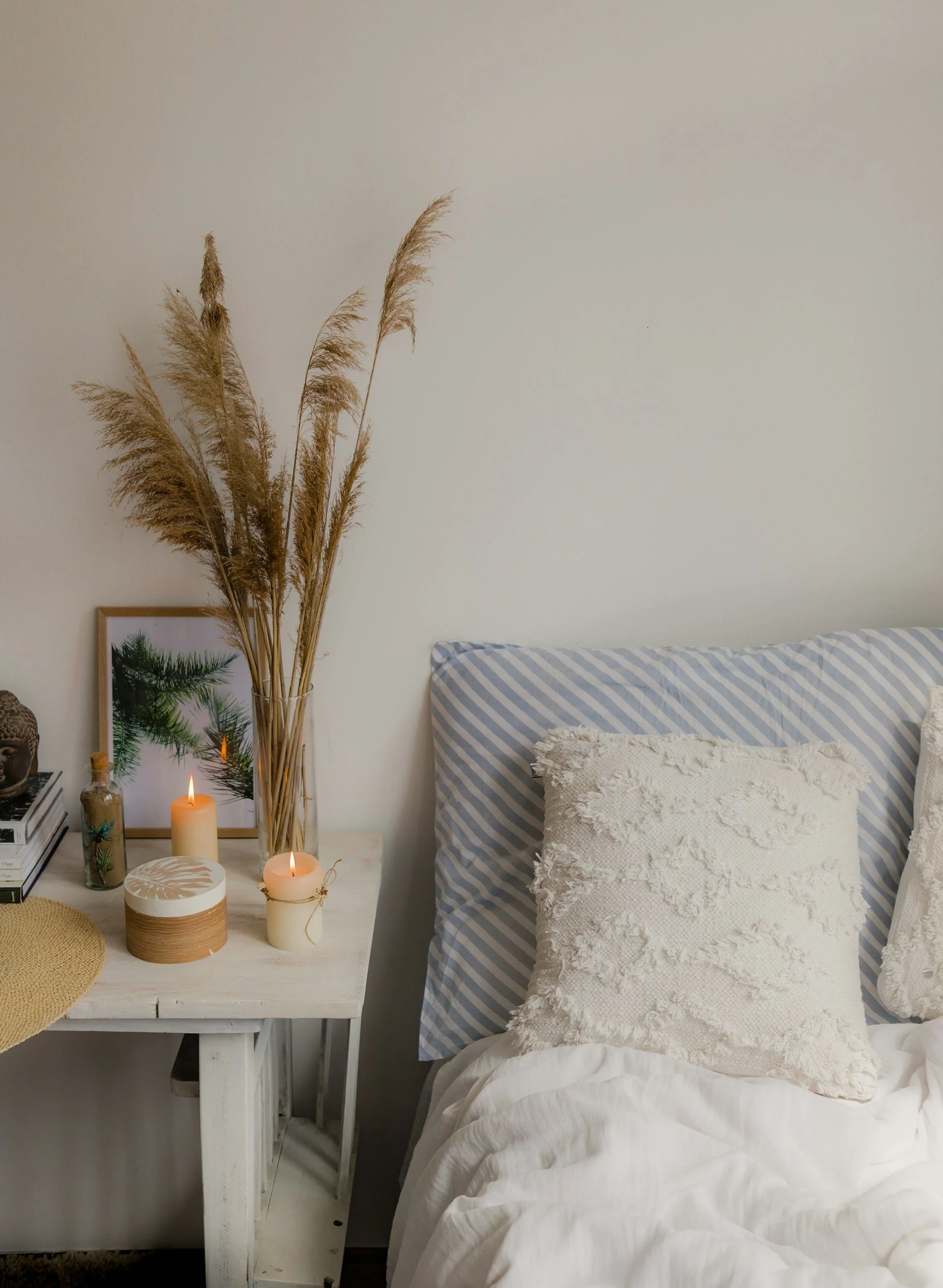
Why Beautiful Homes Still Feel Unsafe
There is a particular kind of quiet disappointment that shows up in interior design, and it rarely gets talked about. A woman puts real effort into her home. She chooses a cohesive palette. She invests in beautiful furniture. She styles every surface with care. Guests constantly compliment the space. And yet, alone in it at night, she still feels a low hum of tension she can't quite explain.
This isn't a failure of taste. It's a missing layer of design that has nothing to do with how a room looks and everything to do with how it makes the body feel. Long before your conscious mind takes in a color palette, your nervous system has already scanned the space for signals of safety or threat. A room can be objectively gorgeous and still fail to deliver the one thing that matters most: the felt sense that this space is truly, deeply safe.
The consequences run deeper than a restless night. A home that keeps the body quietly on alert creates ongoing low-grade stress that many women simply learn to accept as normal. They stop noticing it. They just feel tired in their own living room and assume that's simply what home life feels like. It isn't — and it's entirely fixable.
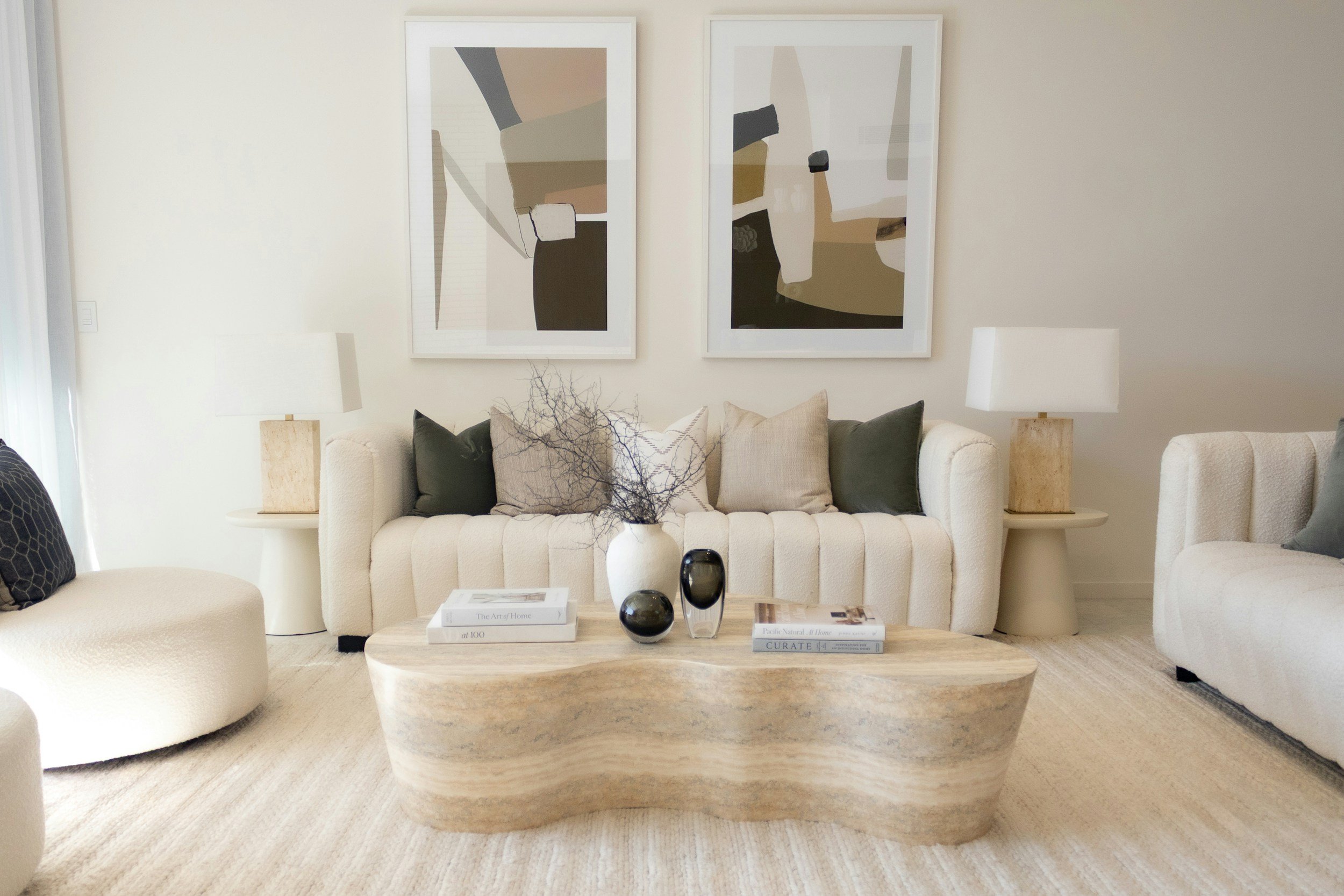
The House That Finally Held Grace Instead of Watching Her
The lamp was on. The candle was lit. The throw blanket was folded exactly the way it appeared in the magazine spread her living room had once been featured in. And Grace still couldn't sleep.
She told me this almost apologetically on our first call, as if it embarrassed her to admit that a home she had spent two years perfecting still left her wide awake at 11 pm, listening to every creak the house made.
Grace had done everything a design magazine would call "right." A neutral palette. Designer furniture. A space that had been professionally photographed. But she described her own home to me in a way that stopped me — she said it felt like a hotel she was house-sitting. Lovely. Impersonal. Not hers.
I asked her a single question: "When was the last time you felt completely at peace in this house?" She sat with it for a long moment before answering. "I don't think I ever have. Not since we moved in."
We started over — not with new furniture, but with her body. What lighting made her exhale? What sounds made her tense? She wanted a corner that belonged to no one but her. We softened the overhead lighting throughout her main floor and added a reading chair by the window, lit only by a lamp. We layered wool rugs into a hallway that had been echoing every footstep. We cleared her kitchen counters down to almost nothing.
Six weeks later, she sent me a message at 9:47 pm: "I'm sitting in my chair right now, and I don't want to move. This is the first time this house has ever felt like it was holding me instead of watching me."
That sentence has stayed with me ever since because it captures exactly what we're chasing in every safety-focused design project — a home that holds you, rather than one that simply performs for the people who visit it.
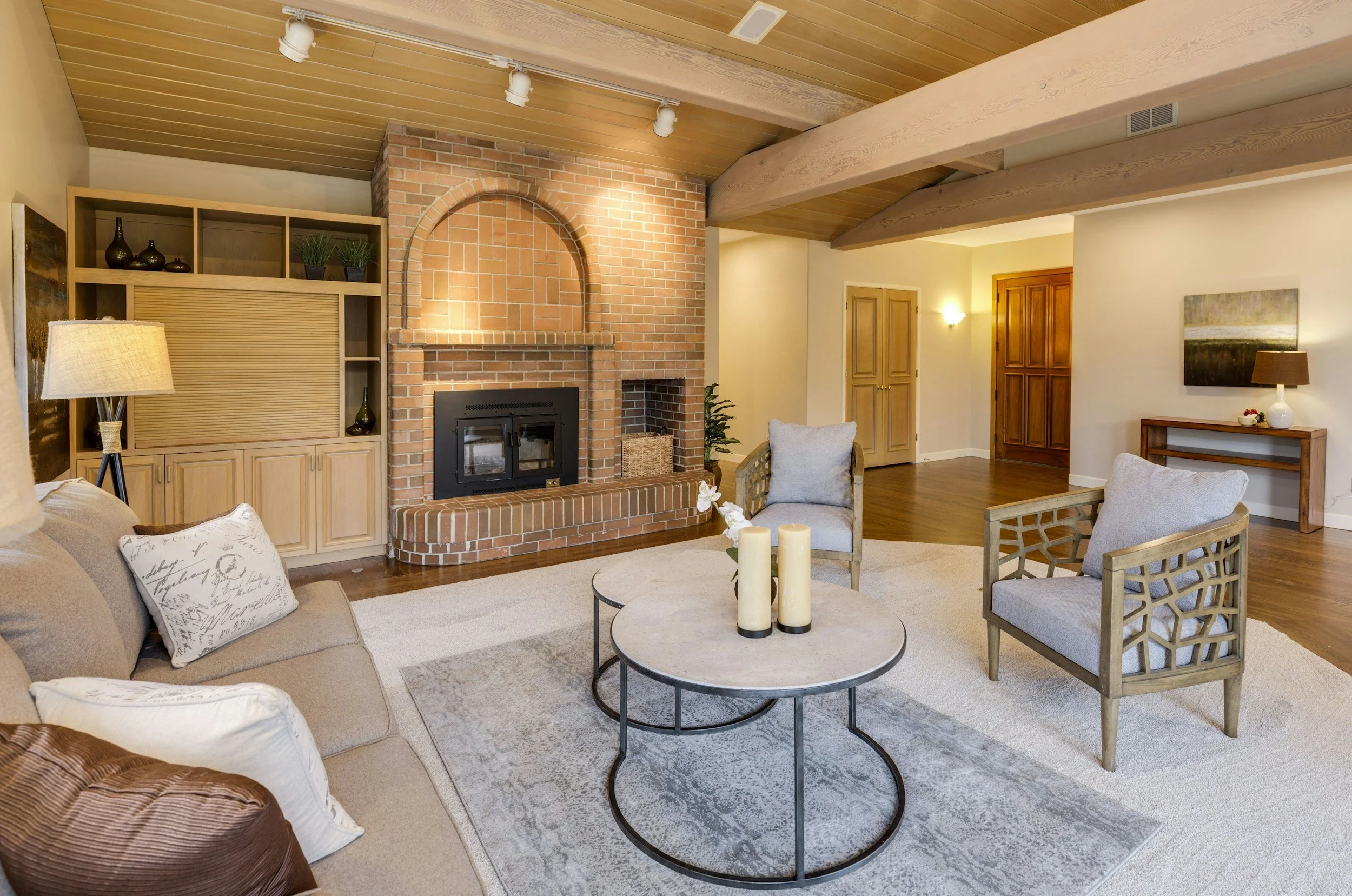
Six Elements That Signal Safety
Each of these elements speaks directly to the nervous system, not just the eye.
Layered, warm lighting replaces harsh overhead fixtures with lamps, sconces, and candlelight that mimic the natural progression of dusk — one of the oldest safety cues the human body responds to.
Clear, decluttered surfaces remove the visual noise that functions like a running to-do list for your eyes. A cleared counter gives the mind permission to stop scanning and simply rest.
Natural materials — wood, linen, wool, stone, and living plants — reconnect a space to the natural world our bodies were designed to trust. This principle, explored more fully in Episode 104's conversation on biophilic design, applies just as powerfully here.
A dedicated quiet corner may be the single most protective design element available, and it's the one most homes are missing. A chair, a window seat, a small nook that belongs to no calendar but yours — this single feature can change how an entire home feels.
Sound softening, through rugs, drapery, and upholstered furniture, absorbs noise that would otherwise make even a spotless room feel chaotic.
Order, not perfection, reduces the small daily frictions that keep a woman in manager mode instead of allowing her to settle into rest mode. Peace in a home is rarely about the absence of belongings — it's almost always about the presence of place.
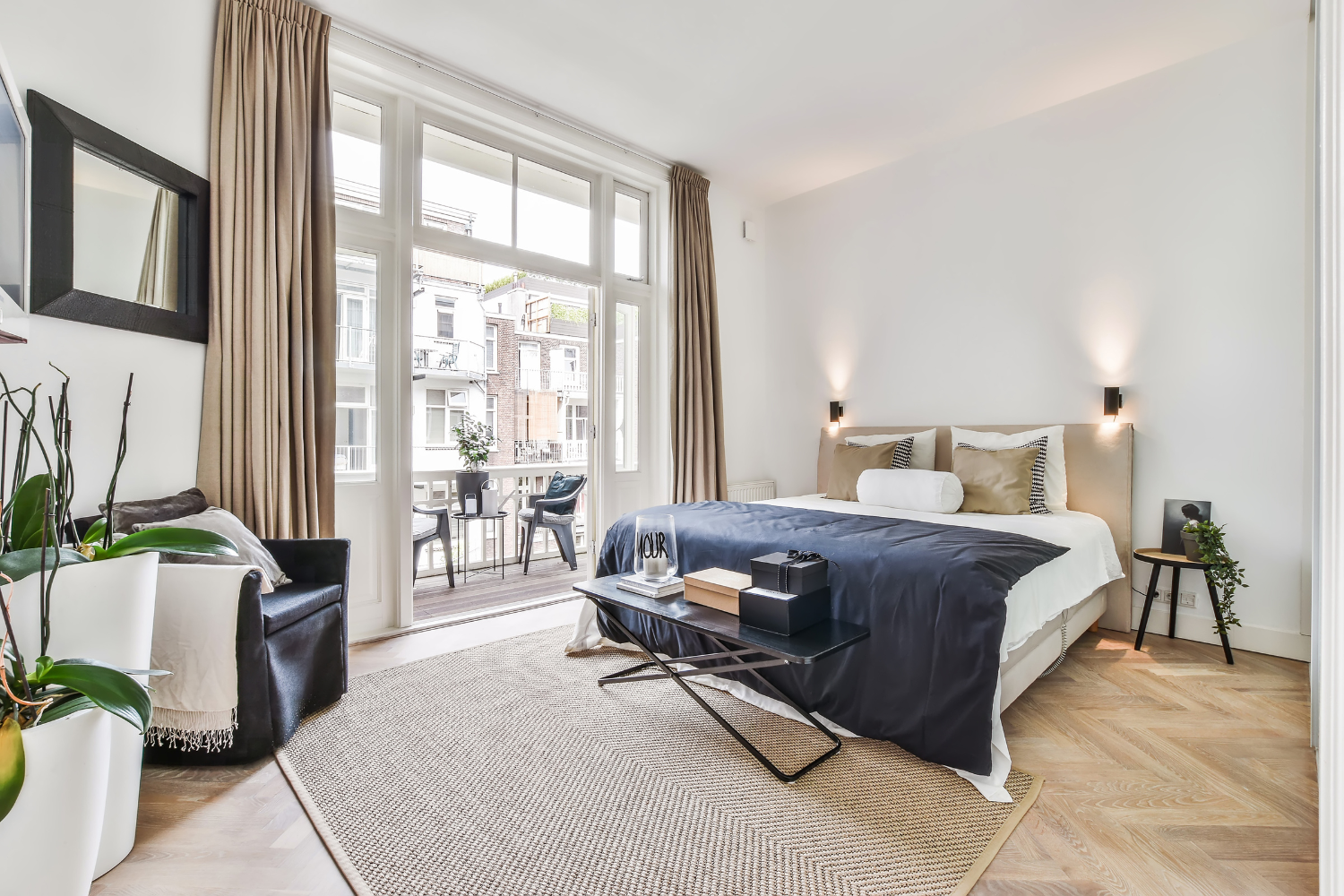
The Peace We Design For Was Already Promised
"Now I can lie down and sleep in perfect peace, for you alone, Lord, will keep me safe!" — Psalm 4:8 (TPT)
This verse captures something essential about the work of designing a truly restful home. Ultimate safety was never something we were meant to build entirely through our own effort — it's something we're invited to rest into. When a home is thoughtfully designed around these principles, it becomes more than a beautiful backdrop for daily life. It becomes a quiet, physical echo of a peace that was already given, long before the first paint chip was chosen.
Stewarding a home this way is a sacred responsibility. Every softened light fixture, every cleared counter, every quiet corner carved out just for rest is a small act of care — a way of saying, this home is meant to hold you, not just impress the people who visit it.

CONCLUSION
Creating a home that feels safe doesn't require a full renovation or a bigger budget. It requires intentional attention to how your space actually makes your body feel, room by room. Start small. Soften one light. Clear one surface. Claim one corner as entirely your own.
The home you're building toward — the one that finally holds you instead of simply displaying you — is closer than you think.
FAQ
What's the fastest way to make a room feel safer without a full redesign?
Start with lighting. Swap one harsh overhead fixture for a warm lamp, and add one soft textile — a throw, a rug, or drapery — to absorb sound. These two changes alone create a noticeably calmer atmosphere within days.
My home is already decluttered. Why doesn't it feel restful?
Decluttering removes visual noise, but safety also depends on lighting, texture, and sound. A clean, minimal room with harsh overhead lighting and hard, echoing surfaces can still feel unsettled. Consider whether your space has warmth and softness layered in, not just order.
Do I need a whole extra room for a "quiet corner" to count?
Not at all. A single chair positioned near a window, paired with a lamp and a soft throw, is enough. What matters is that the spot is intentionally set aside for rest and belongs to no task or schedule.
How do I balance a home that feels safe with one that still looks elevated for guests?
These two goals were never in competition. The most beautiful homes I design are the ones that feel just as restful when no one's watching as they look when everyone is. Warm lighting, natural materials, and a quiet corner enhance a room's beauty — they don't take away from it.
Resource
Take the Interior Design Personality Quiz to understand your style, your priorities, and how to make decisions with confidence at shereedouglasbrock.com (scroll down to take the quiz)
Book a Beautiful Home Makeover Experience and transform any room in your home into a true refuge.