

ReStyle or Remodel? How to Know What Your Home Actually Needs

She has been staring at that kitchen for three years. Standing at the counter with her coffee every morning, looking at the cabinet doors and thinking some version of the same question: Does this all need to go? The cost estimate she requested was a real number — a significant, sobering, life-reorganizing number — and somewhere in the back of her mind, a quiet voice has been asking whether the problem is really as large as that number implies.
This article is built for that moment — the crossroads between restyle and remodel that every homeowner eventually reaches, and that almost no one navigates with the professional framework it deserves.
Restyle vs Remodel — is one of the most financially consequential decisions in homeownership, and the clarity you will get from reading this is the difference between a wise investment and a costly mistake.
““The wisdom of the wise keeps life on track; the foolishness of fools leads them further astray.””
Wisdom in design is not about spending more or spending less. It is about pausing long enough to see clearly — and then making the decision that actually solves the problem at hand.

Spending on the Wrong Solution
There are two ways to make an expensive mistake in your home, and they are mirror images of each other. The first is remodeling, when a restyle would have solved the problem entirely — tearing out cabinets that were structurally excellent and cosmetically outdated, replacing a layout that worked with one that is essentially the same, spending forty thousand dollars on a room that needed four thousand dollars of strategic change. The second is restyling, when a remodel was truly necessary — painting cabinets over a layout that will never function, updating hardware in a room whose infrastructure is failing, investing in surface improvements on bones that cannot support them.
Both mistakes are common. Both are expensive. Both are almost entirely preventable with the right diagnostic framework applied before a single dollar is spent. And yet most homeowners — even those who have renovated before, even those who consider themselves design-literate — make major home investment decisions from a place of emotional response rather than professional discernment.
The emotional response is completely understandable. When you have lived in a room for years and grown to dislike it, the feeling of wanting it to be completely different is real and valid. But feelings about a room and facts about a room are different categories of information, and they point to different solutions. The feeling says: tear it all out. The facts say: here is what is actually wrong, and here is what will actually fix it. Learning to hear the facts over the feeling is the entire skill set this episode teaches — and it is a skill that will serve every homeowner for the life of every home she lives in.
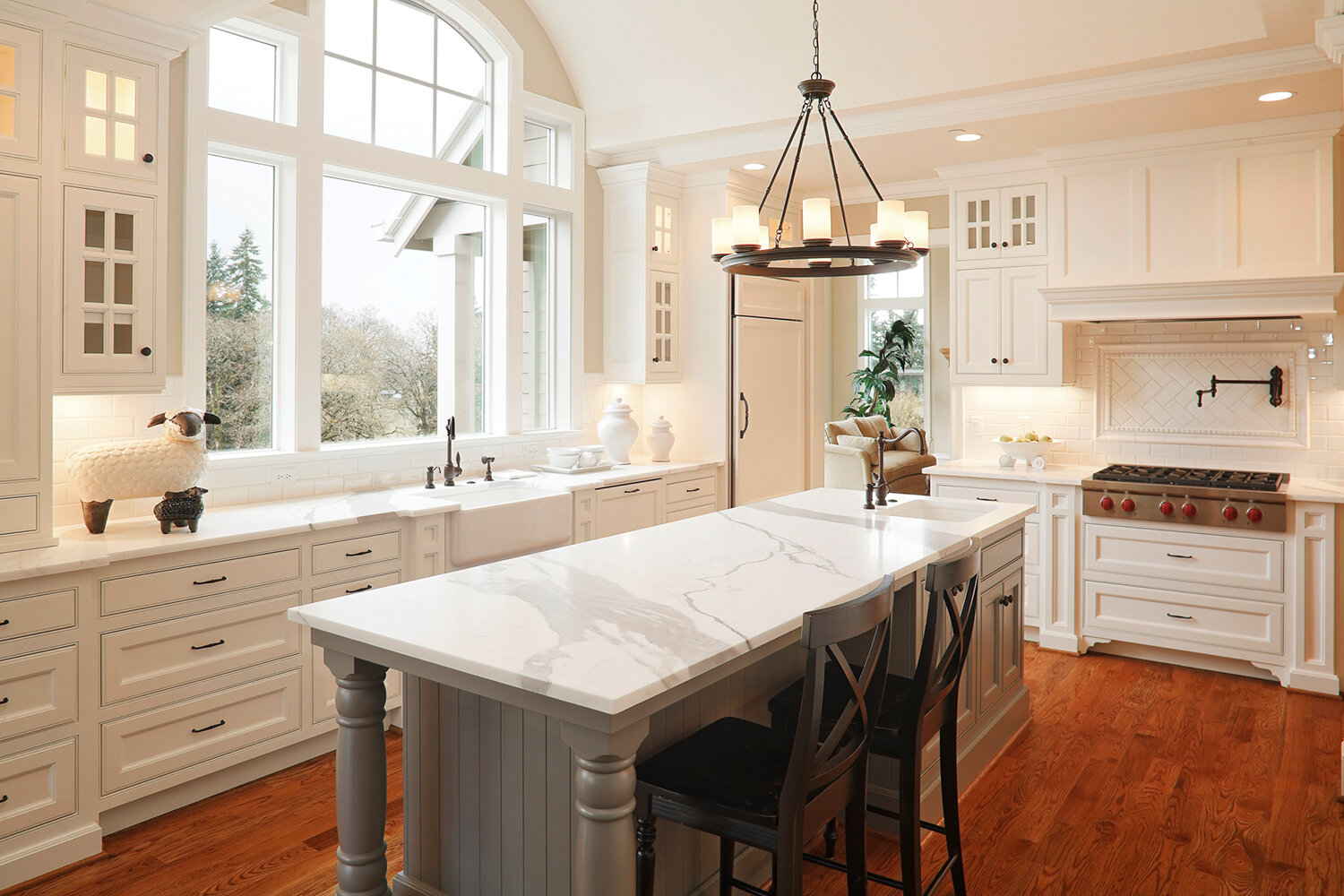
$42,000 vs. $4,000 — The Same Kitchen
The contractor's estimate was on the counter when she called. Forty-two thousand dollars for a complete kitchen renovation: custom cabinets, reconfigured layout, new countertops, new appliances, new flooring throughout. The contractor had been professional, the proposal was detailed, and she had been approximately thirty-six hours away from signing when something made her pause — not certainty, just a quiet, persistent question. What if this isn't actually what the kitchen needs?
The kitchen was original to a renovation from the mid-2000s. Maple cabinets in a warm honey tone that had shifted to a yellowed amber over the years of UV exposure. Black granite countertops. Brushed nickel hardware. A single recessed lighting circuit with no dimmer made the room feel flat and clinical after dark. The layout was a standard U-shape with a peninsula — functional, efficient, well-suited to the way she cooked. Nothing was broken. Nothing was failing. Nothing was structurally compromised. What she hated was the way it looked: dated, heavy, and dim. She had attributed that feeling to the bones of the kitchen without ever separating those bones from the surface layer sitting on top of them.
When I walked through and asked three specific questions — the same three that I will give in detail later — the diagnosis became clear very quickly. The bones were excellent. The maple cabinet boxes were solid, well-constructed, and in perfect condition. The layout was efficient and served her cooking habits well. The peninsula was functional and valued. What the kitchen was suffering from was a cosmetic identity crisis two decades in the making, not a structural one.
The restyle that followed was strategic and targeted. The cabinet boxes were professionally painted in a warm creamy white that immediately lifted the entire room. The black granite — which had been fighting the darkened cabinet tone — was cleaned, resealed, and suddenly revealed as the beautiful material it had always been, now given room to read against a light background. Brushed brass hardware replaced the brushed nickel throughout, introducing warmth and a more current aesthetic. A new pendant light over the peninsula and under-cabinet LED lighting on a warm circuit transformed the evening atmosphere of the kitchen from clinical to inviting. Slightly oversized cabinet pulls on the peninsula island introduced a custom, furniture-like quality that the original hardware had never achieved.
The total investment was just under four thousand dollars. The result was a kitchen that looked custom, felt current, and photographed as though it had been renovated. Thirty-eight thousand dollars remained untouched in her account.
Her message to me after the installation was complete said: "I almost made the most expensive impulsive decision of my homeowning life. I cannot believe it is the same room."

ReStyle, Remodel, and How to Tell the Difference
What ReStyle Actually Is
A professional restyle is not decorating. It is not buying new throw pillows or repainting an accent wall. A restyle is a strategic design reset — a disciplined, trained process of evaluating what exists in a space, identifying what is working at the structural and functional level, and then making targeted, intentional investments that elevate and update what is already there without dismantling what is good.
The reason restyle is consistently underestimated as a solution is that it requires a trained eye to identify correctly. When you live inside a space every day, you stop seeing what is actually there. You see what you feel about it — and what most homeowners feel after years of the same dated surfaces is that everything needs to go. That feeling is understandable. It is also, in the majority of cases Sheree encounters in her practice, inaccurate.
The diagnostic question at the heart of any restyle evaluation is: Are the bones good? Bones refer to the structural and functional elements of a space — the cabinet boxes rather than the doors, the layout and flow of the room, the quality of the flooring substrate, the architectural proportions, and ceiling height. When the bones are sound, when the space functions well and is well-constructed, a restyle will almost always deliver a result that is visually indistinguishable from a full remodel at a fraction of the cost. And without a single day of construction disruption.
What restyle addresses is the cosmetic layer above those bones: the paint on cabinet doors, the hardware finish, the lighting fixtures and their temperature, the countertop if a swap is feasible, the backsplash, the window treatments, and the styling of horizontal surfaces. These are the elements that age most visibly, date most predictably, and respond most dramatically to intentional change. A restyle is the right answer whenever the layout works, the construction is sound, the function serves the life lived in it, and what needs to change is the aesthetic experience of the space. It is not a consolation prize. Executed with professional intention, a restyle is frequently a more beautiful and more personally resonant outcome than a generic renovation, because it works with the specific character of what already exists.

When a Remodel Is Truly Necessary
There are circumstances in which no amount of styling will address what a space actually needs — and it is equally important to identify those circumstances clearly, because proceeding with a restyle when the problem is structural means investing in surface change that will eventually be torn out anyway. The restyle budget is lost, the remodel still happens, and the homeowner has paid twice for one solution.
A remodel is genuinely necessary when the layout is the problem. Layout problems are functional rather than aesthetic — they are the friction of daily life in a space that was never designed for how it is actually used. A kitchen where the work triangle is broken, where the dishwasher door conflicts with the pantry door, where there is no counter space adjacent to the stove — these are layout problems. A primary bathroom where the only sink is on the opposite wall from the closet, requiring a daily traffic pattern that makes no sense — that is a layout problem. Paint and hardware do not fix a layout. Only reconfiguration does.
A remodel is also necessary when infrastructure is failing — when plumbing is outdated or leaking, when electrical systems cannot support modern load requirements, or when subflooring is damaged or compromised. These are safety and function issues, not cosmetic ones, and they are not optional to address. No surface treatment makes failing infrastructure sound.
The third category that genuinely requires a remodel is square footage. When a space is fundamentally too small for the functions it is meant to serve — when there is simply not enough room for adequate storage, comfortable circulation, or the activities that take place there — no restyle can resolve that. A bathroom cannot be made larger with better tile. A kitchen cannot be given more counter space with a lighter paint color. When the footprint is the constraint, expansion or reconfiguration is the only real answer.
Knowing which category your space falls into is not a minor consideration. It is the foundational design decision that determines whether your next home investment is money well spent or money that delays the problem without solving it.
The Three-Question Decision Framework
Before I recommend a single change to any client's home, I ask three questions in order. These questions are diagnostic rather than budgetary. Their purpose is to reveal, as quickly and accurately as possible, whether a room has a structural problem or a surface problem — and those two categories of problem have entirely different solutions. You can apply these questions to any room in your home today.
The first question is: Does this room work? Not does it look the way you want it to — does it function in a way that serves your life? Can you move through it efficiently? Does the layout support the activities that happen in it? Is the storage adequate for what needs to live there? Are traffic patterns logical and unconflicted? If the answer is yes — if the room works well and the frustration is primarily visual — you are almost certainly looking at a restyle. If the answer is no — if you accommodate the room rather than the room accommodating you, if the layout creates daily friction — the second question will help you determine whether that functional problem can be solved cosmetically or requires structural change.
The second question is: What specifically do I dislike, and why? This question moves from emotional response to precise identification. "I hate this kitchen" is an emotion. The specific list of what you hate when you stand in the kitchen and name it out loud is diagnostic information. "I hate the cabinet color and the dated hardware and the dark and oppressive feeling of the room" is a restyle list. "I hate that I cannot open the oven and step back from it without hitting the island" is a remodel problem. The more specific the identification, the more clearly the correct solution emerges. Most women who complete this exercise discover that their specific list is shorter, more targeted, and more cosmetically oriented than the general feeling of hating the whole room would suggest.
The third question is: If the cosmetics were updated — the paint, the hardware, the lighting, the surfaces — would the room function the way I need it to? This is the clarifying question that closes the diagnostic loop. If the answer is yes — if a beautifully executed cosmetic update would make you genuinely happy to be in that space — then a restyle is the right and financially sound solution, and a remodel would be significant overspending on a cosmetic problem. If the answer is no — if even imagining the room freshly painted and beautifully lit and updated in every surface detail doesn't resolve the functional frustration — then the problem is structural, and the remodel is the appropriate and necessary investment.
These three questions, asked in order and answered with specificity, will tell you what your home actually needs with the clarity of professional discernment.

Wisdom Before Action
"The wisdom of the wise keeps life on track; the foolishness of fools leads them further astray." — Proverbs 14:8, TPT
This verse is a verse about the quality of decision-making before the commitment of action. Wisdom keeps life on track not by moving faster or with more confidence than the situation warrants, but by slowing down long enough to see clearly. By asking the right questions before committing to an answer. By understanding the actual nature of a problem before investing in a solution — financial, emotional, or otherwise.
The homeowner who signs the forty-two thousand dollar remodel contract on emotional momentum rather than diagnostic clarity is not making a bad decision because she lacks resources or love for her home. She is making a costly decision because she responded to a feeling rather than a diagnosis. Wisdom in design is exactly what Proverbs 14:8 describes: the capacity to pause, assess, and move forward with clarity rather than reaction.
Treating your home with wisdom means honoring the investment it represents. It means getting the diagnosis right before committing to the treatment. It means asking the three questions before picking up the phone to call a contractor, and being willing to hear the answer even when it is less dramatic — and far less expensive — than the story the emotion was telling.
Your home is worth that kind of care. So is your financial peace.
Conclusion
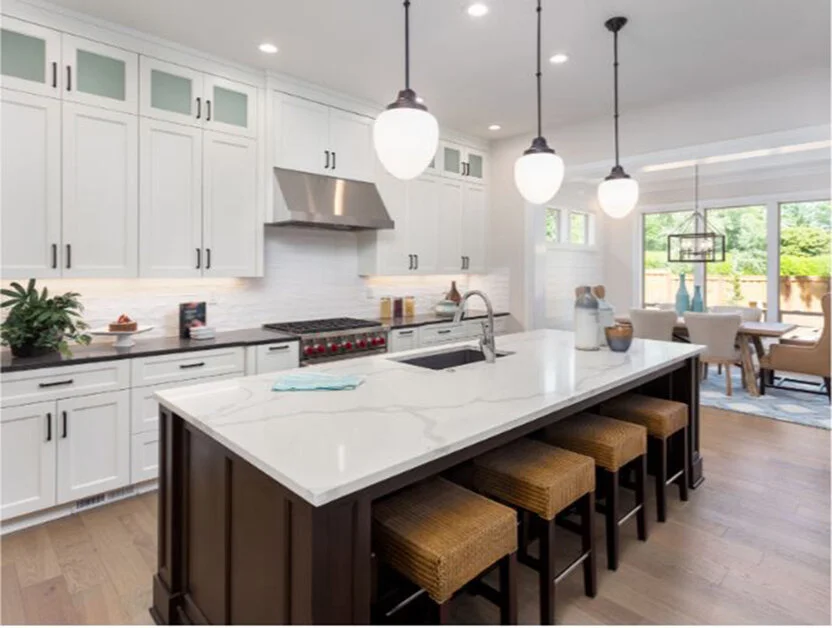
The kitchen she almost renovated for forty-two thousand dollars now looks like a designer kitchen. It cost under four thousand dollars to get there. The difference was not luck or an unusually cooperative space. The difference was a professional eye that could separate the bones from the surface, the structural from the cosmetic, the problem that needed a contractor from the problem that needed a designer.
That eye is available to you — before you spend a dollar in the wrong direction. The Beautiful Room Makeover Experience™ is where that professional assessment begins, and the clarity it provides has saved clients not just thousands of dollars but months of unnecessary disruption and years of living with regret.
Before you call a contractor, before you buy one more thing, let a trained professional look at your space and tell you what it actually needs. That conversation alone may be the most valuable design investment you make this year.
FAQ
What is the difference between a restyle and a remodel in interior design?
A restyle is a strategic design reset that works with the existing structural and functional elements of a space — updating cabinets with paint and new hardware, improving lighting, refreshing surfaces — without changing the layout or construction. A remodel addresses structural, functional, or square footage problems that cosmetic changes cannot resolve. The key diagnostic question is whether the layout and bones of the space work well. If they do, a restyle almost always delivers a dramatic transformation at a fraction of remodel cost.
How do I know if my kitchen needs a remodel or just a refresh?
Ask three questions: Does the kitchen function well for how you cook and live? What specifically bothers you about it — and is that list cosmetic or functional? If the surfaces were updated beautifully, would the kitchen work the way you need it to? If the layout is efficient, the construction is sound, and your frustrations are primarily about how the kitchen looks rather than how it functions, a professional restyle is almost certainly the right — and far more economical — solution.
Can painting cabinets really transform a kitchen without a full renovation?
Yes — consistently and dramatically. Professional cabinet painting, combined with updated hardware, improved lighting, and thoughtful styling, produces results that are visually comparable to a full renovation at a fraction of the investment. The key is that the cabinet boxes must be structurally sound and the layout must function well. When those conditions are met, the transformation a professional restyle delivers is genuinely remarkable.
When is a remodel worth the investment?
A remodel is the right investment when the layout actively interferes with how you use the space, when infrastructure such as plumbing or electrical is failing, or when the footprint is genuinely too small for your needs. In these situations, cosmetic changes — however beautifully executed — will not resolve the underlying problem. The remodel addresses the constraint at its source, and in those circumstances, it is not merely worth the investment. It is the only investment that will actually work.
Resource
Take the Interior Design Personality Quiz to understand your style, your priorities, and how to make decisions with confidence at shereedouglasbrock.com (scroll down to take the quiz)
Book a Beautiful Home Makeover Experience and transform your space in just a few hours—often using what you already own.