

What Is Biophilic Design — And Why Your Home Desperately Needs It

Researchers at Harvard and institutions around the world have documented something that is both surprising and, once you hear it, completely intuitive: when human beings are surrounded by natural elements — real light, living plants, wood, stone, woven textures, organic shapes — their cortisol drops, their sleep improves, their focus sharpens, and their overall sense of wellbeing rises in ways that can be measured. Not felt vaguely or imagined wishfully. Measured, in controlled studies, across demographics, housing types, and environments from hospitals to offices to homes.
Today, I introduce the design philosophy that is built on this body of research: biophilic design. The primary keyword anchoring this post — biophilic design for homes — describes one of the most powerful and most underused principles in residential interior design. And by the time you finish reading, you will understand not only what it is, but why God designed you for it and exactly where to start bringing it into your space.
“And the Lord God planted all kinds of trees in the garden — beautiful trees that produced delicious fruit.”
God's first act of environmental design was a garden — alive, layered, sensory, growing, and beautiful by design. Biophilic design is, at its core, a return to that original blueprint.
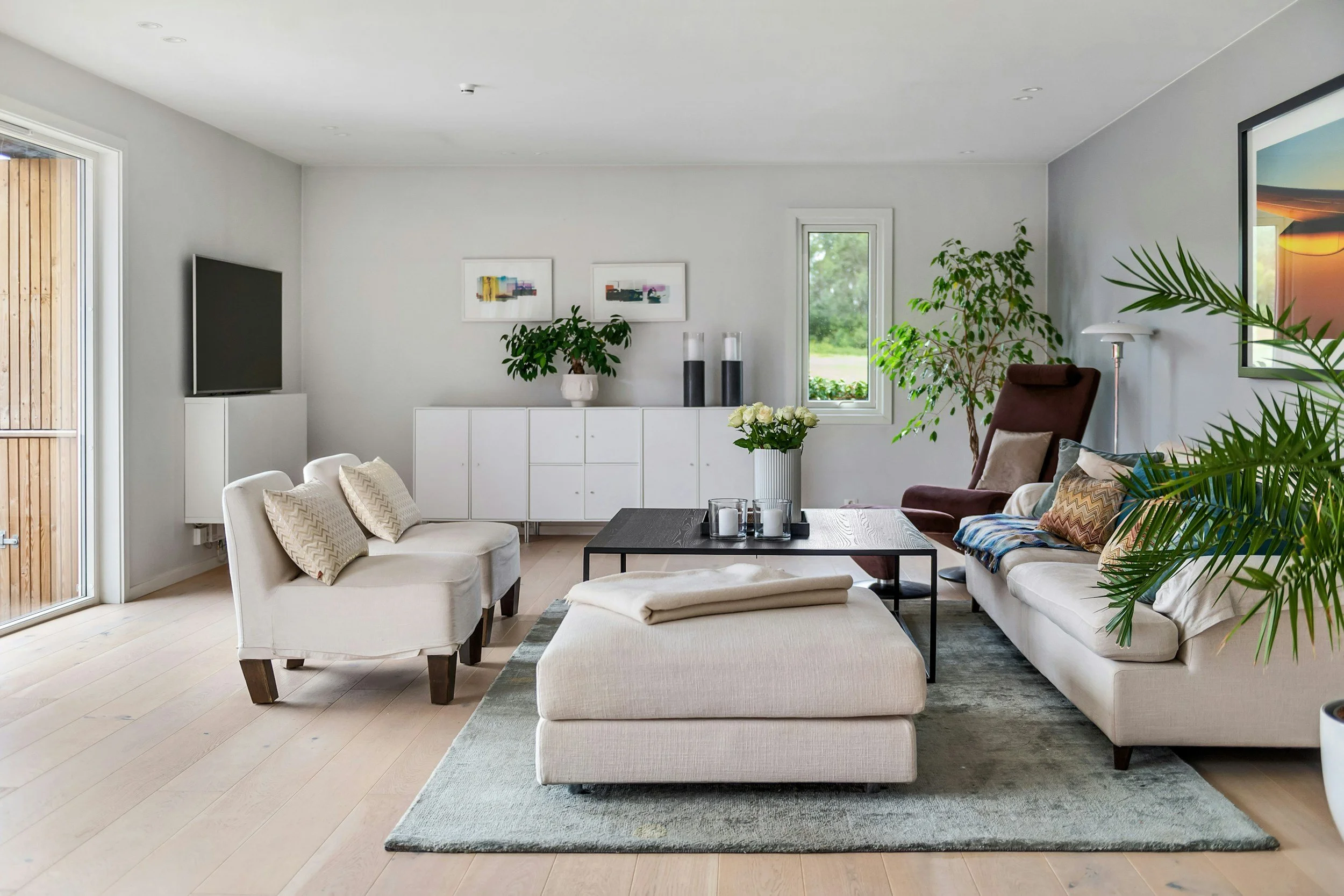
Beautiful Rooms That Feel Empty
There is a particular kind of interior design problem that is difficult to name but instantly recognizable when you encounter it. The room is well-furnished. The surfaces are clean. The color palette is cohesive. The proportions are correct. It photographs well and impresses guests. And yet the person who lives in it doesn't quite feel at home. She finds herself gravitating to other rooms, or to other places entirely. The space is technically successful and atmospherically hollow — and she cannot explain why.
This is one of the most common experiences Sheree encounters in her design work, and it almost always traces back to the same source: the absence of nature. Not the absence of color or pattern or warmth in the conventional sense — but the absence of life. No living elements. No natural materials carry the texture and history of the organic world. No connection to daylight or the outdoor environment. A space that is technically beautiful and biophilically barren — and a human nervous system that registers that barrenness and responds to it, quietly and persistently, as a form of stress.
This matters because the home is not simply a backdrop for life. It is an environment that shapes the people living inside it physiologically and emotionally, hour after hour, day after day. When the environment is working in concert with our biology — when it includes the elements our nervous systems were designed to recognize and respond to — we are more rested, more creative, more at peace. When it works against our biology, the cost is paid in the currency of chronic low-grade stress, fractured focus, and the persistent sense that something is missing without being able to say what.
The good news is that the solution to this problem is one of the most accessible in all of interior design. Biophilic design does not require a renovation. It requires understanding — and intention.
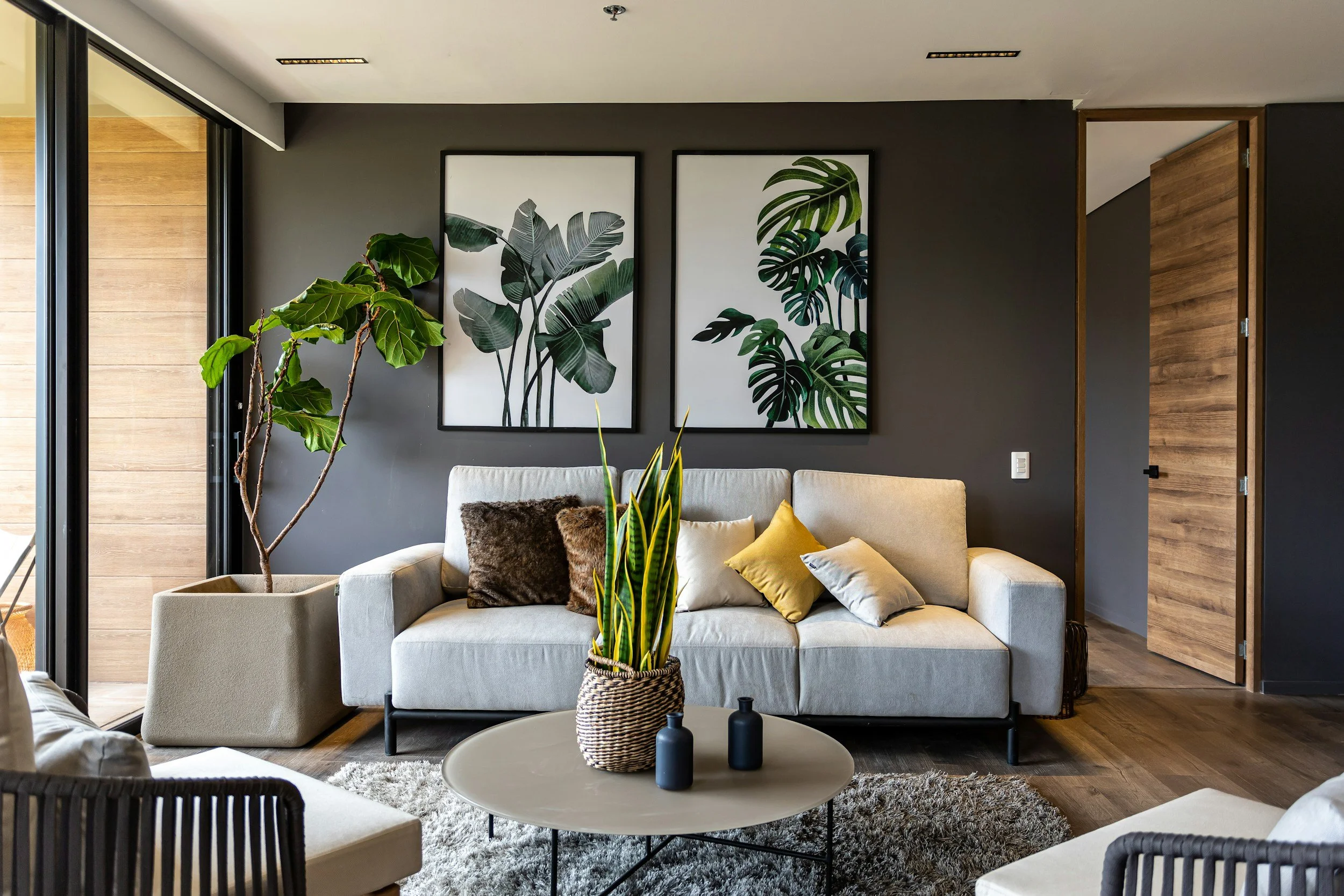
The Showroom That Became a Home
The house was, by every conventional standard, stunning. The marble kitchen countertops were flawless. The living room furniture — angular, low-profile, upholstered in a pale, cool-toned fabric — was sleek and proportionally impeccable. The floors were wide-plank porcelain tile in a pale stone color, maintained with the kind of care that made them look as though they had never been walked on. The recessed lighting illuminated every surface evenly and brightly. The art was graphic and precise.
It was also a home with no living thing inside it. No plant, no flower, no material that had grown in the ground or come from the forest or been woven from natural fiber. Every surface was polished, synthetic, or manufactured to replicate a natural material without being one. It was technically perfect — and the woman living in it described it, without irony, as "a showroom." She said she felt like a guest. She told Sheree that she worked at the kitchen table because the living room made her feel too uncomfortable to linger.
The diagnosis, in design terms, was immediate: complete biophilic absence. The treatment was strategic and layered.
A trio of large fiddle leaf fig trees in oversized terracotta planters arrived first, placed in the corner of the living room that had always felt like an unresolved void. A live-edge walnut console replaced the lacquered white entry piece, and the entry immediately felt grounded — rooted to the earth in a way it hadn't been before. Linen drapery replaced the existing sheers: same light quality, entirely different tactile register. A jute rug was layered over the tile, softening both the acoustic and visual temperature of the room. Dried eucalyptus branches in a large ceramic vase were added to the kitchen counter. A stone bowl filled with smooth river rocks was placed on the coffee table.
Three days after the installation, the client called. She said: "I came home yesterday and I didn't go straight to the kitchen table. I sat on the sofa. I didn't do anything. I just sat."
She had felt, for the first time, invited. Not by furniture. Not by color. By the presence of the natural world, brought inside with care.
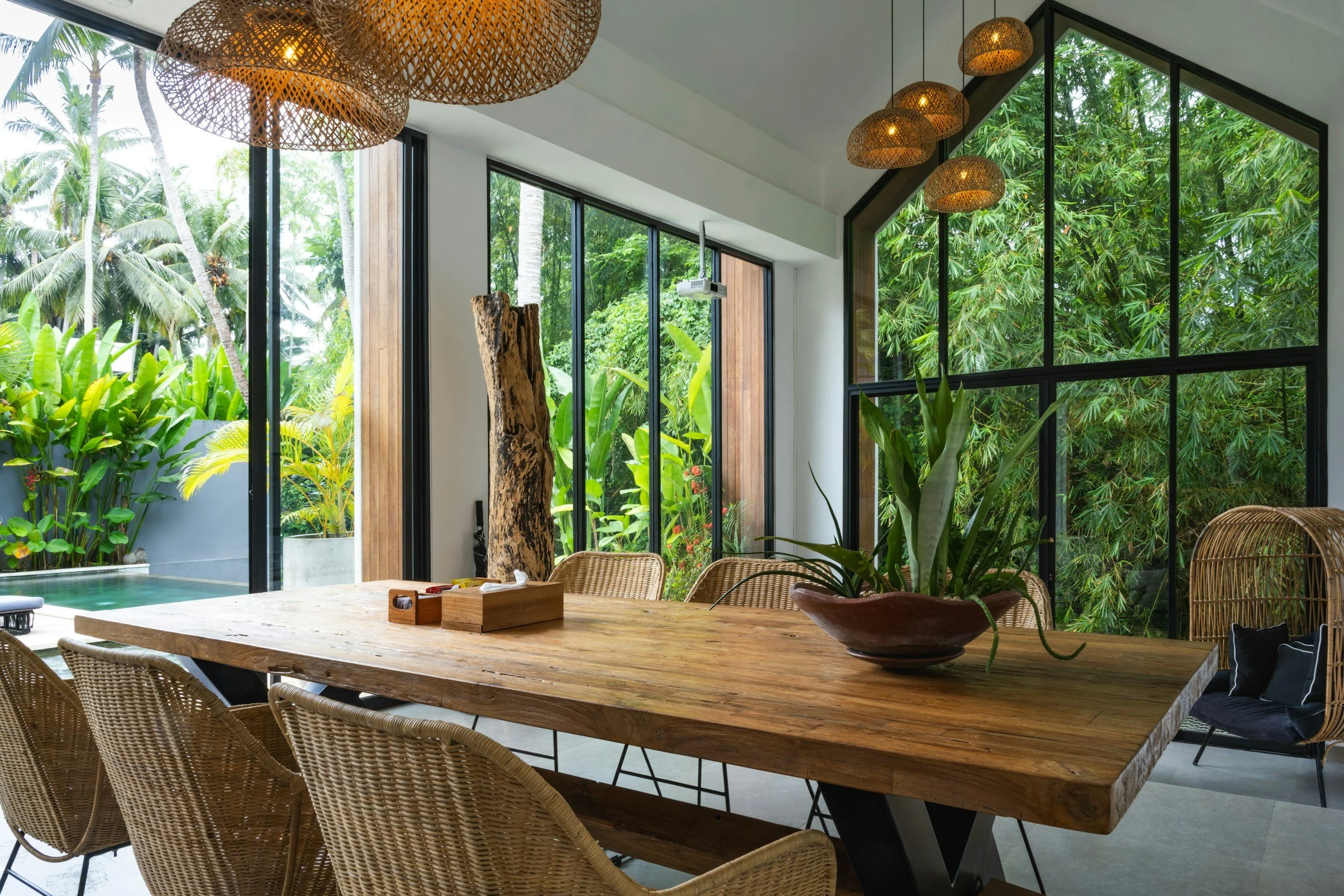
Three Principles of Biophilic Design for Your Home
What Biophilic Design Actually Is
The word biophilia was coined by the biologist E.O. Wilson in 1984 to describe what he observed as an innate human affinity for the living world — a biological tendency to seek connection with other living systems and with nature. Biophilic design is the translation of that tendency into the built environment. It is the intentional practice of designing spaces that connect the people living in them to the natural world through every available means — not just plants, but the full range of ways nature can be present and felt within a home.
Natural light is the foundation. Not just illumination, but the quality, directionality, and movement of daylight — the way it shifts in color temperature throughout the day, the way it creates shadow and depth, the way it connects the interior to the rhythm of the sun. Natural materials are the second dimension: real wood, stone, linen, jute, clay, rattan, cotton — materials that carry the origin story of the living world and that age and develop character over time in the way no synthetic material does. Natural texture and organic pattern constitute the third: the grain of wood, the weave of a basket, the irregular surface of a hand-thrown ceramic piece, the veining of stone. The nervous system reads these patterns as evidence of the natural world, even when the conscious mind isn't naming them.
Biophilic design also encompasses what designers call biomorphic forms — shapes that echo nature without literally depicting it. An arched doorway rather than a perfectly squared one. A curved sofa. A lamp with an organic, irregular silhouette. A table with a live edge rather than a straight one. These forms carry the language of natural shape, and the body responds to that language at a level below conscious thought.
Finally, biophilic design considers the relationship between interior spaces and the outdoor world — the placement and treatment of windows, the visual access to greenery and sky, the use of transparency and light to bring the outside in. A room with one good window overlooking a tree can feel more alive and habitable than a much larger room with no natural view — because that single view does something for the nervous system that no amount of artificial decoration can replicate.
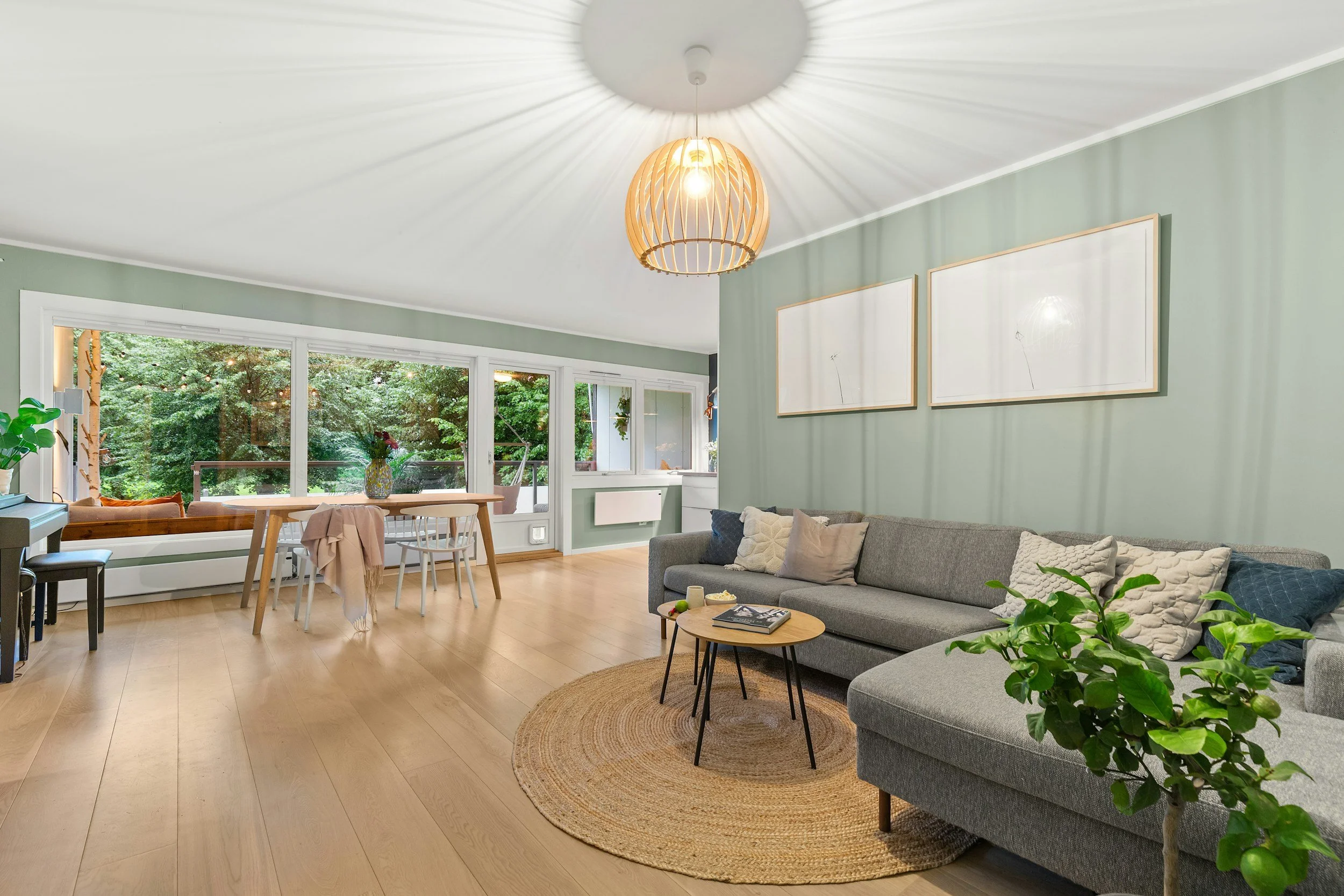
Why It Works: The Science and the Scripture
The research foundation for biophilic design is both extensive and compelling. A landmark study at Harvard's T.H. Chan School of Public Health found that workers in environments with natural light and views of nature slept an average of 46 minutes more per night than those without those elements and reported significantly higher quality-of-life scores across multiple measures. Research published in Environmental Health and Preventive Medicine documented measurable reductions in salivary cortisol — the body's primary stress marker — in individuals who spent time in biophilically designed environments. Healthcare research has consistently shown that patients with views of nature from hospital rooms recover more quickly, require less pain medication, and experience fewer complications than those without natural views.
The framework researchers use to explain these outcomes is built around two related theories: the stress recovery theory, which describes how natural environments activate the parasympathetic nervous system — the rest-and-restore branch — and allow the body's stress response to deactivate; and the attention restoration theory, which describes how natural environments replenish the directed attention that is continuously depleted by the demands of modern life. Both theories point to the same conclusion: the natural world restores us in ways that artificial environments, no matter how beautiful, simply cannot. We are wired for it.
This is not a modern discovery. It is a modern confirmation. In Genesis 2:9, we read that God planted "all kinds of trees in the garden — beautiful trees that produced delicious fruit." The pairing of those words — beautiful and fruitful, lovely and nourishing — is significant. God's first environmental design decision was not merely functional. It was gorgeous. And human beings were placed inside that gorgeousness not by accident but by intention — designed to be restored, nourished, and ordered by the living world He created. Science is doing the work of documenting what Scripture has always implied: we were made for this. Our bodies know the natural world as home.
Where to Start: The Three Most Impactful Entry Points
Biophilic design as a design discipline can feel overwhelming in its scope. But in the real rooms of real homes, there are three specific categories of entry points that deliver the highest impact in the most accessible way — and they build on each other in a specific sequence that matters.
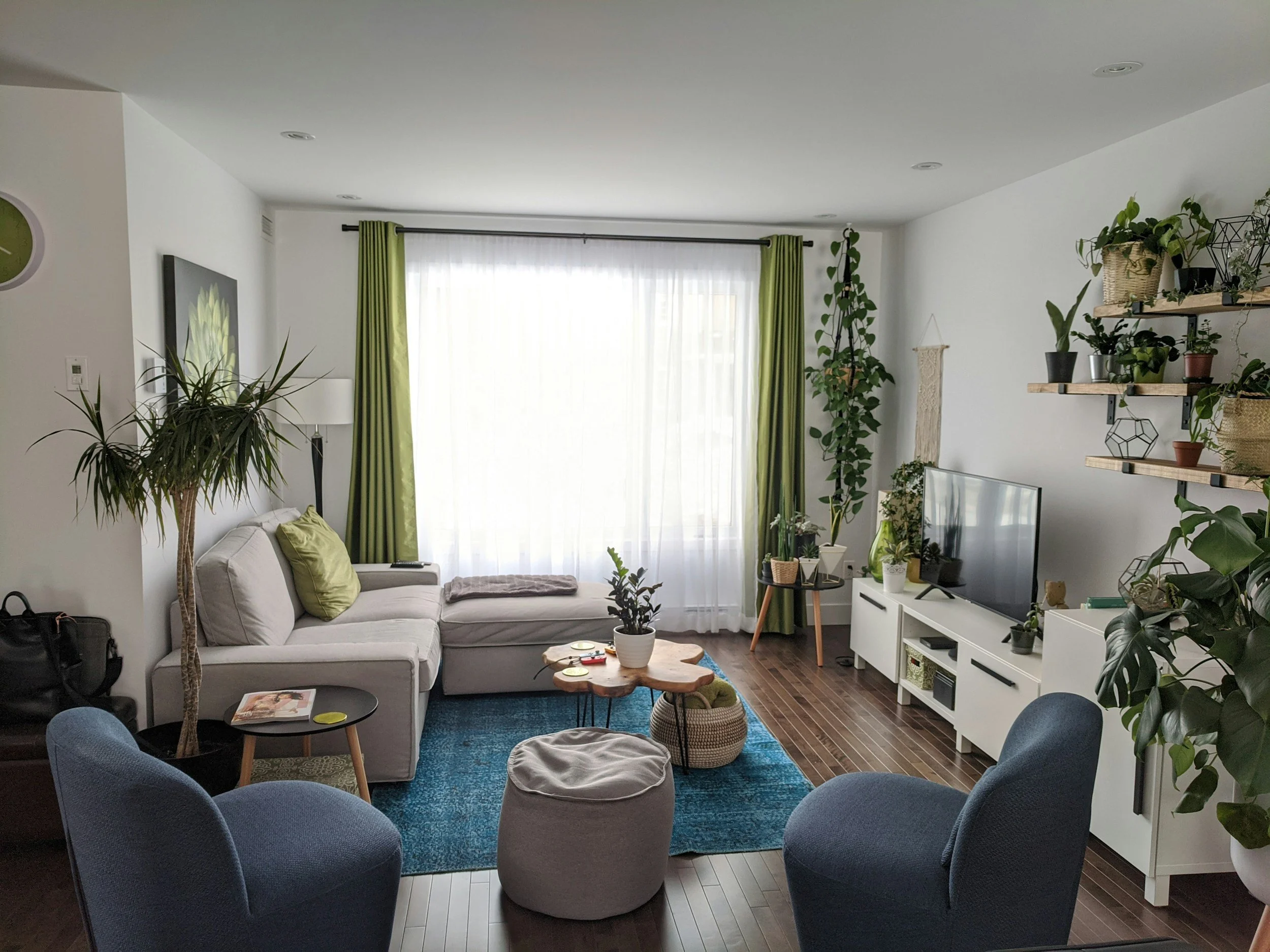
Begin with light, because natural light is both the most powerful biophilic element available and the most affordable to optimize. Walk through every room in your home and assess whether each window is working as hard as it could. Drapery mounted close to the window frame and at window height blocks a significant portion of available light even when fully open — mounting the rod at ceiling height and extending it two to three inches beyond the frame on each side visually expands the window and dramatically increases the light the room receives. Clearing window sills of objects that interrupt the light path changes the quality of a room immediately and costs nothing. In rooms where blinds are habitually closed, consider whether a sheer that softens the view without eliminating the light might serve the space better. Natural light changes everything it touches — the quality of color, the perception of space, the warmth of materials — and organizing your rooms toward it is the foundational biophilic decision.
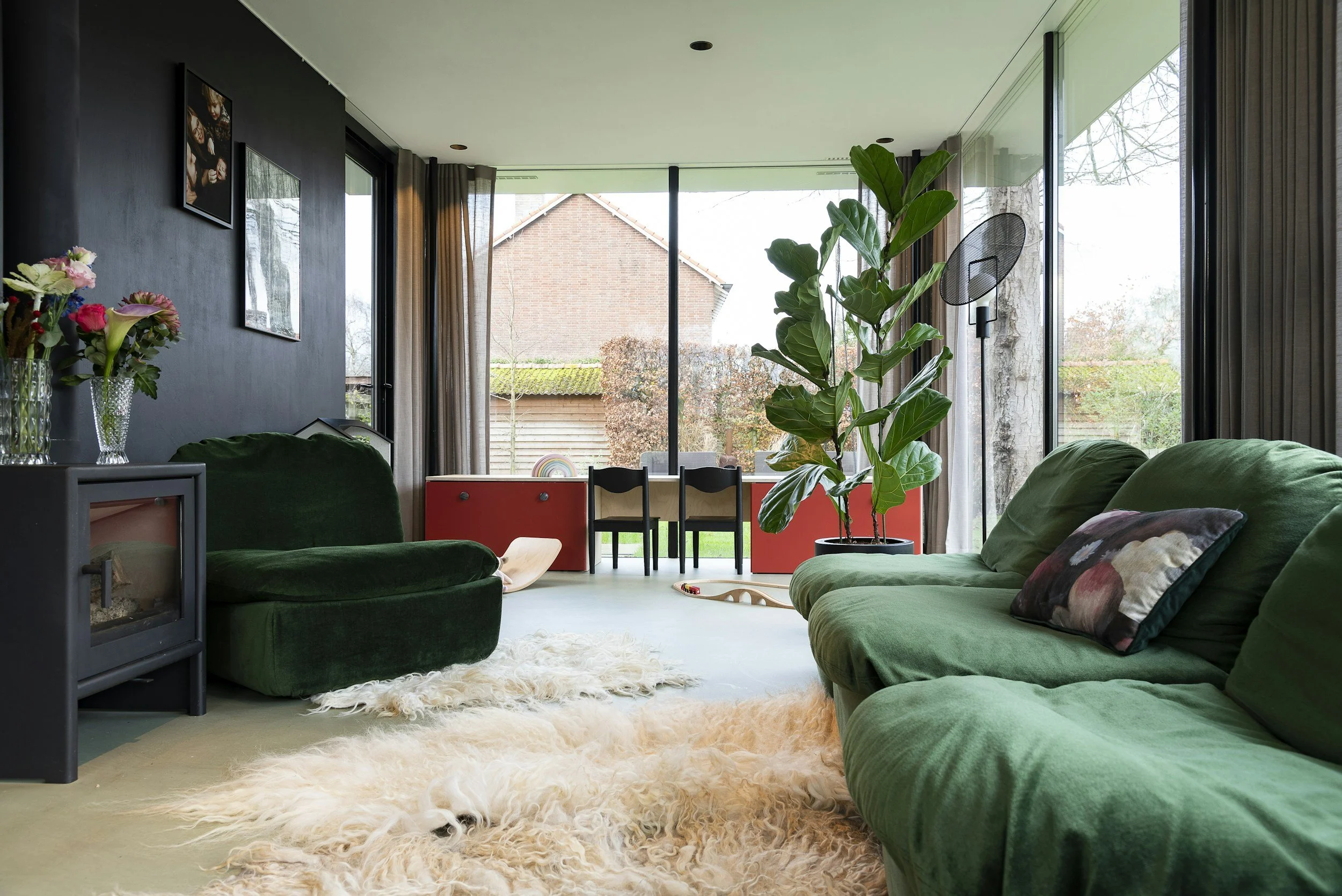
The second entry point is living elements. Plants are the most significant of these — not because they are the easiest to maintain, but because they are the most alive, and the nervous system registers living things differently than it registers objects. Research is specific on this point: representations of nature — photographs of forests, botanical prints, artificial plants — do not produce the same measurable benefits as actual living elements. The presence of something that grows, breathes, and changes produces a response in the body that is distinct and real. For women who are uncertain about their ability to keep plants alive, the most reliable and visually beautiful options include the fiddle leaf fig in bright indirect light, the pothos in almost any light condition, the snake plant in low to medium light, and the ZZ plant, which is nearly indestructible. The most impactful approach is always one large, substantial plant placed with intention rather than a scattering of small ones. A single well-placed plant anchors a corner, adds scale, and introduces the kind of organic presence that transforms the feeling of a room.
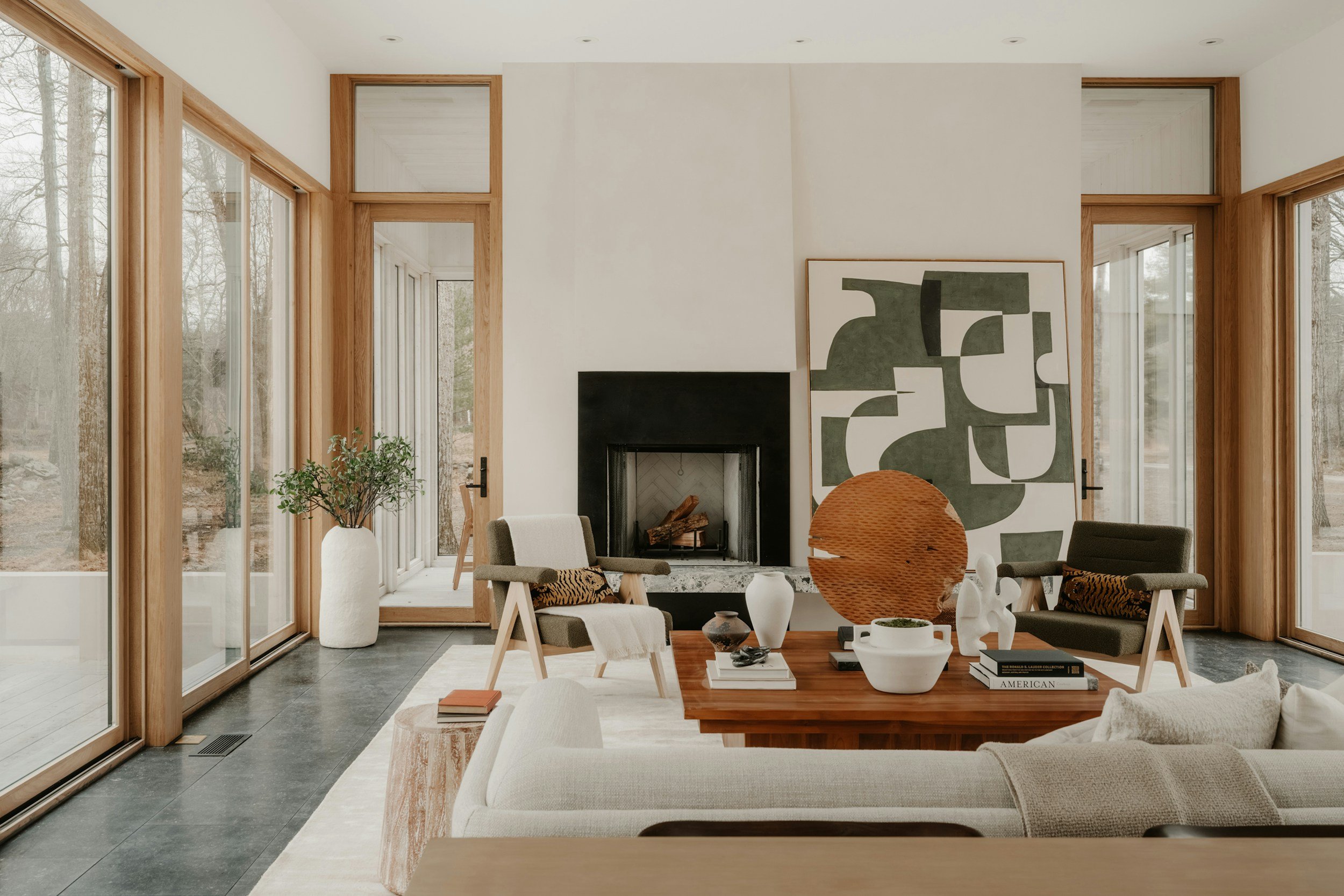
The third entry point is natural materials, and this is where personal style and budget intersect most creatively. Natural materials do not require renovation to introduce. A jute or sisal area rug brings organic texture and acoustic softness to a room that has only hard flooring. A rattan or woven pendant light introduces natural form at ceiling height. A live-edge wood console or coffee table brings the history and character of the forest into a room that would otherwise read as entirely manufactured. Hand-thrown ceramic vessels, stone bowls, linen throws, woven baskets, and clay pots are among the most affordable categories of home accessories — and they are also among the most impactful biophilic additions, because they carry the vocabulary of the natural world in material, texture, and form.
Proceed in this order — light, then living elements, then natural materials — and the biophilic transformation of your home will unfold in a layered, compounding sequence. Each element amplifies the ones before it, and the cumulative effect is a home that does not simply look organic and beautiful. It feels alive.
Returning to the Garden
"And the Lord God planted all kinds of trees in the garden — beautiful trees that produced delicious fruit." — Genesis 2:9, TPT
The Garden of Eden was not a metaphor for comfort. It was a real environment, designed by God for human habitation, and it was characterized by the fullest possible expression of the living world: every tree, every plant, every source of water, every movement of growing things. It was the original biophilic environment — and human beings were placed inside it as the first act of provision in the created order.
When we bring natural elements into our homes with intention — when we choose a living plant over a plastic one, a wood surface over a laminate one, a linen curtain over a synthetic one — we are, in a small but real way, returning our spaces to the conditions of their original design. We are honoring the material world God made by allowing it to speak inside our walls. We are practicing stewardship not just over our homes but over our own wellbeing — the rest, creativity, and peace that God built into the fabric of the world He designed us to inhabit.
Biophilic design is not a trend or a lifestyle category. It is a return. And every choice that brings the natural world back into your home is a choice to live closer to the conditions in which you were designed to flourish.
Conclusion
The home that restores you — the one that brings your shoulders down the moment you cross the threshold and holds you in a kind of quiet that feels like permission to rest — is not built from the right furniture or the right paint color. It is built from the presence of the natural world, brought inside with purpose and care.
You do not need a renovation to begin. You need a window cleared of what is blocking its light. You need one large plant placed in the corner of a room that has nothing living in it. You need a jute rug, a linen throw, or a ceramic bowl filled with something that came from the earth. You need to begin — and each small step will reveal the next one.
When you are ready for a design partner who can see the full biophilic potential of your specific spaces and help you realize it with beauty and intention, the Beautiful Room Makeover Experience™ is where that journey begins. It all starts with a Discovery Call. Your home was designed to be alive. Let's build it that way.
FAQ
What is biophilic design in interior design?
Biophilic design is the intentional practice of connecting indoor spaces to the natural world through natural light, living plants, organic materials such as wood and stone, natural textures, and views of the outdoor environment. It is grounded in the scientific understanding that human beings are biologically wired to seek connection with nature, and that environments reflecting the natural world produce measurable improvements in stress, sleep, focus, and overall well-being.
Does biophilic design require a large budget?
Not at all. The most impactful biophilic changes are often among the most affordable: optimizing natural light by repositioning drapery, adding one large living plant in a key location, introducing a jute rug, a linen throw, or a hand-thrown ceramic vessel. Biophilic design is as much about material choice and the presence of living elements as it is about construction or renovation.
What plants are best for biophilic design in a home?
For maximum visual impact with minimal maintenance, fiddle leaf figs in bright indirect light, pothos in low to moderate light, snake plants, and ZZ plants are all excellent choices. A single large plant placed with intention creates more biophilic presence — and more design impact — than multiple small plants scattered without a clear compositional purpose.
How does biophilic design connect to faith?
Biophilic design reflects the original conditions of human habitation as described in Genesis — a living, layered, growing garden that was designed by God to nourish and restore the human beings living inside it. When we bring natural elements into our homes intentionally, we are honoring the material world God created and practicing stewardship over our own well-being — the peace, rest, and vitality that He designed the natural world to provide.
Resource
Take the Interior Design Personality Quiz to understand your style, your priorities, and how to make decisions with confidence at shereedouglasbrock.com (scroll down to take the quiz)
Book a Beautiful Home Makeover Experience and transform your space in just a few hours—often using what you already own.