

Why Expensive Homes Feel Better at Night — Lighting Design Secrets

There is a feeling that happens in certain homes after the sun goes down. You have felt it — in a hotel lobby that made you exhale the moment you walked in, in a friend's dining room that felt somehow more beautiful than yours, despite being half the size, in a model home that stopped you in the doorway and made you say I want to live here. The room glows rather than shines. It pulls you in rather than exposing you. Everything feels intentional and warm and quietly, unmistakably right.
And almost none of it has to do with the furniture.
What you are responding to in those spaces is lighting. Not the quantity of it, not the price of the fixtures, not even the style of the lamps. It is the intelligence behind the light — where it lives, what temperature it carries, what it has been asked to illuminate, and what it has been asked to leave in beautiful shadow. This is the hidden design language of expensive homes. And once you understand it, you will never look at a room the same way again.
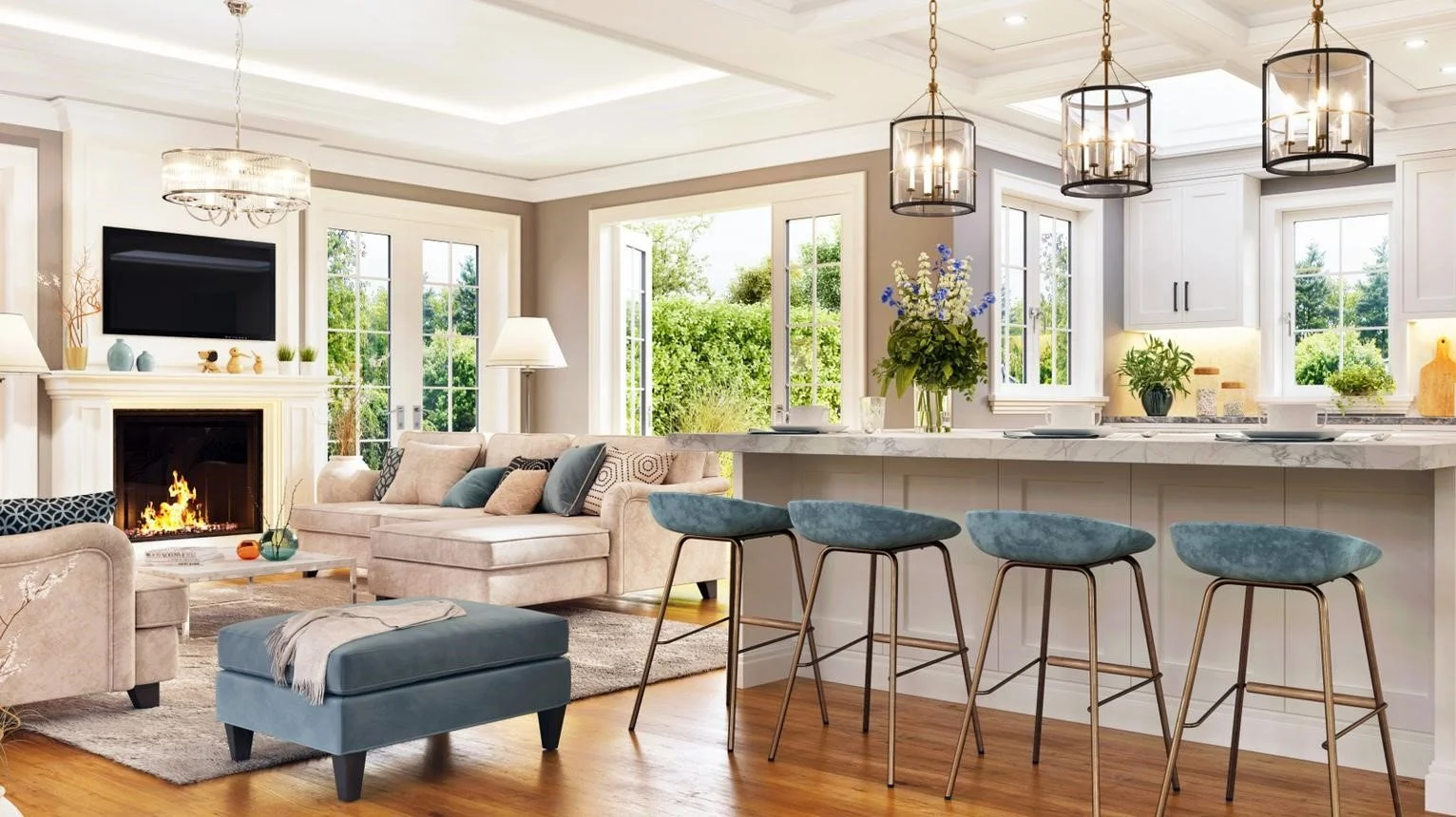
The Question Expensive Homes Are Actually Asking
Most homeowners, when their room feels off, ask a very reasonable question: Is there enough light? They look at the fixtures, assess the brightness, and conclude that the solution is more. More bulbs. More wattage. More fixtures. More light sources are turned on simultaneously until the room is fully, thoroughly, and undeniably illuminated.
And then they stand in that perfectly bright room and feel strangely worse.
This is one of the most common and least talked-about experiences in home design. The room is bright. The room is functional. The room allows you to see everything clearly. And yet — something is wrong. The space feels flat. Slightly institutional. Like a room that is trying very hard and somehow not quite succeeding.
The reason is this: brightness and beauty operate on entirely different frequencies.
Expensive homes do not ask whether the room has enough light. They are asking how the room is supposed to feel. Calm or energized. Intimate or expansive. Warm and welcoming or crisp and alert. They are engineering an emotional experience first, and then using light as the primary tool to create it. Every decision — bulb temperature, fixture placement, the number and type of light sources — flows from that emotional intention.
That is a fundamentally different approach. And it produces fundamentally different spaces.
Why Beauty Requires Shadow
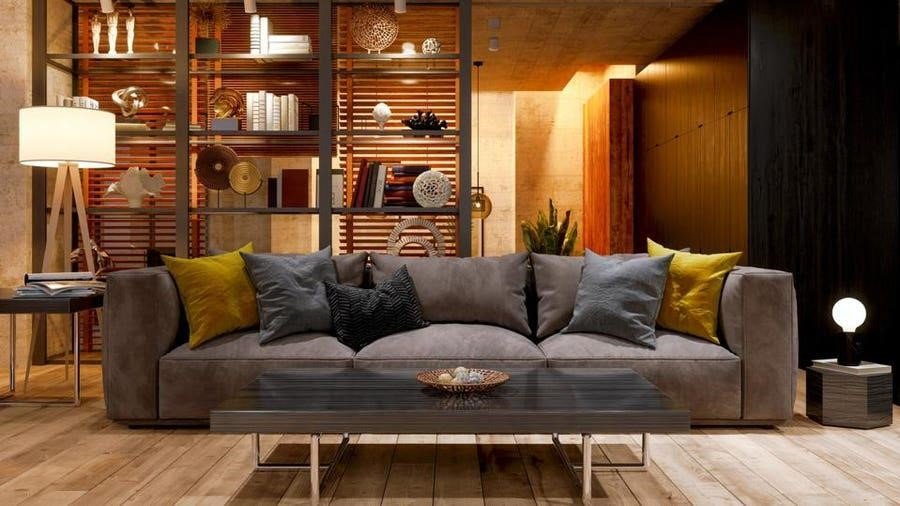
Here is the counterintuitive truth at the heart of this entire conversation: a room that is equally lit in every corner is a room without dimension.
Shadow is not the enemy of a beautiful space. Shadow is what creates depth, texture, and the visual interest that makes a room feel alive rather than flat. When light falls across a textured wall and fades into darkness at the edge, your eye reads that transition as dimension. When a lamp creates a warm circle of light that makes everything just outside it feel quietly important, your eye reads that contrast as intention. When a piece of art is illuminated while the surrounding wall recedes into softness, your eye understands immediately that this piece matters.
Strip away all the shadow — flood the room with even, overhead brightness until every corner is equally visible — and you strip away all of that. The room becomes a lit box. Every surface is equally important, which means no surface is important. The eye has nowhere to rest, nothing to be drawn toward, no story to follow.
Expensive homes are seldom evenly bright. They are strategically lit, with as much thought given to where the light does not reach as to where it does. That intentional relationship between light and shadow is what creates the depth and dimension you feel in beautifully designed spaces.
The Problem with One Light Source
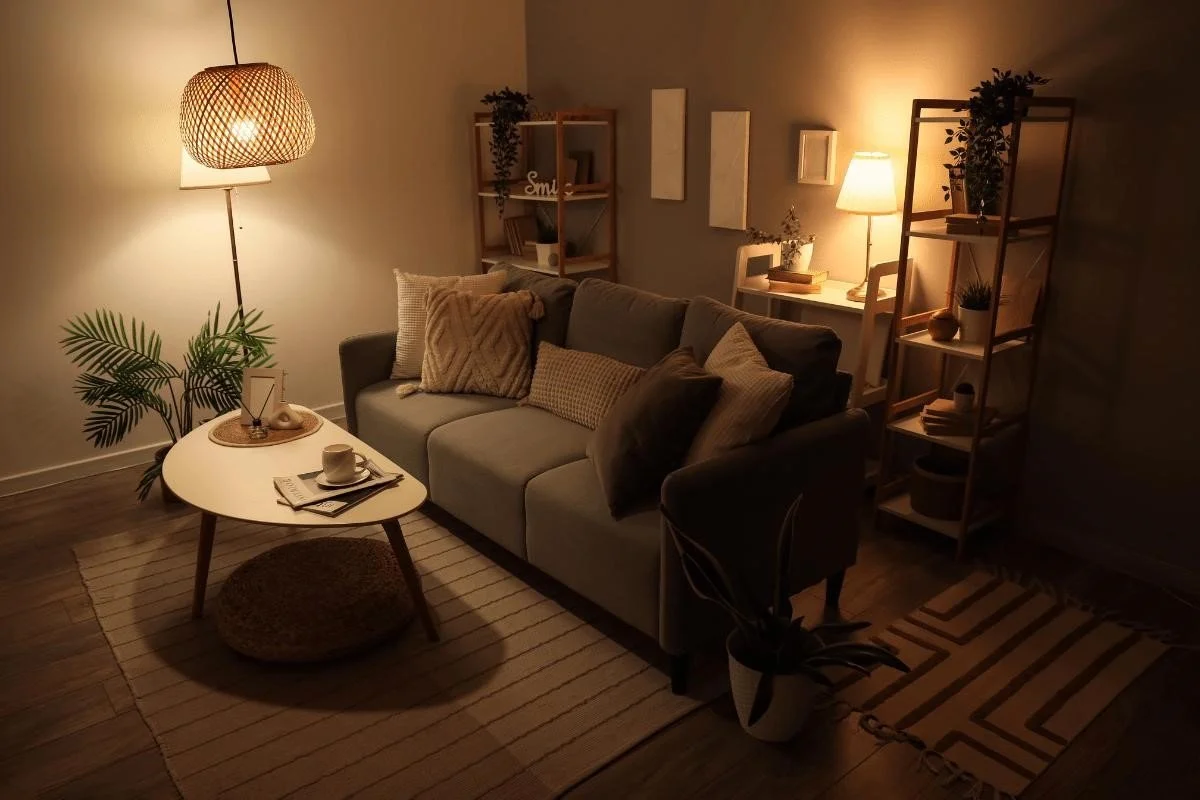
Your eye has been conditioned since birth to expect light from multiple directions at multiple levels. Natural environments never have a single light source. Sunlight comes through windows at an angle. It reflects off walls and floors. It interacts with the objects in a room to create a complex, layered quality of light that feels inherently right to the human nervous system.
When all of the light in a room comes from a single overhead source — even a beautiful, expensive, statement-making overhead source — your eye knows something is missing. It cannot name it. But it feels like a low-grade discomfort, a sense that the room is somehow incomplete.
This is why layered lighting is not a design luxury. It is a design necessity. Ambient light sets the overall tone and brightness of the room. Task lighting serves specific functional needs. Accent lighting highlights architectural features, art, and the moments of beauty you want to draw attention to. And the interplay between those three layers — the way they work together to create contrast, depth, and dimension — is what transforms a room from functional to felt.
The ceiling fixture sets the stage. The lamps create intimacy. The accent lighting creates drama. And the shadows that live between all three? Those are where the magic lives.
Light Temperature and the Emotional Body
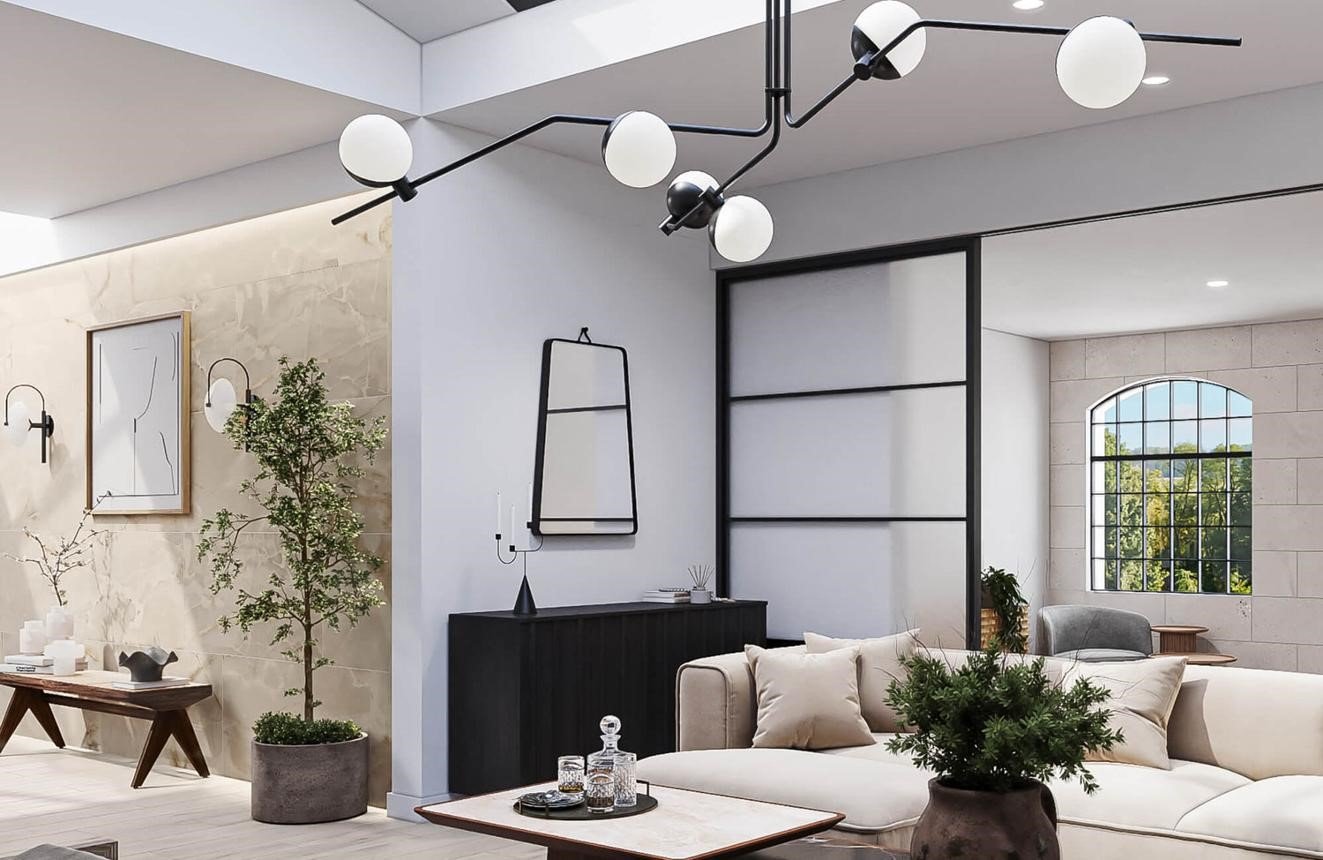
Of all the lighting decisions a homeowner can make, the one with the most immediate and underestimated impact is light temperature. Measured in Kelvins and experienced in the body, light temperature determines whether your room feels like a sanctuary or a sterile environment — and most people never think about it at all.
Cool light, the kind that reads slightly blue or white, creates alertness. It is the light of productivity, of clarity, of being seen and assessed. It is also, not coincidentally, the light of offices, hospitals, and big-box retail stores. It is not inherently bad. But it is not the light of rest, warmth, or emotional ease. It is the light of doing, not being.
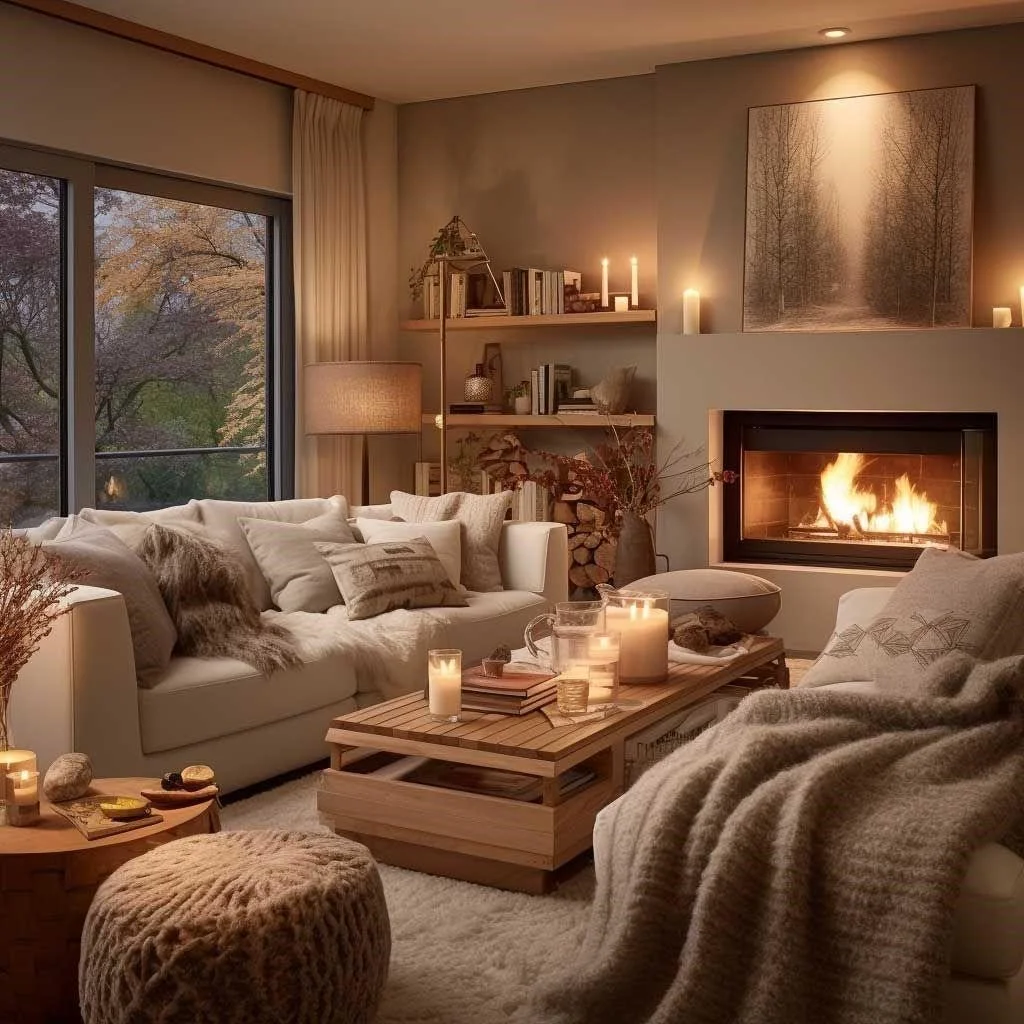
Warm light — soft amber, gentle gold, the color of late afternoon sun filtering through linen curtains — does something physiologically different. It lowers the nervous system. It signals safety. It says, in a language your body understands before your mind does: you can exhale here. You are home.
Expensive homes are almost always warm. Not by accident and not merely by aesthetic preference, but because the designers and homeowners who created them understood that the emotional experience of a space begins before you ever consciously notice the furniture. It begins the moment the light hits your eye, and your nervous system decides whether to relax or stay alert.
Changing the temperature of your light is one of the simplest, most affordable, most immediately transformative shifts you can make in your home. And yet it is the last thing most people think about.
Placement: The Design Decision Nobody Talks About
You can have ten light sources in a room and still feel like something is wrong. And you can have four — placed with precision, purpose, and a clear understanding of how light interacts with your specific space — and feel like the room was designed by someone who truly understood what they were doing.
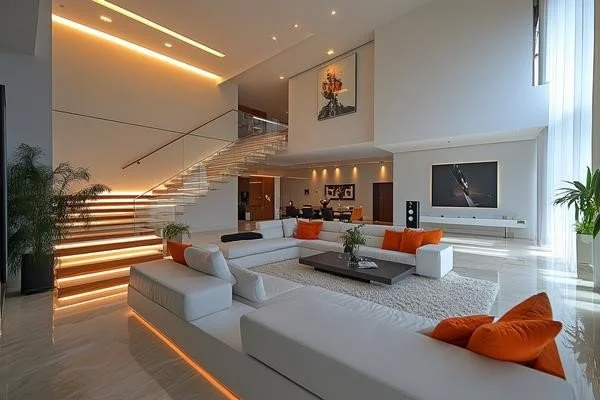
Placement is the most powerful and least discussed variable in lighting design. It determines how light interacts with your architecture, your furniture, your art, your textures, and the natural movement of people through the space. Balanced placement creates harmony — a sense that the room is complete, considered, and whole. Unbalanced placement creates what I call visual tension: that subtle, hard-to-name discomfort that makes you want to keep adjusting, keep adding, keep trying to fix something you cannot quite identify.
Most people respond to this tension by adding more light sources. But the tension was never about quantity. It was about where. And more sources placed without intention simply create more tension, not less.
This is the central insight that changes everything: the solution to bad lighting is seldom more lighting. It is better lighting. More intentional. More considered. More aware of what the specific space needs — not what a general rule suggests, but what this room, with this architecture and this furniture and this natural light, is asking for.
What Intentional Lighting Actually Does
When lighting is designed with intention, something shifts in a room that is difficult to describe but impossible to miss. The space feels calmer. More complete. More like itself. You stop noticing the individual fixtures and start simply feeling the room — its warmth, its depth, its quiet invitation to stay.
This is the goal. Not to be noticed, but to be felt. Not to impress, but to create an atmosphere so right that the people inside it simply feel better — calmer, warmer, more at home — without necessarily knowing why.
That is the hidden work of lighting in expensive homes. It is never the star of the room. It is the invisible force that makes every other element of the room more beautiful than it would be without it. The art looks more significant. The textures look richer. The furniture feels more considered. The whole room seems to breathe.
And you — the woman who walks into that space at the end of a long day, in need of rest and beauty and the feeling of being truly, deeply home — you feel it before you can name it.
That feeling is available to you. In your home. With your space. Right now.
It begins with understanding that your light has not been given a vision yet. And once it has, everything changes.
FAQ
Is expensive lighting equipment necessary to make my home feel luxurious at night?
Not at all — and this is one of the most liberating truths in lighting design. The warmth and atmosphere you feel in expensive homes is created almost entirely by how light is used, not by how much the fixtures cost. A $40 lamp placed intentionally in the right corner of a room will do more for your space than a $400 fixture hung in the wrong location with the wrong bulb temperature. Before you invest in new fixtures, invest in understanding your room's light needs first. The strategy always precedes the shopping.
What is the single most impactful lighting change I can make right now?
Change your bulb temperature. If your home currently has cool, bright white bulbs — the kind that feel slightly blue or harsh — swap them for warm bulbs in the 2700K to 3000K range. This one shift, which costs almost nothing, immediately changes the emotional experience of every room. Your space will feel softer, warmer, and more inviting the moment you turn the lights on. It is the fastest and most affordable lighting upgrade available to any homeowner.
How many light sources does a room actually need to feel layered and complete?
There is no single number that works for every room, but a reliable starting point is three intentional sources working at different levels — ambient, task, and accent. A ceiling fixture or overhead light for general illumination, one or two lamps at eye level for warmth and intimacy, and at least one directed light source that highlights something beautiful in the room. Even in a smaller space, this three-layer approach creates the depth and dimension that makes a room feel designed rather than simply furnished.
Why does my room look beautiful in the daytime but feel flat and uninviting at night?
Daytime light is doing work that your artificial lighting is not. Natural light enters a room from an angle, interacts with surfaces and textures, creates shadows and highlights, and changes throughout the day in ways that keep a space feeling dynamic and alive. When the sun goes down, and you switch on overhead lights, you are replacing all of that nuance with a single, flat, even source — and the room loses everything that made it feel beautiful. The solution is to design your artificial lighting to do what natural light does naturally: create layers, warmth, contrast, and intentional shadow.
Can lighting really make a modest home feel more luxurious, or does this only work in high-end spaces?
Lighting is genuinely one of the great equalizers in interior design — and this is something the design industry rarely says loudly enough. The emotional experience of warmth, depth, and atmosphere that you feel in expensive homes is created almost entirely through lighting decisions, not through the cost of the furnishings. A modest home with beautifully layered, warm, intentional lighting will feel more elevated and inviting than an expensive home with harsh, flat, or poorly placed light every single time. Your home does not need to be larger, more expensive, or more finished to feel luxurious at night. It needs lighting with the intention to make the room shine, literally!
Resource
Take the Interior Design Personality Quiz to discover your unique design personality and begin designing from a place of genuine self-knowledge at shereedouglasbrock.com (scroll down to take the quiz)
Ready for your home to feel warm, elevated, and beautifully complete? Explore Beautiful Home Makeover Experience