


Thanksgiving is a day for gratitude, full tables, and the people we love most. It's also a day when many women give and give until the last dish is dried and put away. If that sounds like you, I want to remind you of something beautiful today.
God cares about your rest, your health, and your peace, and you can design your home to care for you, too.
That is the heart of wellness design, and it's one of the most meaningful directions in interior design right now. Scripture spoke to it long before it became a trend.
“Beloved, I wish above all things that thou mayest prosper and be in health, even as thy soul prospereth”
When the apostle John wrote to his friend Gaius, he prayed, "Beloved, I wish above all things that thou mayest prosper and be in health, even as thy soul prospereth" (3 John 1:2, KJV).
I find such comfort in that verse. John didn't pray only for his friend's spiritual life. He prayed for his health and his flourishing, all of it together, because that is how God sees us.
We are not divided into a body over here and a soul over there. We are whole people, lovingly made, and God cares for every part of us.
Wellness design is one way of living out that truth inside the walls of your home.
A bedroom designed for rest honors the body God gave you.
Rooms filled with daylight, clean air, and natural materials care for the health He wants for you.
Order, softness, and a quiet place for prayer make room for the peace of God that passes all understanding.
When your home supports your wellbeing, you are better able to love and serve the people He has placed in your life, from a place of fullness instead of exhaustion.
On a day devoted to giving thanks, there is something especially fitting about this. Gratitude includes receiving the good gifts God offers, and rest is one of those gifts.
Designing a home that helps you receive it is not selfish. It is good stewardship of the life He has entrusted to you.
God's heart is for the whole of you, and your home can reflect that care in every room.
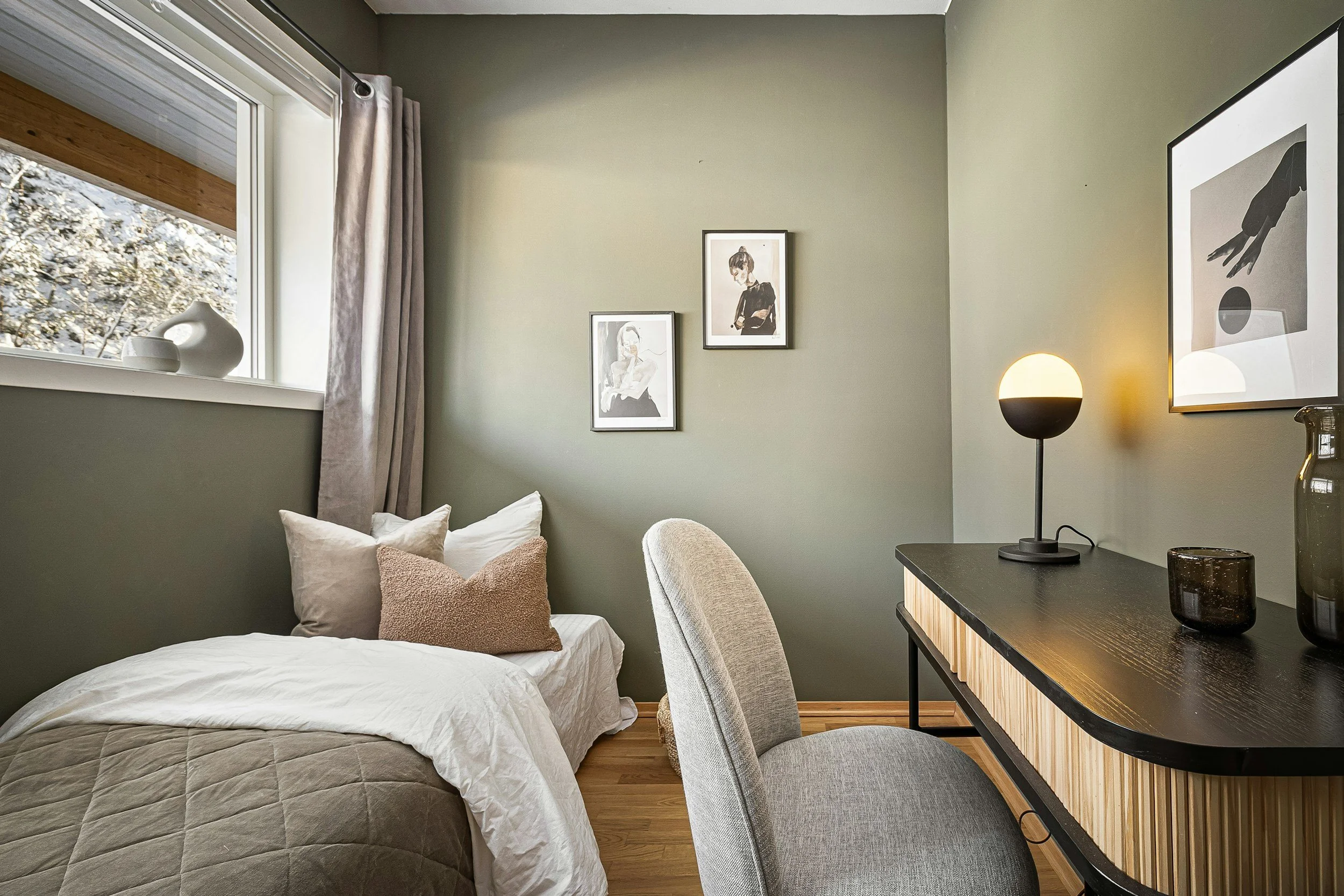
Sheree bedroom in muted green
When a Beautiful Home Still Leaves You Feeling Tired
Many of the women I work with live in homes that look lovely but are exhausting to live in.
Guests walk in and compliment the living room, the kitchen, and the entry. Yet the woman who lives there feels worn out by the end of every day and can't quite explain why.
Often, the answer is hidden in plain sight.
The overhead lights blaze until bedtime, so the body never receives the signal that the day is done.
The bedroom has slowly become a storage room, holding the extra chair, the folded laundry, the exercise equipment, and the stack of papers that still need attention.
Kitchen counters collect the mail from the last several weeks. Hard floors and bare walls bounce every sound around the house, so even a quiet evening feels loud.
None of these things seem like a big deal on their own. Together, they create a home that asks something of you every moment instead of giving something back. Your eyes never find a place to rest, your mind keeps working, and your body stays on alert. And because the house looks fine, it's easy to assume the problem is you, when the problem is really the design.
The good news is that a home can be designed differently.
Wellness design starts with a simple question: How do you want to feel when you walk through your own front door?
When the answer is rested, healthy, and at peace, every design decision begins to point in that direction.
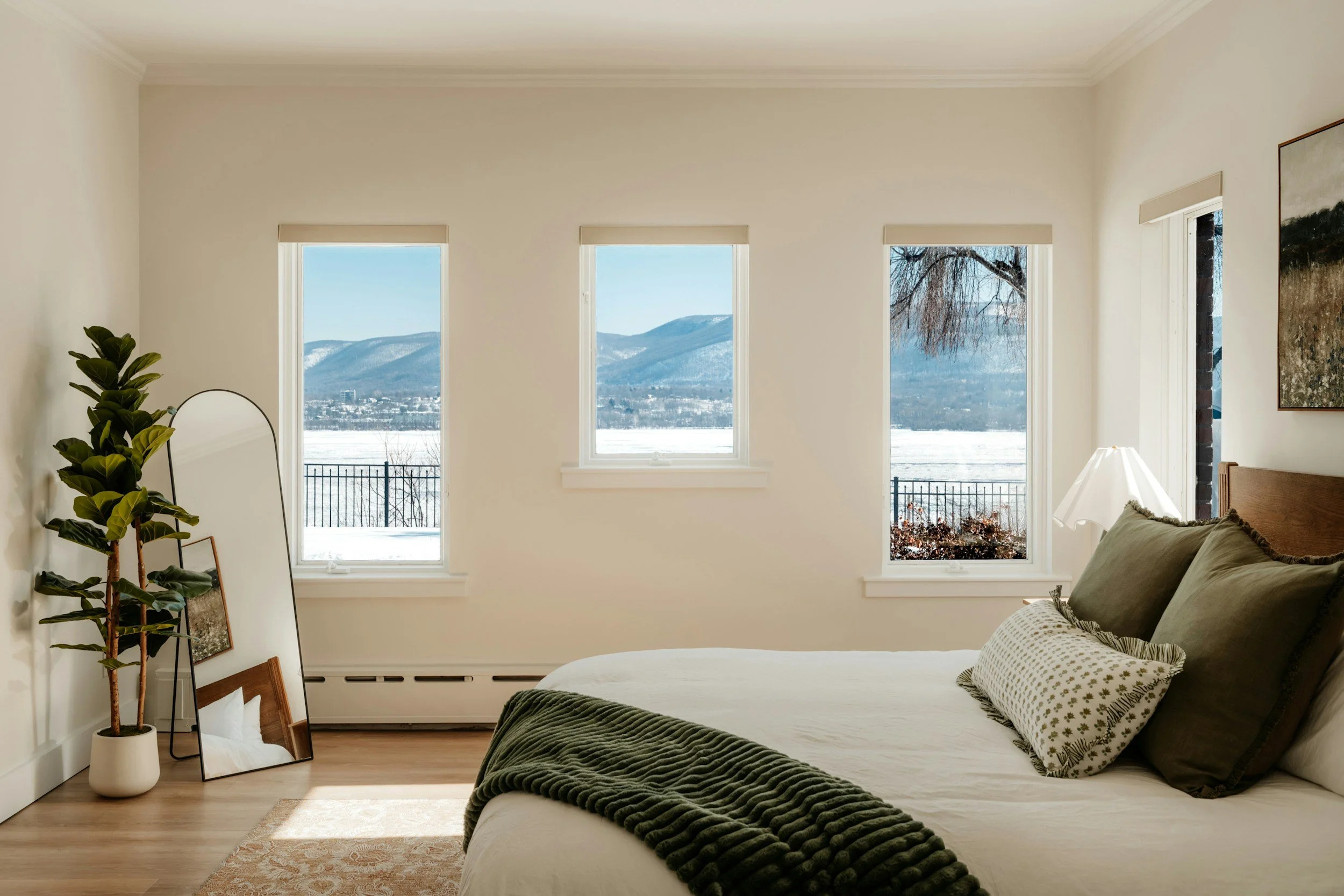
Sheree bedroom with mountain view and warm cream palette
Three Ways Your Home Can Support Your Wellbeing
Wellness design rests on three foundations, and each one reflects a different part of God's care for you. The first is rest, the second is health, and the third is peace.
Let's look at how you can bring each of these into your home through thoughtful design choices.
1. Rest: Transform Your Bedroom Into a True Sanctuary
Of all the rooms in a home, the bedroom is the one most often forgotten. We pour our design energy into the spaces guests see, and the room where we begin and end every day gets whatever is left over.
Wellness design gives this room back its one true job, which is rest.
A restful bedroom begins with a quiet color palette. Think of colors that soften your shoulders rather than raise your heart rate. Soft neutrals, gentle blues, warm creams, and muted greens all invite the body to slow down.
Bedding plays an important role as well, because touch is one of the fastest ways the body learns it's safe to let go. Fabrics that feel wonderful against your skin turn bedtime into something you look forward to.
Let Your Lighting Follow the Rhythm of the Day
Light may be the most overlooked part of a restful bedroom. God created our bodies to follow the rhythm of the day, with bright, cool light in the morning and warm, soft light as evening comes.
When the overhead fixture stays on until bedtime, the body misses its cue to rest. Window treatments that let you control the light allow morning sun to wake you gently and evening darkness to settle in fully.
Here is one quick win you can try tonight: change the bulbs in your bedroom lamps to a warm white, around 2700 Kelvin, and turn off the overhead light in the evening. It's a modest change, and many women feel the difference the very first night.
Keep Work and Worry Out of Your Bedroom
A restful bedroom also keeps work and worry out of view. When the last thing you see before sleep is the bill pile or the laundry basket, your mind keeps running. When the last thing you see is something calm and beautiful, your mind is free to rest.
Your bedroom should be a place where you can let go of the day's responsibilities and allow yourself to be renewed. It deserves to be designed with that much love.
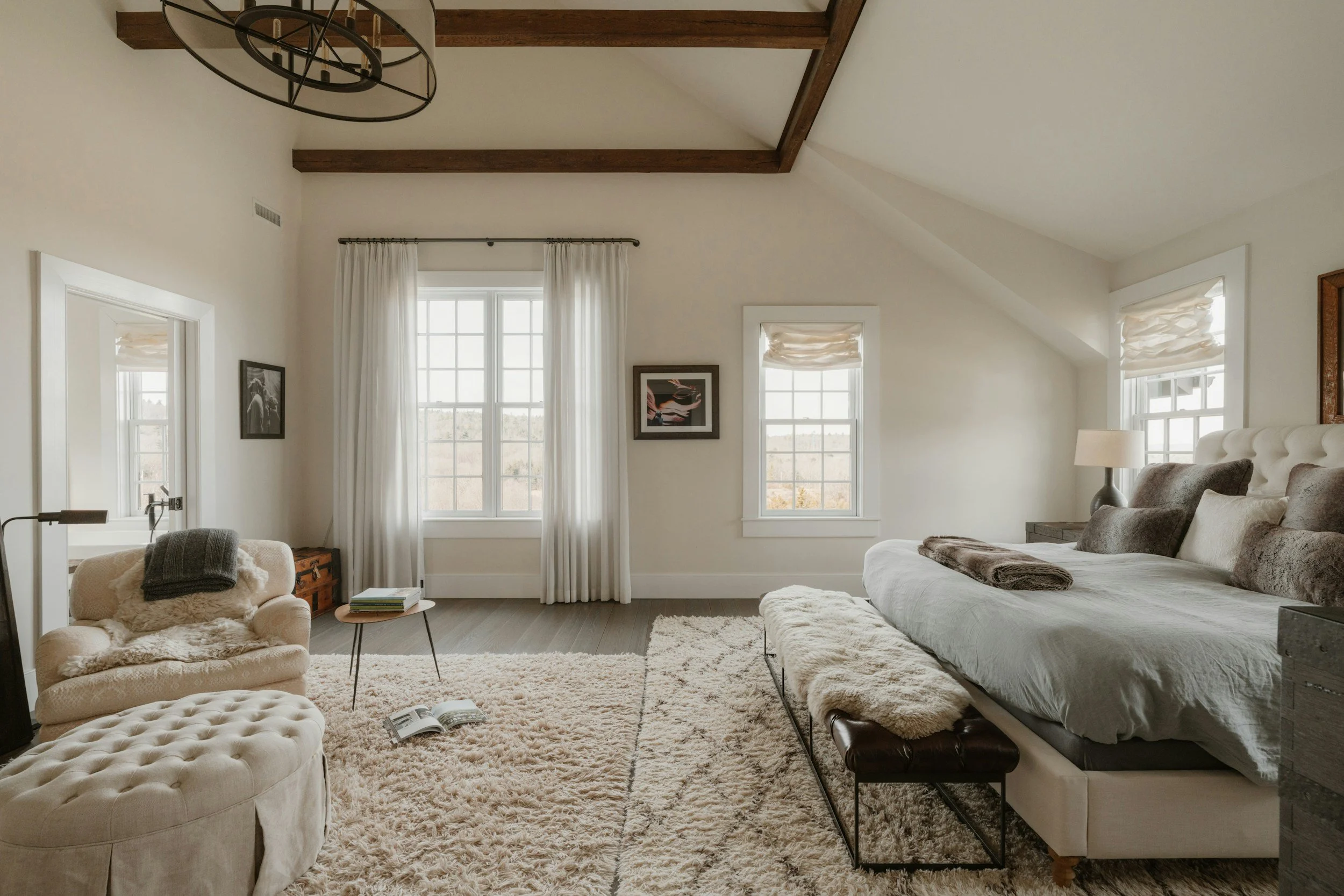
Sheree bedroom with area rug, upholstered seating, drapery and a few soft pillows
2. Health: Bring in Natural Light, Fresh Air, and Natural Materials
The second foundation of wellness design is health.
Most of us spend the majority of our hours indoors, so the light we live in, the air we breathe, and the materials we touch every day shape how we feel more than we realize.
Make the Most of Natural Daylight
Natural daylight is one of the greatest gifts a home can offer. Rooms filled with daylight lift the mood, help us stay alert during the day, and support better sleep at night.
This is one reason designers place reading chairs, desks, and breakfast tables near windows. When heavy drapery stays closed all day or a large piece of furniture blocks the glass, a home quietly loses one of its most healthful features.
Take a look around your home. Are you making the most of the natural light available to you? Sometimes, simply opening the drapes or rearranging furniture can make a meaningful difference.
Choose Materials That Support a Healthier Home
Fresh, clean air is the next piece. Many paints, finishes, and furnishings release fumes long after they are installed. Choosing low-VOC or zero-VOC paints, natural fiber rugs, and solid wood furniture is a thoughtful way to care for your family's health.
I'm especially careful with these selections in homes where little ones or grandchildren spend time playing on the floor.
These choices may seem like small details, but they are part of being intentional about the environment your family lives in every day.
Bring the Beauty of Nature Indoors
Then there is nature itself.
In Episode 104, we explored biophilic design, the idea that people feel better when their homes connect them to creation. Living plants, wood, stone, linen and wool, views of the garden and even the gentle sound of water all bring calm and vitality into a room.
God placed the first people in a garden, and something in us still breathes easier when a bit of that garden comes inside.
A healthy home does not require an expensive overhaul. It grows from thoughtful choices made over time, with wise stewardship of a modest budget.
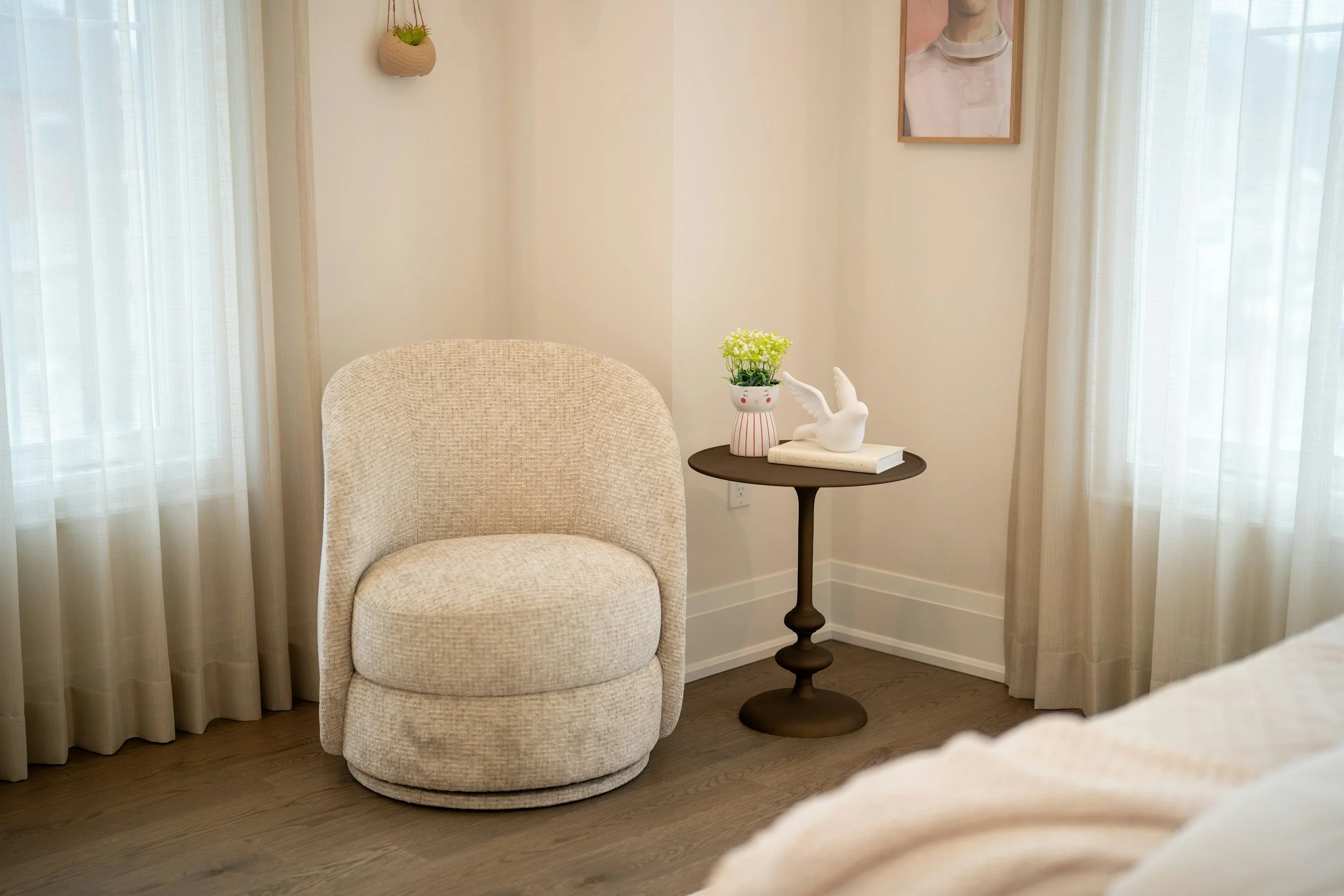
Sheree bedroom with a spot for prayer, Scripture and stillness, round chair for bedroom
3. Peace: Create a Home Filled With Order, Softness, and God's Presence
The third foundation is peace, and peace in a home comes from three things working together: order, softness, and a place set apart for God.
Start With Order: Give Your Eyes a Place to Rest
Visual clutter is one of the most common sources of stress in a home. When every surface is covered, your eyes never find a resting place.
A peaceful home has a place for everything, with storage designed so that the things you use often are easy to reach and the things you don't need to see are tucked away.
When I take an inventory of a client's room, one of the first decisions we make together is what truly belongs in that space and what would serve the family better somewhere else.
You don't have to organize your entire home in one day. Start with one room or one surface. Think about what belongs there and what might be better placed somewhere else. Creating a little breathing room can make a difference in how the whole space feels.
Add Softness to Make Your Home Feel Like an Embrace
The second is softness.
Hard surfaces bounce sound, and a noisy home is rarely a peaceful one. Area rugs, upholstered seating, drapery, and a few soft pillows quiet a room in a way you can feel the moment you sit down.
Softness also shows up in rounded shapes, gentle curves, and inviting textures that make a room feel like an embrace.
These details do more than make a room beautiful. They help create an environment where you can relax, settle in, and enjoy the people around you.
Create a Special Place to Spend Time With God
The third, and my very favorite, is a place set apart for God.
This is where wellness becomes holiness. A peaceful home has a spot for prayer, Scripture, and stillness. It might be a reading chair by a window with a small table for your Bible and a candle, a corner of your bedroom, a bench on the patio, or a nook at the end of a hallway.
It doesn't need to be large. It needs to be intentional.
When you have a place that invites you to meet with the Lord each morning, the peace you find there begins to flow into every other room.
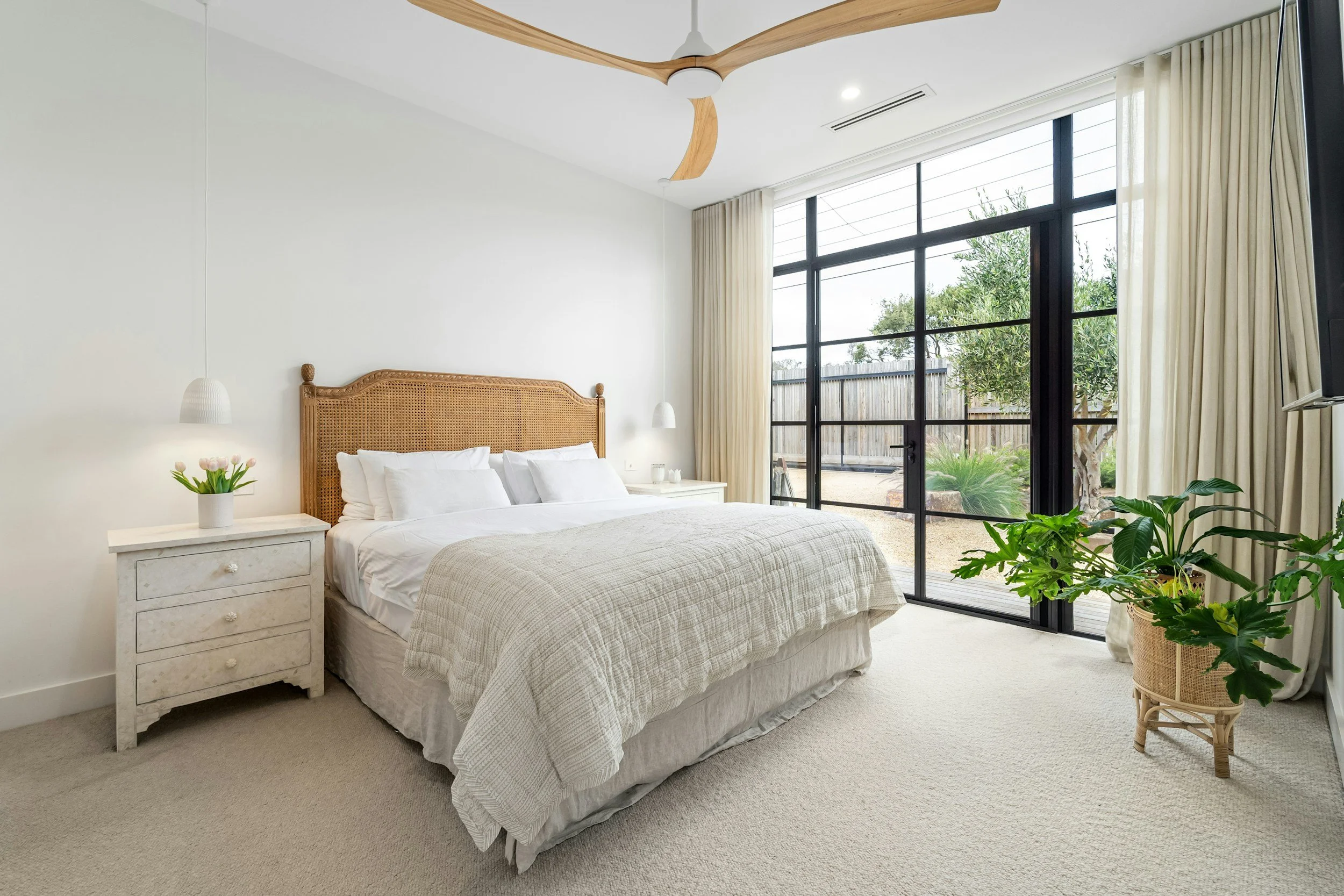
Sheree bedroom with living plants and a garden view, natural light in the bedroom
Create a Home That Gives Back to You
Your home was never meant to be a place that only takes from you. It can be a place that restores you, body, mind, and spirit.
Wellness design brings that to life through a bedroom that truly rests you, through light, air and natural materials that support your health, and through order, softness and a place set apart for God that fill your home with peace.
You don't need a large budget or a full renovation to begin. You only need to start with one thoughtful choice in one room, and let that choice grow into a home that cares for you the way God cares for you.
Here's your simple next step: Tonight, after the last dish is put away, go into your bedroom and change those lamp bulbs to a warm white. Turn off the overhead light, sit down for a moment and notice how the room feels.
That small change can be the beginning of something beautiful.
This Thanksgiving, as you give thanks for the people around your table, I pray you'll also receive the rest He so lovingly offers.
May your home be beautiful by design and blessed by God.
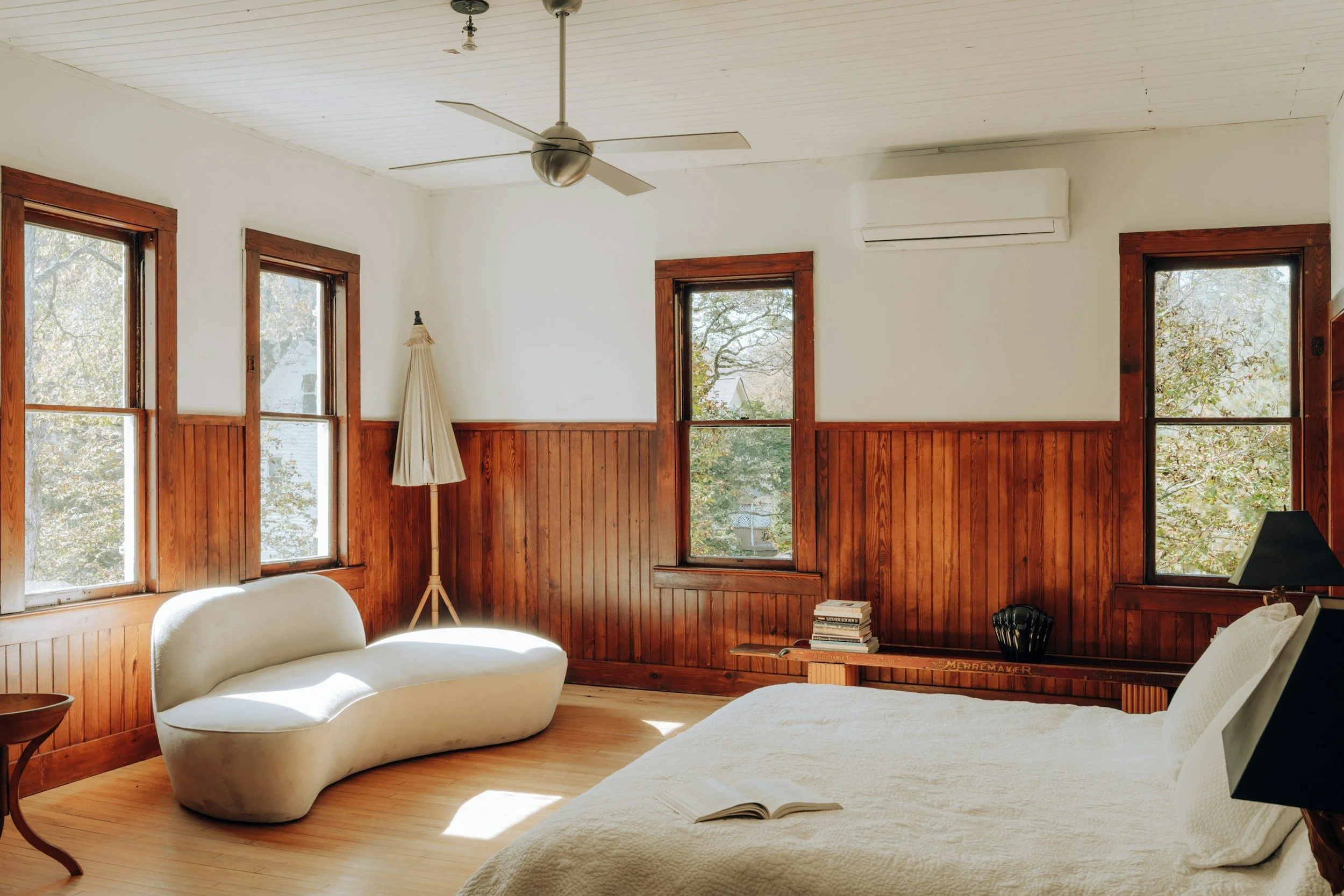
Sheree bedroom with wood paneled walls, a bench and a rounded sofa
Frequently Asked Questions
What is wellness design in interior design?
Wellness design is an approach that shapes a home around the wellbeing of the people who live in it. It focuses on rest, health, and peace through choices such as restful bedrooms, natural daylight, clean air, natural materials, calm color palettes, thoughtful storage, and quiet places for reflection.
Do I need a large budget to create a wellness-focused home?
Not at all. Wellness design grows from thoughtful choices made over time. Something as modest as switching your bedroom lamps to warm white bulbs, opening up a window that furniture has been blocking or choosing low-VOC paint for your next project can make a meaningful difference, and a wise steward can build on those choices one room at a time.
Which room should I start with?
For most women, the bedroom is the best place to begin, because it is where your body rests and renews each night. When your bedroom supports deep rest, you carry that energy into every other part of your home and your day.
How does faith connect to wellness design?
Scripture shows that God cares for the whole person- body, mind, and spirit- as we see in 3 John 1:2. Designing a home that supports rest, health, and peace, including a place set apart for prayer and Scripture, is a way of honoring that care and stewarding the life He has given you.
Resource
Ready to transform your room into a place of rest, health, and peace, with wise stewardship of your budget every step of the way? The Beautiful Room Makeover Experience is Sheree's signature program that takes one room from scattered to beautiful, with her guiding every decision.
Find Out More about The Beautiful Room Makeover Experience.
Join the waitlist: God in the Home Ebook Collection