

Room ReStyle vs Remodel — What Your Home Needs
Many homeowners have this question: Does my home need a remodel, or does it simply need better design?
When a room feels outdated, uncomfortable, or visually cluttered, it is easy to assume the only solution is construction. Renovation shows, social media, and home improvement trends often reinforce the idea that walls must be moved and expensive updates must be made in order to create a beautiful home.
Yet interior design professionals know something important. Many homes that feel frustrating or unfinished do not actually require structural renovation. Instead, they need thoughtful restyling that improves layout, lighting, proportion, and balance.
Scripture offers a powerful reminder about the importance of wisdom before action.
Before rebuilding a home, wisdom encourages us to understand what the home truly needs.
“Wise people are builders — they build families, businesses, and communities through intelligence and insight. Through wisdom and understanding a house is built, and by knowledge its rooms are filled with every precious and pleasing treasure.”

Many homeowners feel dissatisfied with their living spaces at some point. A room may feel outdated, awkward, or visually cluttered. Furniture might not feel comfortable, and the environment may seem heavy or uninspiring.
When this happens, the natural reaction is often to assume the architecture itself must be wrong. Homeowners begin thinking about removing walls, replacing flooring, installing built-ins, or updating cabinetry.
These types of renovations can be incredibly expensive and disruptive. They often require permits, contractors, and months of construction.
What many homeowners do not realize is that their home's structure may already work quite well.
The real issue may be the room's design.
Furniture that is too large or too small for the space can disrupt balance. Lighting that is dim or poorly placed can make rooms feel dull and lifeless. Rugs that are too small can visually shrink the room rather than grounding the furniture.
When these design elements are not aligned, the room feels unsettled.
Without design clarity, homeowners sometimes spend thousands of dollars renovating spaces that could have been dramatically improved through thoughtful restyling.
Understanding the difference between remodeling and restyling allows homeowners to make wiser decisions that protect both their finances and their peace of mind.
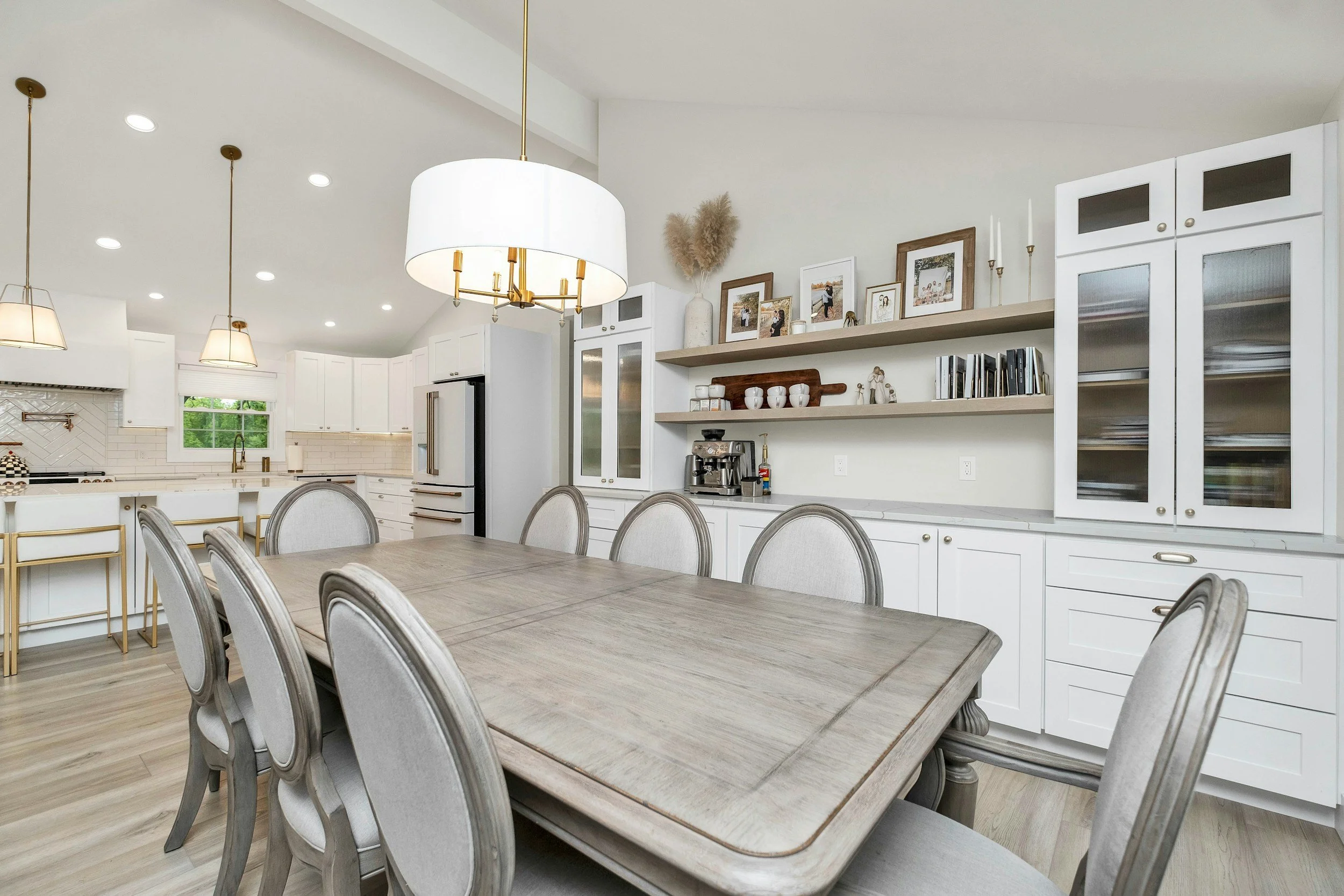
A homeowner once called me because she believed her living room needed a complete remodel.
She explained that the room felt dated and uncomfortable. After looking at inspiration photos online, she became convinced that the only solution was installing custom cabinetry and possibly altering the structure of the space.
When I walked into the room, however, something immediately stood out.
The architecture of the room was actually quite lovely. Large windows allowed natural light to fill the space, and the ceiling height created a sense of openness.
The issue was not structural.
The furniture arrangement blocked the natural pathways through the room, making the space feel cramped. The rug was far too small for the seating area, which caused the furniture to feel disconnected rather than unified.
Lighting was also limited, leaving certain areas of the room dim and uninviting.
Instead of recommending construction, we began refining the design of the room.
We repositioned the furniture to encourage conversation and movement. We replaced the rug with one that properly anchored the seating area. We introduced layered lighting with lamps that added warmth and depth.
Within a short time, the room felt entirely different.
The homeowner looked around and said something that captures the heart of many redesign projects.
“I thought I needed a remodel. I just needed to see the room differently.”
That moment is one of the most rewarding parts of interior design.
Sometimes the most powerful transformation comes not from rebuilding, but from reimagining.

Difference Between a Room Restyle and a Full Remodel
A room restyle focuses on improving the design elements within the existing architecture of a home. Instead of altering walls or construction features, restyling works with furniture placement, lighting, color, and decorative balance to improve the way the space functions and feels.
One of the first elements evaluated during a restyle is furniture layout. Many rooms feel uncomfortable simply because the seating arrangement does not support conversation or natural movement through the space. Adjusting the position of furniture can dramatically improve the experience of a room.
Lighting also plays a crucial role. Rooms that rely solely on overhead lighting often feel flat and dim. Introducing layered lighting through table lamps and floor lamps creates warmth and depth that make a room feel welcoming.
Proportion is another key factor. Rugs that are too small or furniture that is poorly scaled can visually disrupt a space. Correcting these proportions instantly creates a more balanced environment.
Remodeling, on the other hand, becomes necessary when structural elements of the home limit functionality. Examples include walls that block natural light, kitchens that require new plumbing or cabinetry, or outdated systems that must be updated.
Understanding these differences helps homeowners determine whether construction is truly required or whether thoughtful design can achieve the desired transformation.

The principle of wisdom before action appears repeatedly throughout Scripture.
Proverbs 24:3–4 reminds us that building wisely requires understanding before filling a home with treasures.
When applied to interior design, this wisdom encourages homeowners to pause before beginning major renovations. Careful evaluation often reveals that many rooms already contain the foundation for beauty.
Rather than rushing into construction, thoughtful stewardship considers how existing resources can be used more effectively.
This approach aligns beautifully with biblical values of wisdom, stewardship, and gratitude.
Our homes are places where life unfolds. They are where families gather, where guests are welcomed, and where daily routines take shape. Caring for these spaces thoughtfully allows them to better support the people who live within them.
CONCLUSION
When a room feels frustrating or outdated, it is easy to assume that a remodel is the only solution.
Yet many homes already contain the architectural foundation needed to create beautiful spaces. What they often lack is simply thoughtful design clarity.
By improving layout, lighting, proportion, and balance, a room can be transformed without the expense or disruption of construction.
Before beginning a remodel, it is wise to evaluate whether the room truly requires structural change or whether a professional restyle could unlock the beauty that already exists.
Often, the difference between frustration and peace in a home is not construction.
It is clarity.
FAQ
What is the difference between a restyle and a remodel?
A restyle improves layout, lighting, and décor within the existing structure, while a remodel involves structural changes such as moving walls or replacing cabinetry.
Can interior design really transform a room without construction?
Yes. Many rooms dramatically improve through better furniture placement, lighting, and proportion.
When is remodeling necessary?
Remodeling is typically needed when structural issues prevent the room from functioning properly.
Why should homeowners evaluate design before remodeling?
Design clarity can often solve problems that homeowners mistakenly believe require renovation.
Resource
Take the Interior Design Personality Quiz and discover the design style that fits you naturally. 👉 shereedouglasbrock.com (scroll down to take the quiz)
Get professional guidance refining a specific room, explore the Beautiful Home Makeover Experience
Want to transform your home with confidence? Book a 👉 1:1 Interior Design Consult