

Designing Kids' Rooms They'll Absolutely Love
Kids' room design is one of those areas where parents often feel torn between their own aesthetic vision and their desire to give their child something truly special, and the result is frequently a room that is pleasant but not particularly personal.
The truth is, the most beautifully designed children's rooms in the world do not start with a shopping cart or a mood board. They start with a conversation.
“In my Father’s house are many rooms. If it were not so, would I have told you that I go to prepare a place for you? And if I go and prepare a place for you, I will come again and will take you to myself, that where I am, you may be also.”
Jesus Himself is a designer. He didn't just promise us a destination — He promised us a prepared place. A room made with intention, with love, with you in mind. And that is exactly what we get to do as mothers, as homemakers, as women who care deeply about the people under our roofs.
When you design a room for your child, you are reflecting the very heart of God — saying to that little one, I thought about you. I made this for you. You belong here. A child's room is so much more than four walls and a bed. It is a message they will carry into adulthood about their own worth, their own belonging, and the love of a parent who prepared a place just for them.

Why Most Kids' Rooms Miss the Mark
There is a particular kind of disappointment that shows up in children's room design, and it is surprisingly common. A parent — usually a mom with good taste, a real eye for design, and the very best intentions — puts real effort into planning her child's room. She spends hours on Pinterest. She carefully selects a color palette that is cohesive and beautiful. She sources furniture that is stylish and age-appropriate. She pulls it all together with thoughtful accessories and lovely bedding. And then her child walks in, looks around politely, and says… "It's nice, Mom."
Not "I love it." Not "This is so me." Just — nice.
That single word carries a quiet heartbreak, because what it really means is: "This doesn't feel like me." And the reason it doesn't feel like them is simple — no one asked.
This is the most common and most fixable mistake in children's room design. Parents approach it as they would any other room in the house — with their own taste, their own inspiration sources, and their own vision of what beautiful looks like. What they forget is that this room is not for them. It is for a small, fully formed human being who already has opinions, preferences, instincts, and a developing sense of personal identity that is just waiting to be honored.
The consequences of a room that doesn't connect with a child run deeper than a polite shrug. A child who doesn't feel at home in their own room tends to spend less time there, which means less independent play, less creative exploration, and less of the quiet, restorative downtime that growing children desperately need. A room that feels mismatched or generic creates a low-grade sense of disconnection — not dramatic, not obvious, but present nonetheless. And a missed opportunity in childhood design is more than aesthetic. It is relational. It is a moment when a child could have felt deeply seen and simply didn't.
The good news is that this problem has a beautiful, simple solution — and it starts with seven questions.
The Room That Became Ava's World
Six weeks. That is how long the paint samples had been taped to the wall when Lauren finally called me. Not because she couldn't make a decision — Lauren was sharp, decisive, and deeply capable in every other area of her life. She had paused because somewhere in her gut, she knew something was off about the direction she was heading, even though she couldn't name it yet.
Lauren had a nine-year-old daughter named Ava who adored her, trusted her completely, and had been patiently waiting for her room to be redone as a birthday surprise. Lauren's plan was beautiful by any objective standard — soft lavender walls, white furniture, a floral canopy bed she had saved on Pinterest so many times the algorithm practically knew her by name. It was the kind of room that would photograph beautifully. It was the kind of room that would get compliments at every playdate.
What it was not, as it turned out, was Ava's room.
During our discovery call, I asked Lauren the question that changed everything: "Have you asked Ava what she wants her room to feel like?" The pause that followed was long and honest. Then came a laugh. Then came, "No. I just assumed she would love what I love."
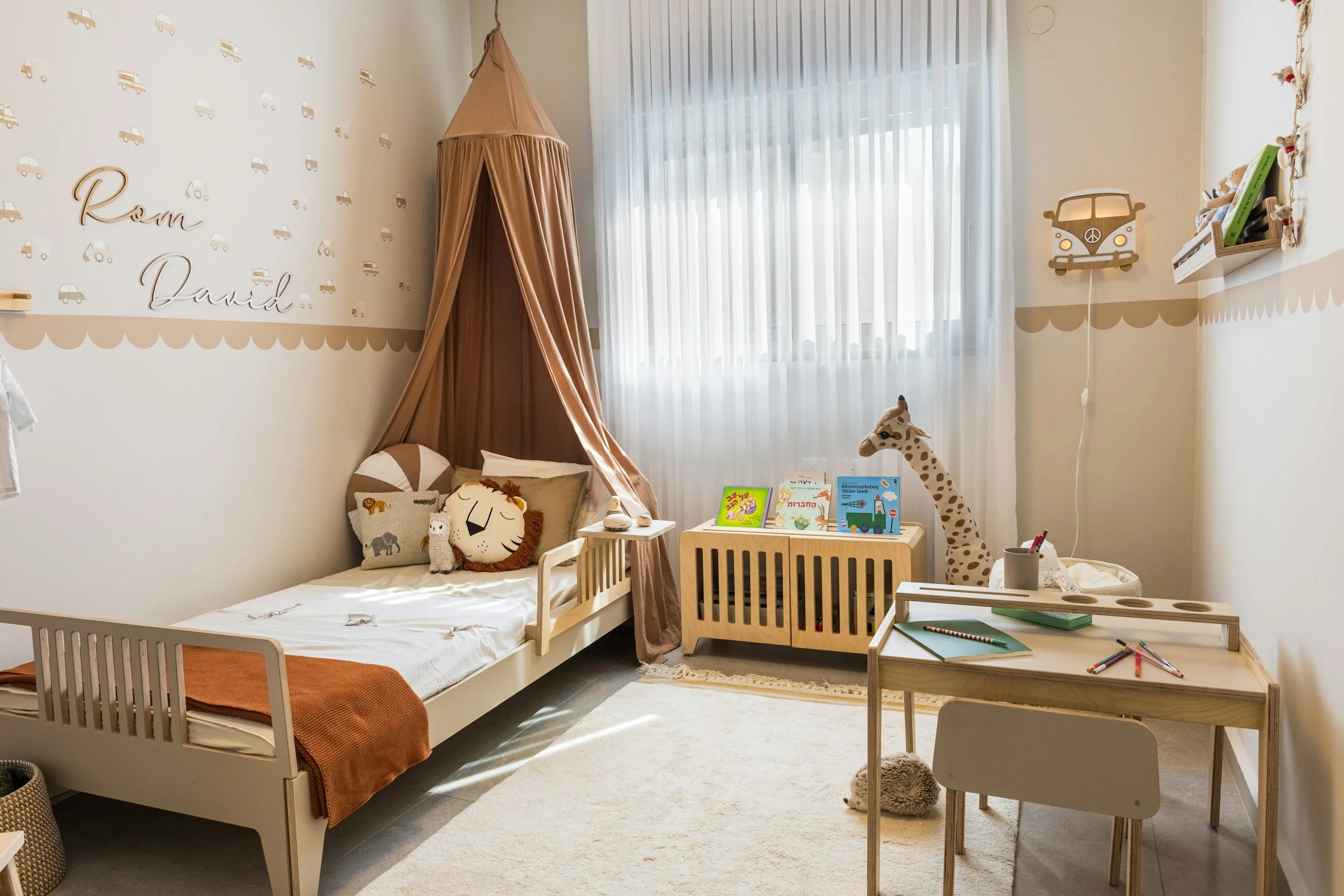
That evening, Lauren sat down with Ava, made two cups of hot chocolate, and asked her seven simple questions. What came out of that conversation rewrote the entire design brief. Ava did not want lavender. She wanted deep teal and gold because she was obsessed with the ocean and treasure maps. She wanted a reading nook that felt like the inside of a ship's cabin. She wanted her artwork displayed on the wall in a real gallery arrangement because she had already decided, at nine years old, that she was going to be an artist. She wanted a cozy hideaway under a loft bed where she could go when the world felt like too much.
None of this was on the original Pinterest board. All of it was Ava.
The room we designed together was bolder, richer, and far more interesting than the original plan — and it was beautiful in a way that a lavender floral room, however lovely, simply could not have been, because it told a true story. On the reveal morning, Ava walked in, stopped in the doorway, and burst into tears. Happy, overwhelmed, this-is-exactly-me tears. She looked at her mother and said, "Mama, it's perfect."
That is what happens when you ask the right questions before you pick up a paintbrush.
Seven Questions That Become Your Design Brief
The seven questions that follow are not casual conversation starters. They are a professional design tool. Each one is designed to extract a specific piece of information that will directly inform a design decision — from color palette to furniture layout to the emotional atmosphere of the finished room. Ask them in a relaxed, unhurried moment. Write down the answers. And then treat those answers as the most important document in your entire design process, because they are.
Q1: If your room could have one magical thing in it, something that made it feel totally you, what would it be?
This question reveals the emotional core of your child's design vision. You are not asking for something practical. You are asking them to dream without limits, and in that unguarded answer, you will find the feeling that the entire room needs to chase. Maybe they describe a climbing wall. Maybe they describe a stage with a spotlight. Maybe they describe a window that opens onto an imaginary forest. Whatever it is, that answer tells you what joy looks like to your child, and joy is always the right place to start.
Q2: What's your favorite thing to do in your room, and does your room make it easy or hard to do that?
This is a function question dressed in the language of feeling. Children will tell you, with beautiful directness, whether their room actually works for their life. A child who loves to build tells you they need floor space and accessible storage. A child who loves to draw tells you they need a dedicated surface and good light. A child who loves to read tells you they need a nook that is soft, warm, and quiet. Function and beauty are not opposites in good design — they are partners, and this question brings them together.
Q3: What is your favorite color or colors, and would you want to see them in your room?
This question does more than identify a palette. It reveals how your child wants to feel in their space. Color psychology is one of the most powerful tools in interior design, and children respond to it instinctively and honestly. A child who gravitates toward deep jewel tones wants richness and depth. A child who loves soft, warm neutrals craves calm and safety. A child who wants bright, saturated color is asking for energy and joy. None of these is wrong. All of them are information.
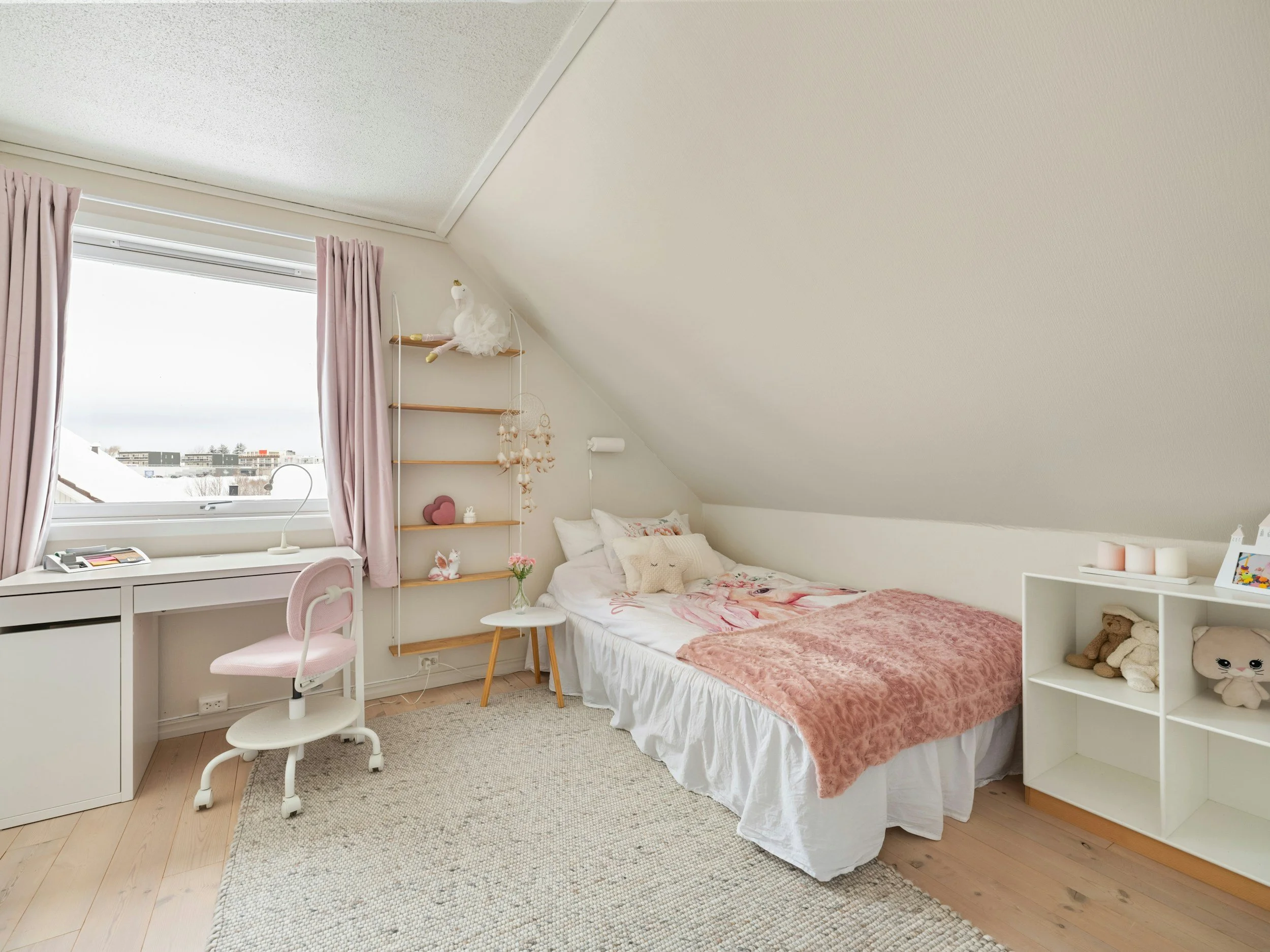
Q4: If you could give your room a theme, like a rainforest, outer space, a cozy cottage, or anything you dream up, what would it be?
This gives the room its story. Children live inside stories. They do not just inhabit spaces; they inhabit worlds. A theme is not a decorating gimmick. It is a narrative framework that makes every subsequent design decision easier and more intentional. Once you know the story the room is telling, everything from the light fixtures to the throw pillows becomes part of a cohesive, meaningful whole.
Q5: Is there a place in your room where you feel really cozy and safe, like your own little hideaway?
This question addresses one of the most fundamental and most overlooked needs in children's room design: sanctuary within sanctuary. Every child needs a space that feels small, soft, and entirely theirs — a place to retreat, to regulate, to simply breathe. Whether it is a curtained reading corner, a canopy over the bed, or a nook tucked beneath a loft, this element of the room design speaks directly to a child's emotional and developmental needs. When it is present, children return to it again and again. When it is absent, something quietly important is missing.
Q6: If your best friend came over and walked into your room, what would you want them to say about it?
This question is perhaps the most psychologically rich of all seven. It reveals how your child sees themselves and wants to be seen by others. A child who wants their friend to say "this is the coolest room I've ever seen" is asking for a room with personality and boldness. A child who wants their friend to say "I never want to leave" is asking for a room built on warmth and welcome. These are two very different design directions, and knowing which one matters to your child is invaluable information.
Q7: If you could change one thing about your room right now, what would it be? — is beautifully simple and remarkably direct.
Children do not overthink it. They know exactly what is not working — the closet that never closes, the desk that is always a disaster, the light above the bed that makes it impossible to read comfortably at night. This answer gives you your most urgent design priority and your most immediate opportunity to communicate through design that you heard them, and you acted on what they said.
Together, these seven questions create a design brief that is more specific, more personal, and more emotionally intelligent than anything a mood board alone could produce. They are the foundation of every great children's room — not the furniture, not the paint, not the accessories. The conversation.
You Have Everything You Need to Begin
You do not need a large budget to design a kids' room that your child will treasure for years. You do not need to start over from scratch or hire a team of professionals. What you need is a conversation — intentional, unhurried, and genuinely curious — with the small person who is going to live in that room every single day.
The seven questions in this episode are your starting point. They cost nothing. They require no prior design knowledge. And the answers they produce are worth more than any mood board, any shopping trip, or any amount of time spent scrolling. They are the voice of your child, telling you exactly who they are and exactly what would make them feel most at home in the world.
Start there. Let everything else follow. And know that the room you are about to create — the one that grows from those honest, imaginative, heartfelt answers — is going to be more beautiful than anything you could have designed alone.
FAQ
How do I balance my child's design preferences with my own taste as the parent? Think of your child's answers as the brief and your taste as the translation. Your child tells you the feeling, the colors, and the story they want. You — or your designer — translate those into elevated, cohesive, beautiful design decisions. You are not surrendering your aesthetic. You are enriching it with deeply personal information, making the result more meaningful for everyone.
What if my child's favorite colors or themes feel overwhelming or hard to work with? This is exactly where a professional designer becomes invaluable. Almost any color or theme can be executed beautifully when it is handled with skill and intentionality. Deep teal and gold, dinosaurs and fossils, outer space, rainforests — all of these can be elevated into genuinely stunning children's rooms when the design is approached thoughtfully. The key is always balance: let the theme be present and joyful without overwhelming the space.
At what age should I start asking my child these questions? Children as young as four or five can answer most of these questions with surprising clarity and conviction. The vocabulary they use will be simpler, but the instincts are real. For children under four, focus on color and cozy hideaways — those two elements alone will make a significant difference. For children eight and older, all seven questions are entirely appropriate and often produce remarkably thoughtful answers.
What if my child's dream room is completely outside my budget? The goal of these questions is not to create a wish list you feel obligated to fulfill exactly. It is to understand the feeling, the story, and the priorities that matter most to your child. A child who dreams of an underwater ocean room does not necessarily need an expensive mural and custom furniture — they may need deep teal walls, some thoughtfully chosen accessories, and a reading nook with a soft, ocean-colored canopy. Great design is always about capturing the feeling, not replicating the fantasy dollar for dollar.
Resource
Take the Interior Design Personality Quiz to understand your style, your priorities, and how to make decisions with confidence at shereedouglasbrock.com (scroll down to take the quiz)
Book a Beautiful Home Makeover Experience and transform your space in just a few hours—often using what you already own.