

Furniture That Never Goes Out of Fashion — The Classic Traditional or Romantic Styles
There is a particular kind of room that lives in the imagination of a certain kind of woman long before it ever exists in her home. She has seen it in magazines, glimpsed it in other people's houses, felt something stir when she walked past a shop window with the right curved chair in it. Soft. Curved. Layered. Timeless. And more often than not, she has never given herself full permission to build it, because somewhere along the way, she absorbed the idea that soft means weak, and feminine means "not serious." That idea has never been true, and it's time to put it to rest.
The Classic Romantic design personality is one of the most enduring, most historically grounded aesthetics in residential design, and understanding it clearly — rather than dismissing it as "just pretty" — is the difference between a room that feels curated and one that feels chaotic.

What Classic Romantic Style Actually Is
At its core, this design personality is built on three things: softness, warmth, and layering executed with intention. It is not Victorian excess. It is not shabby-chic nostalgia dressed up with distressed paint. It is a considered, historically informed style with its own clear vocabulary.
Five traits define it consistently. First, a palette that stays warm, never cold — ivory, blush, sage, antique white, the colors of a garden in late afternoon light rather than a showroom under fluorescents. Second, textiles layered with real purpose, not simply piled on for volume. Third, curved silhouettes built into the bones of the furniture itself, not added as an afterthought — channel-tufted headboards, bergère chairs, pedestal tables. Fourth, a genuine appreciation for vintage and antique pieces, valued for the history they carry into a room. And fifth, light that comes from warm, intimate sources — table lamps, sconces, layered lighting — rather than a single flat overhead fixture that flattens everything beneath it.

A Story from a Historic Walnut Creek Estate
Years ago, I had the privilege of designing one of the most beautiful properties I've ever worked on: the Mansion at Lakewood, a historic 8,400-square-foot estate in the exclusive, wooded Lakewood neighborhood of Walnut Creek, California. Set on 2.6 secluded acres, the home had nine bedrooms and eight and a half bathrooms and a history as rich as its architecture. It was built by prominent local developer Robert Noble Burgess and designed by architect John D. Wagenet, who trained in the design office of the legendary Julia Morgan. Originally, the home was built specifically to entertain prospective buyers and host events for the newly developed neighborhood — hospitality was never incidental to this house. It was the entire reason it existed.
By the time I came to know the estate, it belonged to Sharon and Mike, and Sharon remains, to this day, the most gracious hostess I have ever had the pleasure of designing for. Her personal design personality was Classic Romantic through and through — formal and traditional at the entry, softening into country and provincial influences as you moved deeper into the home. I actually had my second baby shower in that house, and I have never forgotten how it felt to be welcomed into a space so deliberately, beautifully prepared for people.
Sharon and Mike remodeled nearly every inch of the property — every room, the kitchen, the grounds. The kitchen alone became a showstopping black-and-white tiled space with a modern country sensibility. It was, without exaggeration, a beautiful money pit, and they were entirely up for the task. Sharon's assistant Alice and I spent months hunting antique stores, estate sales, and salvage yards for pieces rescued from old San Francisco estates. Every individual find was exquisite, and together, the rooms came together into something genuinely breathtaking.
It wasn't without its challenges. From very early on, some neighbors resisted the idea of a bed and breakfast on their street, and years of lawsuits and friction followed. Eventually, Sharon and Mike made the decision to sell and move forward. I was proud of them for how they handled every bit of it — with the same grace that defined their home.
There's a verse from Hebrews that has stayed with me ever since designing that house. Hebrews 13:2, in the Passion Translation, tells us to show hospitality to strangers, because they may be angels from God showing up as our guests. That's exactly what Sharon and Mike's home was built to do — welcome people in, prepare space for them intentionally, and treat that preparation as sacred rather than optional. A home built for hospitality isn't decoration. It's love, made visible in every layered, considered choice.

Telling the Romantic Styles Apart
One of the most common points of confusion for women who love this aesthetic is that "romantic" isn't one single style — it's a family of related styles, and knowing which branch is truly yours changes everything about how a room comes together.
Country design leans rustic and lived-in, favoring painted woods and a slightly imperfect, gathered quality that feels collected over time rather than purchased all at once. Provincial is more refined than Country, drawing on soft French countryside influences, muted florals, and gently carved wood details that feel elegant without becoming formal. Country French sits between the two, blending graceful curves and touches of gilded detail with a relaxed, sun-faded palette that keeps it from feeling stiff. Farmhouse, meanwhile, is the most pared-back of the four romantic styles — clean lines, natural materials, and a preference for simplicity over ornamentation, while still carrying that same underlying warmth.
Understanding which of these speaks to you specifically is what keeps a room cohesive instead of scattered. A space that blends all four without intention tends to feel like a collection of separate ideas rather than one confident style.
Signature Pieces of the Classic Romantic Home
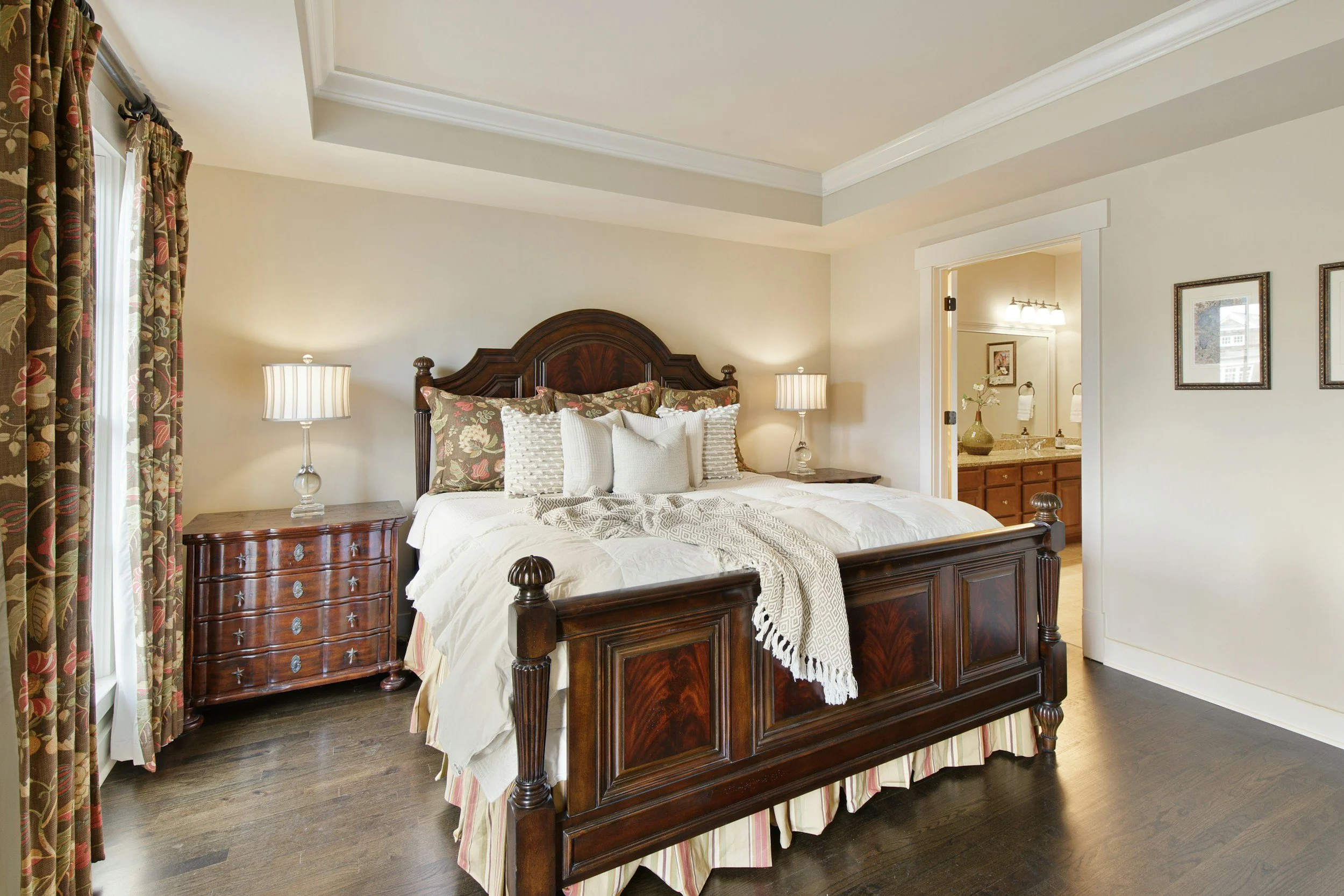
A handful of pieces define this style more than any others, and investing in them well makes an outsized difference.
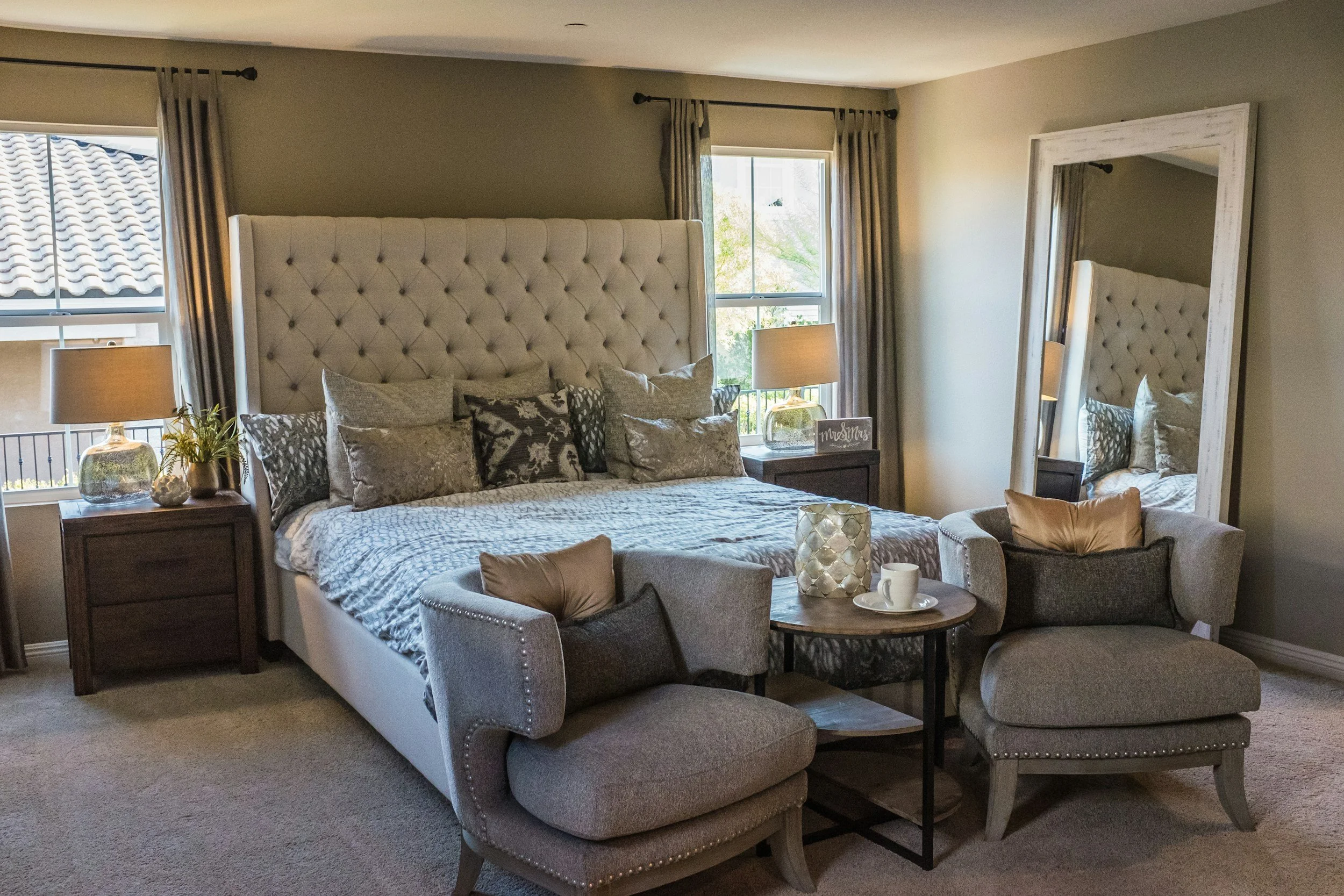
A channel-tufted headboard is arguably the single most defining piece you can bring into a romantic bedroom — it sets the tone for the entire room around it.
Crystal and warm-metal lighting does real, active work in a space; it catches and shifts light throughout the day in a way flat fixtures simply cannot.
Floral and botanical textiles are best used as an accent that echoes the language of the garden, not as the entire visual story of the room.
Vintage mirrors bring both history and reflected warmth, adding depth without adding clutter. And fresh or dried botanicals serve as the final living layer — the detail that keeps a romantic room feeling genuinely tended rather than staged for a photograph.
Why This Style Deserves to Be Built With Confidence
Classic Romantic is not a fussy, lesser choice hiding behind soft fabric. It is a fully realized, historically grounded design personality that deserves to be executed with real skill — not diluted into apology because someone once suggested that softness reads as unserious.
If you take one thing from this, let it be this: keep your palette warm, never cold or high-contrast. Build your structure with scale that grounds the room, editing that brings clarity, and a contained palette that holds everything together. And lean into your vocabulary — the tufted headboard, the crystal light, the floral accent, the vintage mirror, the living botanical.
Put those pieces to work with intention, and softness stops looking like clutter. It starts looking like exactly what it is: beauty, prepared with love.
FAQ
How do I know if Classic Romantic is really my style, or if I just like it in photos?
A style you love in photos but hesitate to commit to in your own home is often still your style — the hesitation usually comes from doubt about whether it's "too much," not from a lack of genuine attraction to it. A good gut check: does it show up again and again in the images you save, the furniture you linger over, the homes that make you feel something? If so, that's not a passing preference. The free Interior Design Personality Quiz at ShereeDouglasBrock.com can confirm it in a couple of minutes, so you're building from certainty instead of guesswork.
Isn't Classic Romantic style expensive to pull off well?
Not necessarily. What makes this style feel elevated isn't a large budget — it's restraint and intention. A single well-chosen channel-tufted headboard, one great crystal or warm-metal fixture, and a few vintage or antique finds do more for the room than a houseful of new furniture bought all at once. Antique stores, estate sales, and salvage yards — the same places I sourced from for the Lakewood estate — are often where the most exquisite, budget-friendly pieces are hiding.
How do I keep a Classic Romantic room from feeling cluttered or overly fussy?
This comes down to editing. The style is built on layering with intention, not piling on. Stick to a warm, contained color palette so nothing fights for attention. Choose textiles and accessories with a clear point of view rather than one of everything. And let a few signature pieces — the headboard, the lighting, one or two vintage finds — do the heavy lifting, rather than trying to fill every surface.
Can I mix Country, Provincial, Country French, and Farmhouse in the same room?
You can, but it works best when one style leads and the others simply inform it, rather than all four competing for the spotlight. Pick the one that speaks to you most — say, Provincial for its refinement, or Farmhouse for its simplicity — and let the others show up in small, supporting touches. That's what keeps a romantic room feeling like one confident style instead of a scattered collection of ideas.
What's the easiest way to start bringing Classic Romantic style into my home without a full remodel?
Start with light and layering — the two things that transform a room fastest without construction. Swap a flat overhead fixture for warm, lamp-lit sources. Add one curved, upholstered piece, like a bergère chair. Bring in a vintage mirror or a few fresh or dried botanicals. These small, intentional layers are often enough to shift a room from generic to genuinely romantic.
Resource
Take the Interior Design Personality Quiz, and it will tell you clearly whether Classic Romantic truly is your style, at shereedouglasbrock.com (scroll down to take the quiz)
Book a Beautiful Home Makeover Experience and transform your space in just a few hours—often using what you already own.