
21 "Outdated" Design Trends I Still Love — And Why You Might Too
Is my home outdated? This is a question I hear constantly from homeowners.
If you've scrolled a design account and felt a small wave of embarrassment about your shiplap wall, your gray palette, or your gallery of family photos, you are not alone, and you are not behind.
“Stop imitating the ideals and opinions of the culture around you, but be inwardly transformed by the Holy Spirit through a total reformation of how you think.”
This verse reminds believers not to be shaped by the passing patterns of this world, but transformed through a renewed way of thinking — and that wisdom applies just as much to your living room as it does to anything else in life. This post walks through twenty-one design choices that trend culture loves to call outdated, and explains why so many of them are still doing exactly what good design is supposed to do.
There is a particular kind of quiet anxiety that comes from loving something in your home and then discovering, usually through a passing comment or a scroll through social media, that it has been declared "over."
It happens with barn doors. It happens with subway tile. It happens with anything that once felt fresh and now gets lumped into a highlight reel of design mistakes.
The trouble is that trend culture moves fast, and it rarely distinguishes between a fad that deserved to fade and a genuinely good design decision that simply isn't new anymore. When you internalize every trend forecast as a verdict on your taste, you start making decisions out of fear of judgment rather than out of what actually serves your home and your life. Left unaddressed, this creates a strange kind of homelessness inside your own house — a feeling that no matter what you choose, it will eventually be wrong, because trends will keep moving whether you keep up or not. That anxiety costs you peace, it costs you confidence, and over time it can cost you real money as you rip out and replace things that were never actually the problem.
A client of mine, Marissa, had shiplap installed in her family room a few years back and loved it the moment it went up.
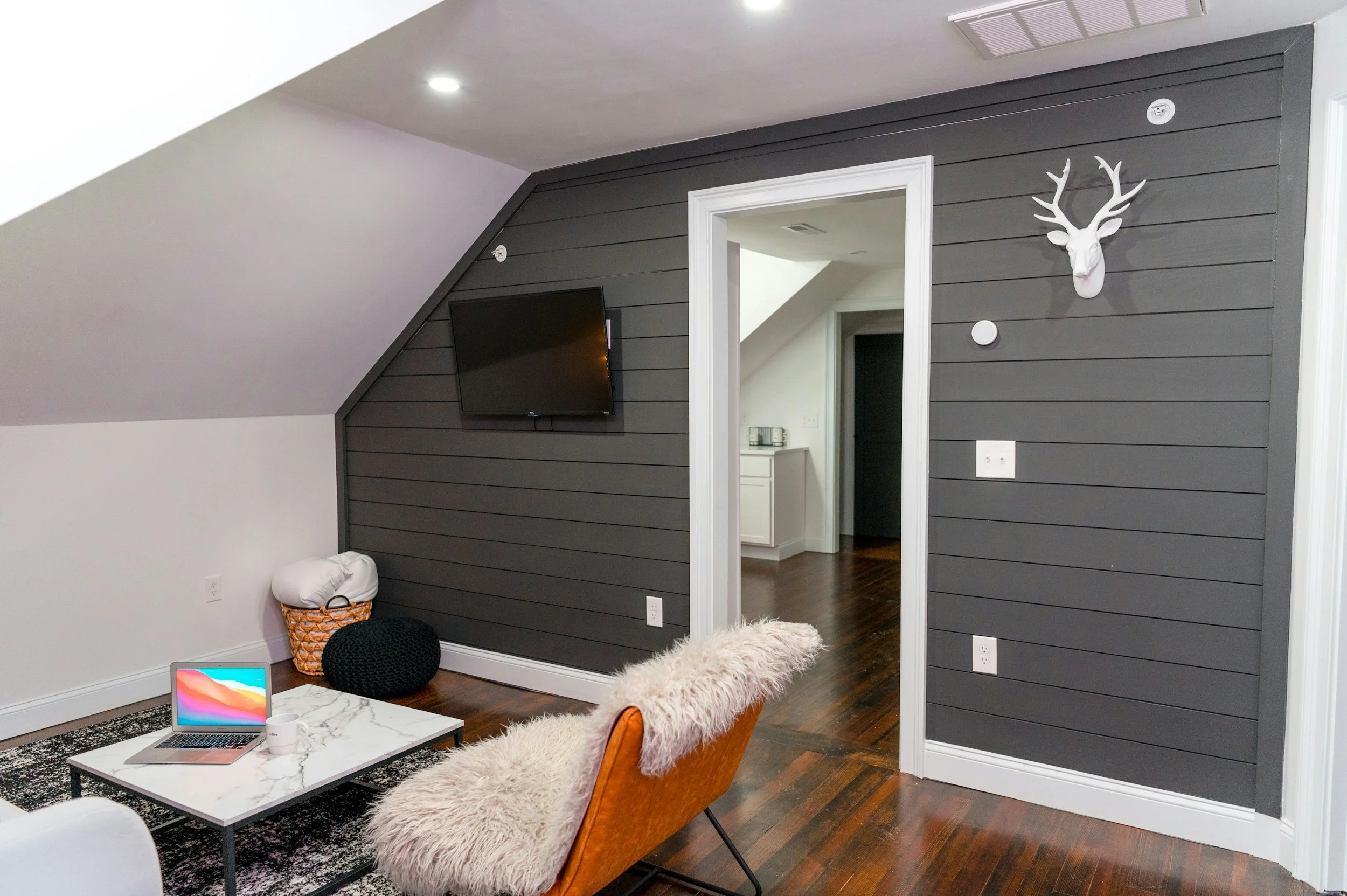
Then design accounts started treating shiplap as a punchline, and she called me second-guessing everything, wondering if she needed to tear it out and start over before her home looked embarrassingly dated.
We sat together in that room, and I asked her a simple question: does this space still feel like rest when you walk into it? Her answer was immediate. Yes.
That was the turning point. We didn't rip anything out. We refreshed the paint tone around the shiplap, adjusted the furniture layout, and let the architecture stay exactly as it was, because the architecture was never the problem.
What changed wasn't the room — it was Marissa's relationship to the room. She told me afterward that she stopped scrolling design accounts looking for permission to love her own house. Her home wasn't behind. It was simply hers, and that was enough.
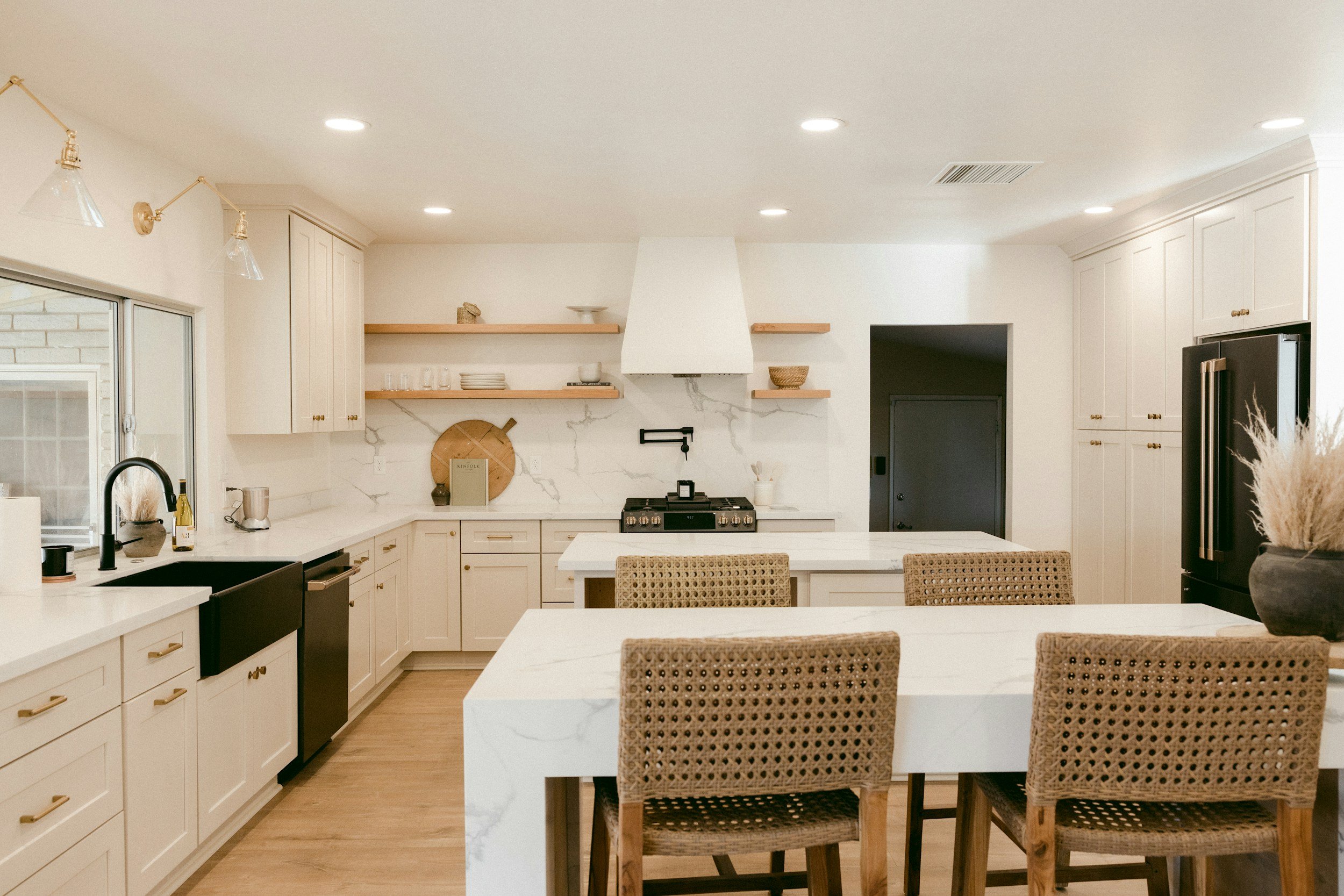
21 Design Trends I Still Love
The trends I am talking about fall into three categories, and understanding the difference helps you evaluate your own home with more clarity than a trend forecast ever could.
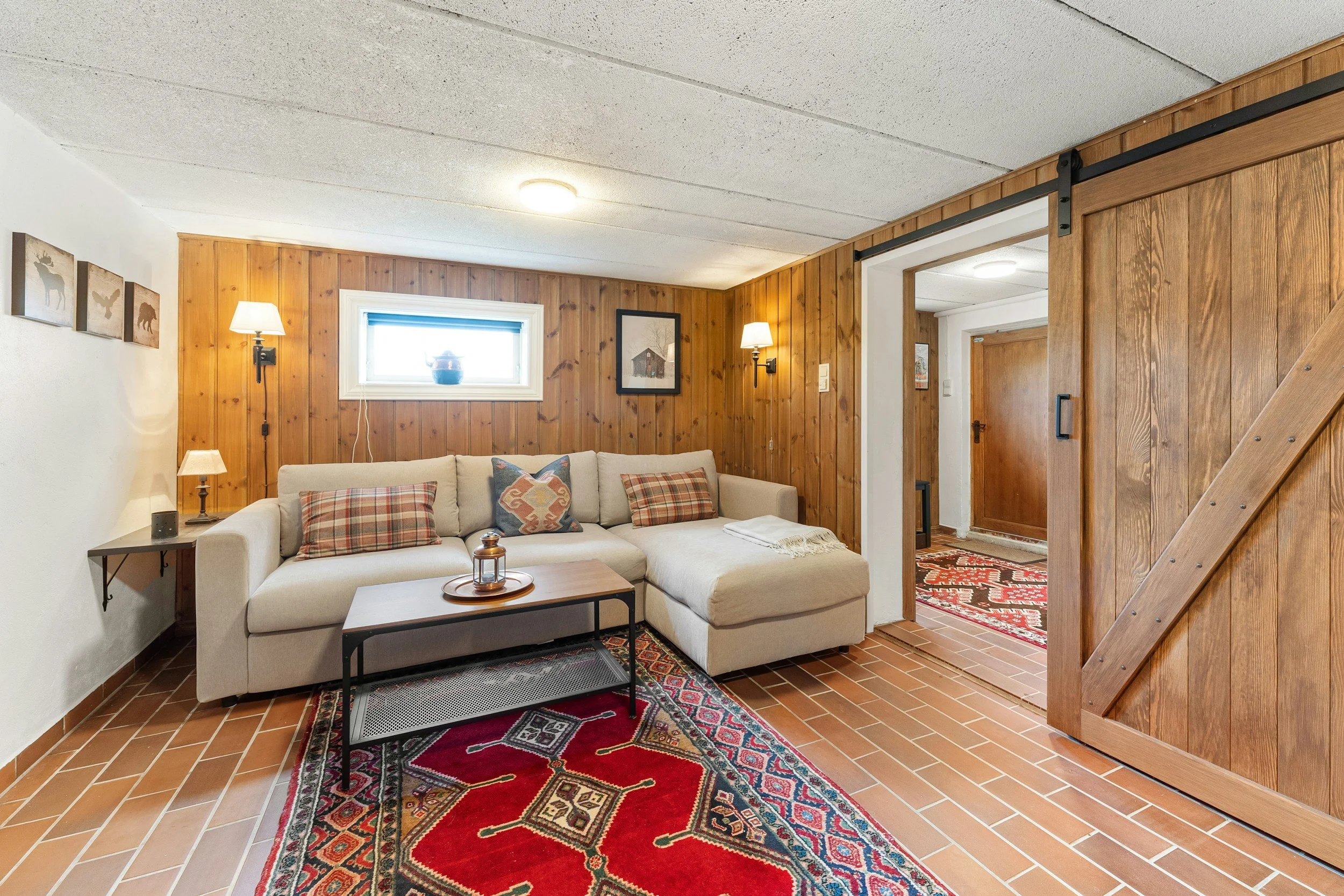
The first category is architectural — choices like sliding barn doors, shiplap, open-concept layouts, wood paneling, and asymmetrical room arrangements. These shape how a room functions before any decorating happens, which means their value isn't really about style at all. It's about how the space works for the way you actually live. If a barn door solves a tight hallway or an open floor plan keeps your family connected while you cook, that's a functional win, not a fashion statement, and function doesn't expire.
The second category covers the workhorse surfaces in your kitchen and bath — farmhouse sinks, subway tile, warm white kitchens, dark granite, open shelving, vinyl and laminate flooring, linoleum, and handheld shower heads. These are used every single day, which means durability and practicality matter more here than timing trends. A surface that holds up beautifully under real daily life has earned its place regardless of what's currently trending in a magazine spread.
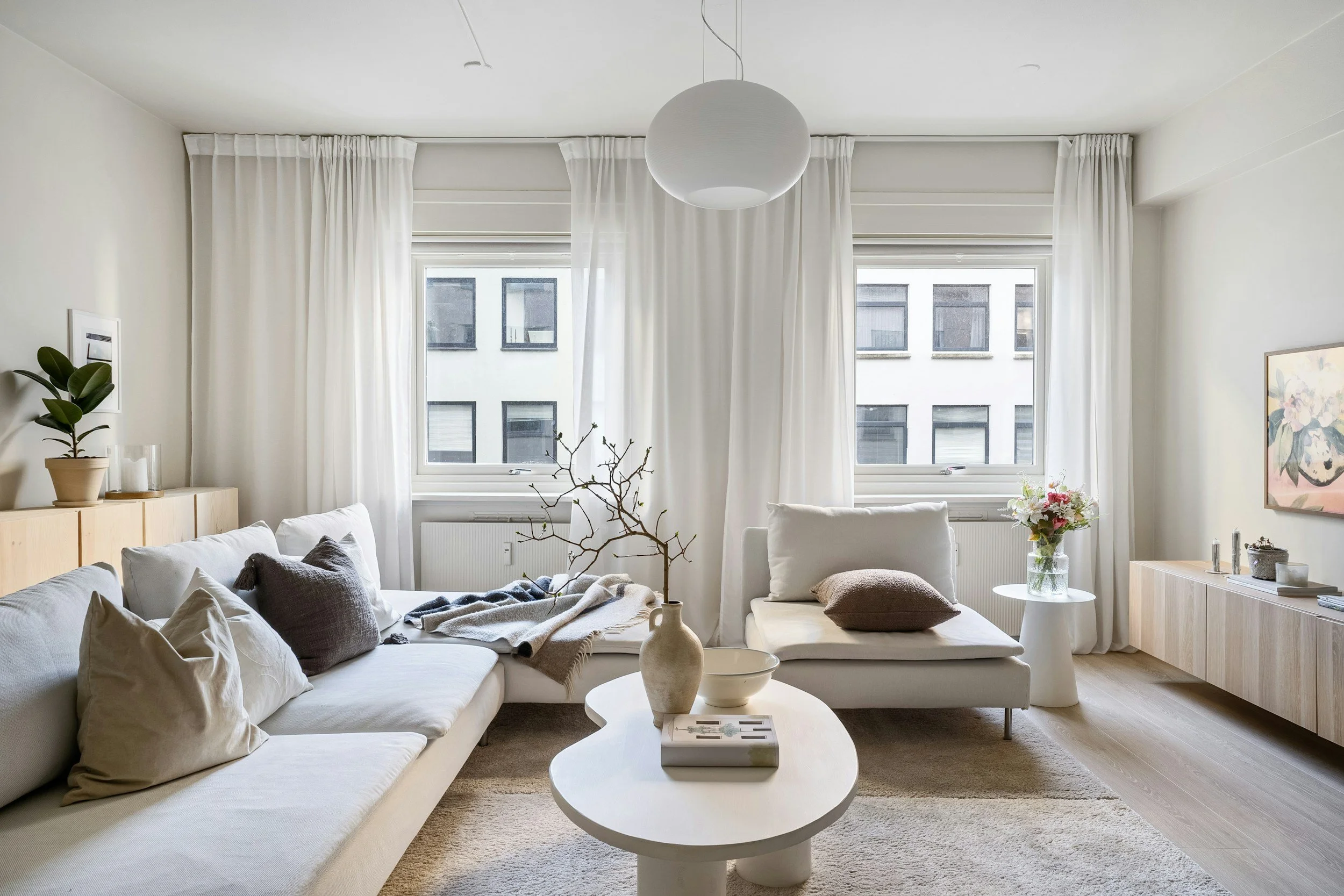
The third category is personality-driven — Scandinavian minimalism, word art, painted furniture, wall-to-wall carpet, gallery walls, monochrome gray, color-coded bookshelves, and Venetian plaster. This is where your home stops being generic and starts reflecting who actually lives there. These choices were never meant to please a trend cycle in the first place, so it doesn't make sense to judge them by one. The real test for any of these three categories isn't whether it's currently trending — it's whether it still functions well, holds up to daily life, and feels like you. When a design choice passes those three tests, it doesn't matter what a trend forecast says about it.
Stewardship of a home isn't about keeping pace with what's currently fashionable — it's about caring well for the space you've been given and making decisions rooted in what's actually true and good for your family, not what's currently getting the most engagement online. Peace, order, and beauty in a home were never meant to be judged by a trend calendar.
Conclusion
Your home was never meant to be a trend report card.
The twenty-one choices I covered — from barn doors to Venetian plaster — are proof that good design decisions hold their value long after a trend cycle has moved on to the next thing.
If something in your home still makes it feel like a place to rest when you walk in, that is not a sign you're behind. That is a sign you got it right.
Confidence in your home doesn't come from chasing every shift in design culture — it comes from trusting what you already know works for your life.
FAQ
Is it bad to keep a design trend that's considered "outdated"?
Not at all. If a design choice still functions well and feels true to how you live, it's still doing its job — trend status has nothing to do with whether something is working for your home.
How do I know if a trend in my home is worth keeping?
Ask whether it still serves its function, holds up to daily use, and reflects your actual taste. If it passes those three tests, it's worth keeping regardless of what's currently popular.
Should I renovate just because a trend has fallen out of favor?
No — renovating based on trend pressure alone often leads to spending money on changes that don't actually improve how your home feels or functions. Renovate based on what's not working for your life, not what's no longer trending.
How can I stop feeling anxious about my home's style choices?
Shift the question from "is this in style" to "does this space feel like rest when I walk into it?" That single reframe removes most of the pressure trend culture creates.
Resource
Take the Interior Design Personality Quiz, and it will tell you clearly whether Classic Romantic truly is your style, at shereedouglasbrock.com (scroll down to take the quiz)
Book a Beautiful Home Makeover Experience and transform your space in just a few hours—often using what you already own.