
Transitional Style — The Beginning of Every Classic Lasting Interior Design
Some homes still feel completely right twenty years after they were designed. Others feel dated within a couple of seasons.
The difference rarely comes down to money. It comes down to foundation.
“To everything there is a season, a time for every purpose under heaven.”
Every piece in your home has its own season and its own place, and today we're continuing our five-part series with the one design foundation that makes everything you layer on top of it actually last: transitional style.

When Your Home Starts Feeling Dated
So many women I talk to have redecorated more times than they'd like to admit, not because they didn't love their choices, but because those choices were tied to a trend instead of a foundation.
A few years pass, the trend fades, and the room that once felt fresh starts to feel tired, even though nothing about it is actually wrong.
This cycle is exhausting, and it's expensive.
It also isn't necessary.
A home built on the right foundation doesn't need to be reinvented every few years. It needs to be layered thoughtfully, with pieces that reflect who you are, on top of a base that was never trend-dependent to begin with.
I think of transitional style as the quiet, confident starting line.
It doesn't ask you to commit to a single dramatic aesthetic before you're ready, and it doesn't lock you into anything that will feel out of place in just a few years.
It simply gives your home permission to grow with you, one intentional layer at a time.

What Is Transitional Style?
Transitional style is best understood as the meeting point between modern simplicity and timeless comfort.
It gives you a beautiful foundation that feels current without being tied to whatever happens to be trending this year.
And the beauty is that it doesn't have to feel cold, sterile, or overly neutral. The goal is to create a calm base that gives your personality room to shine.
The Attributes of Transitional Style as a Foundation
So, what actually creates that transitional foundation?
Here are some of the elements I look for:
Clean Lines and Streamlined Furniture
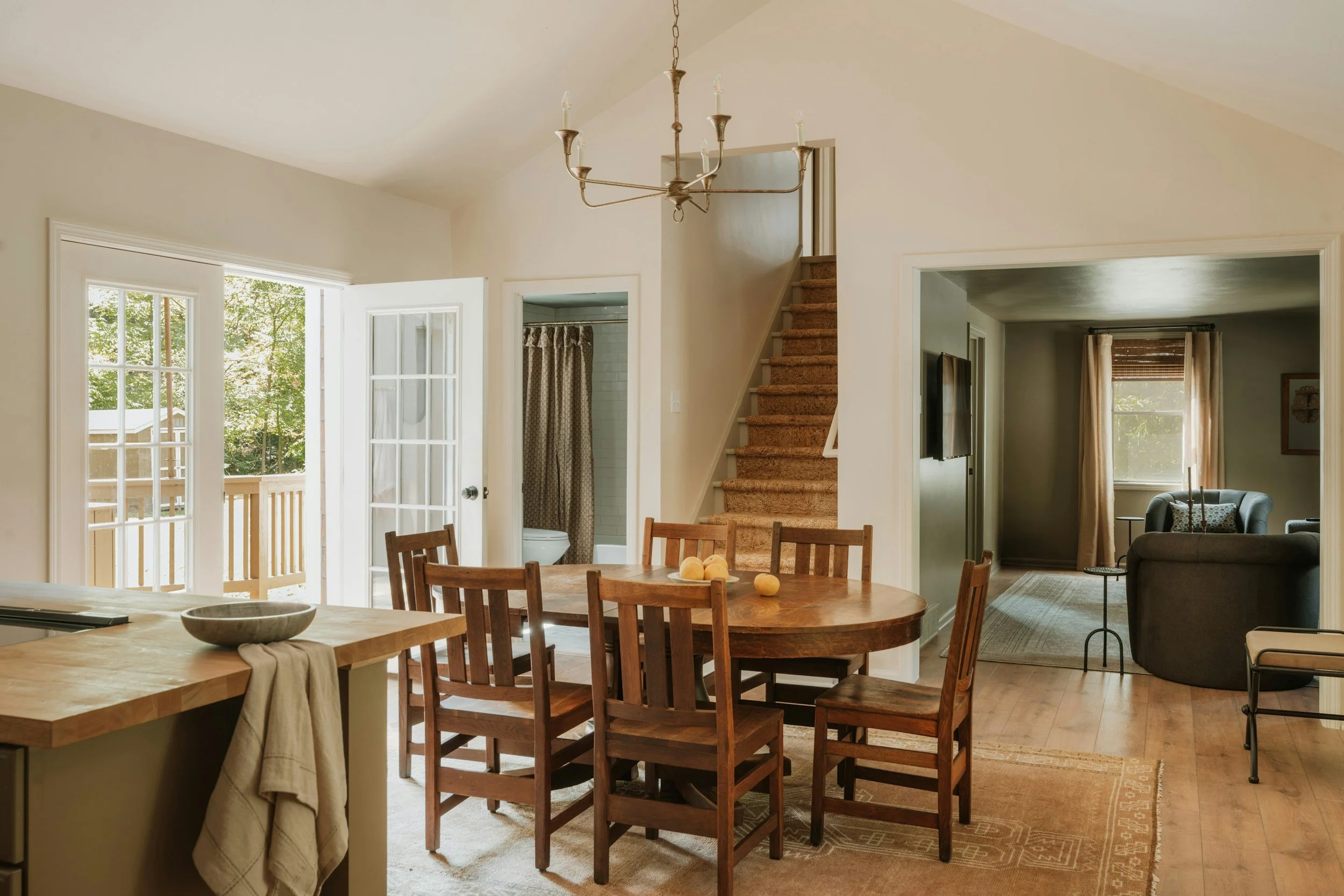
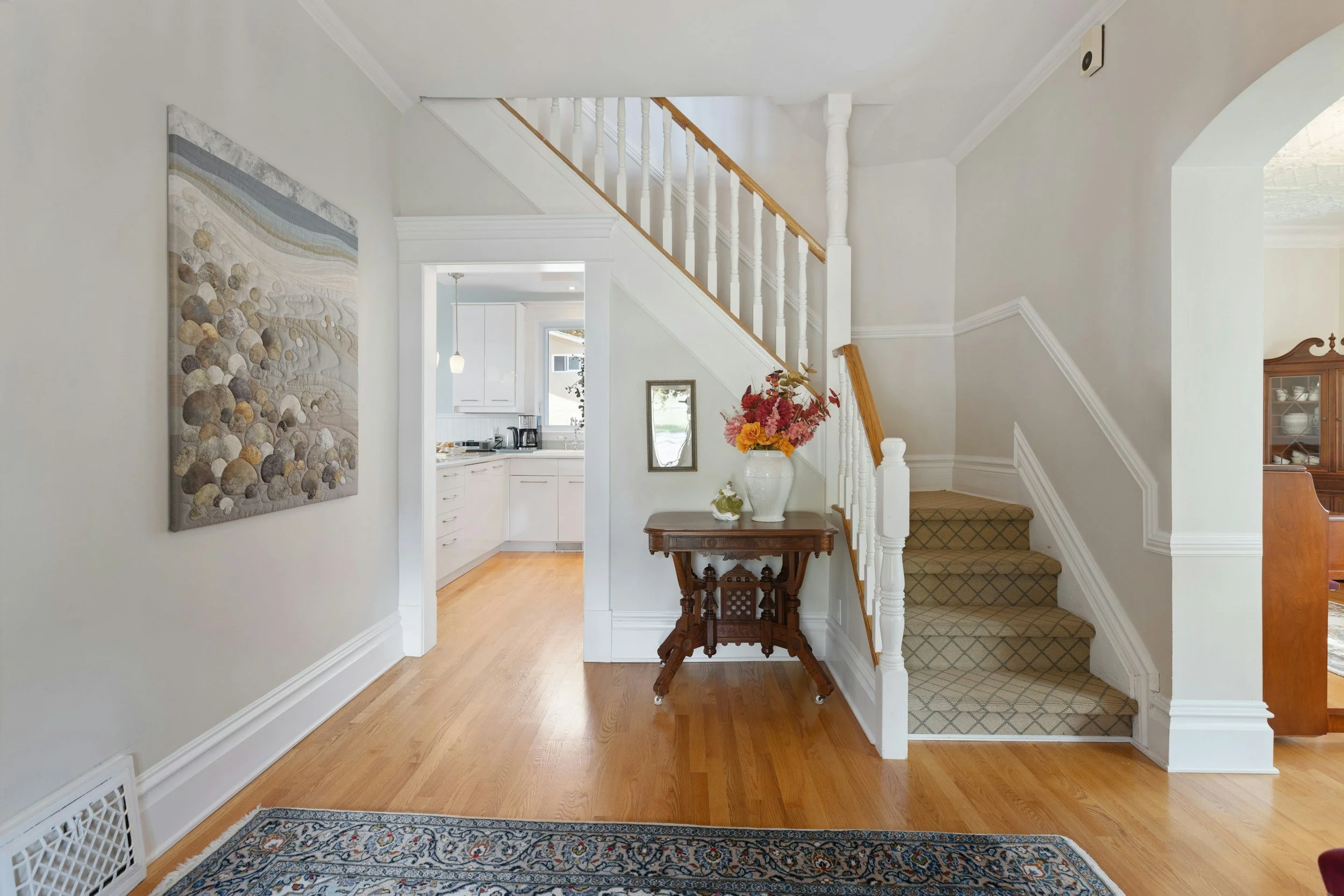
Transitional style leans toward clean lines and streamlined furniture shapes.
Your larger furniture pieces can feel classic and simple rather than overly ornate or tied to one particular design trend.
A Soft, Neutral Palette
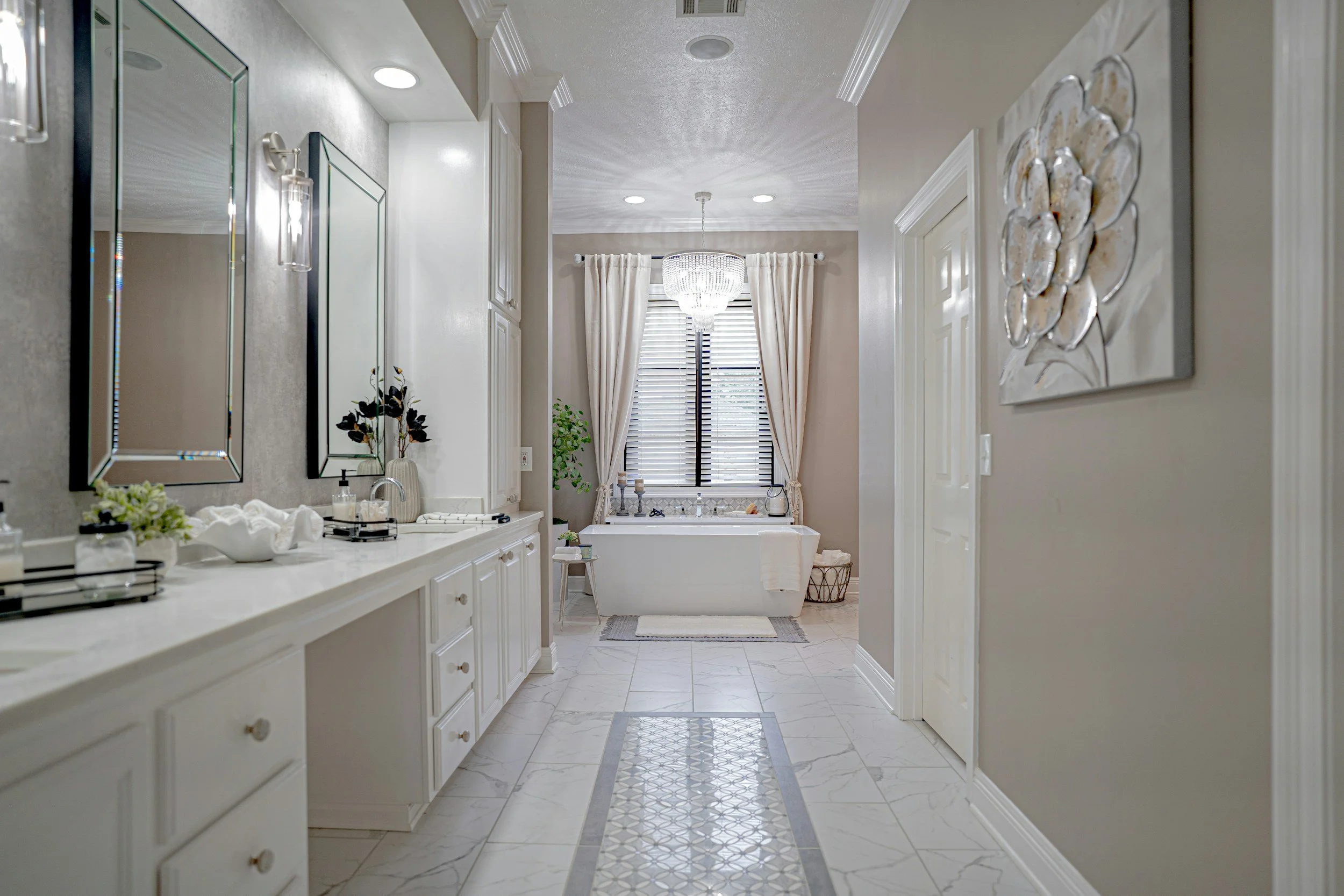
Think tones like ivory, taupe, and soft gray.
These colors create a calm backdrop that allows other elements in your home to change and evolve without requiring you to replace the entire room.
An Open, Uncluttered Feel
A transitional room has room to breathe.
The goal isn't to fill every corner. Instead, the space feels intentional, comfortable, and visually balanced.
Comfortable, Inviting Seating
Clean and streamlined doesn't mean uncomfortable.
Transitional style balances simplicity with inviting seating that makes you actually want to sit down, relax, and enjoy your home.
Layered Textures
Wood, leather, glass, and metal can all work together to bring warmth and depth to the room.
These layers keep a neutral foundation from feeling flat or boring.
Thoughtful Lighting
Chandeliers, sconces, and table lamps can become quiet, elegant statements.
The lighting doesn't have to overwhelm the room. It simply adds another thoughtful layer to the overall design.
Subtle Pattern and Natural Elements
Plants, stone, subtle patterns, and a piece or two of statement art can add personality and depth.
The key is that these elements complement the foundation rather than pulling the room toward a passing trend.
Together, these elements create a foundation that feels comfortable, warm, and timeless without becoming predictable.
Why a Transitional Foundation Protects Your Investment
This matters more than it might seem, because that foundation is what protects your investment.
I have clients whose homes were designed on a transitional foundation more than twenty years ago, and their rooms still feel completely current today.
When the big-ticket pieces in a home—the sofa, the case goods, the major furniture—are chosen for their clean lines and neutral tones rather than for whatever is trending in a given year, they simply don't need to be replaced as trends shift.
That changes the entire math of a design investment.
A trend-driven piece often needs replacing within a handful of years. A well-chosen transitional piece keeps earning its place in your home for decades.
That's exactly why working with a designer and building your home on a transitional foundation can be such a wise financial decision for your space.
Your Foundation Doesn't Have to Stay Neutral
Here's where it gets personal, though.
A transitional base was never meant to stay neutral forever.
Once that foundation is in place, you layer in one or two styles you genuinely love through your art, pillows, rugs, lighting, and accessories.
And that's the moment a room stops looking like a showroom and starts looking unmistakably like you.
When you blend two or three styles onto that transitional base, the resulting mix is often described as eclectic. And really, it's just your personality expressing itself through color, pattern, and texture, layered over something that will never go out of style underneath it.
That's exactly the roadmap for the rest of this series.
Over the next four episodes, we're going to walk through four specific personality styles: Classic Dramatic, Romantic, Executive, and Ethnic.
Each one is simply a different way of layering yourself onto the foundation we've laid today.
You Don't Have to Choose Between Timeless and Personal
It's worth saying plainly: most of my clients don't actually need to choose between a foundation that lasts and a home that feels personal.
That's a false choice.
The two work together.
The foundation carries the weight, and your personality gets to be as bold, as soft, as structured, or as richly patterned as you want it to be, without risking the longevity of the investment underneath it.
A Season for Every Piece in Your Home
Ecclesiastes 3:1 tells us, “To everything there is a season, a time for every purpose under heaven.”
It's easy to read that verse and think only of seasons of life—grief, joy, waiting, growth—but it applies just as naturally to the pieces in your home.
A transitional foundation gives every piece you bring into your home its proper season and its proper place, without forcing you to rush a decision or discard something before its time.
Nothing has to be replaced just because a trend moved on.
Nothing has to be added before you're ready.
There is a season for the foundation, and there will be a season for the layers you add on top of it.
And both seasons matter.
Your Home Doesn't Need to Chase Every Trend
Your home doesn't need to chase every trend to feel finished.
It needs one classic, lasting foundation to build on, and that foundation is transitional style.
Clean lines, a neutral palette, comfortable textures, and thoughtful lighting create a base that will never feel dated. And everything you love—every color, every pattern, every personal touch—gets to live on top of it for as long as you want it to.
Over the next four episodes, we're going to get specific about exactly how your personality shows up on that foundation.
For today, simply let this sink in: The base you build now is the base you'll still be living in—and loving—twenty years from now.
There's real freedom in that.
You don't have to figure out every detail of your personal style today to start building your home well.
You only need to get the foundation right, and the rest can unfold naturally, season by season, layer by layer, exactly as Ecclesiastes describes.
Frequently Asked Questions
Is transitional style the same thing as my Interior Design Personality Style?
No, and this is an important distinction. Transitional style is the foundation, the base a home is built on. Your Interior Design Personality Style, the result you get from the quiz, is what you layer on top of that foundation. They work together, but they answer two different questions.
Do I have to start over completely to build a transitional foundation?
Not necessarily. Many homes already have transitional bones, especially if the major furniture pieces were chosen with clean lines and a neutral palette. Often it's less about starting over and more about recognizing what you already have and building intentionally from there. A designer's eye can be especially helpful here, simply because it's hard to evaluate your own foundation objectively when you're standing in the middle of it every day.
Will a transitional base feel boring or too neutral?
Not at all, because the goal was never to stay neutral. The transitional base is meant to be layered, with color, pattern, art, and texture that reflect your personality. The foundation stays calm and lasting so that everything you add on top of it can be as expressive as you want it to be. In fact, a well-built transitional base often makes bold choices feel even more striking, because they have a calm backdrop to stand out against.
How long does a transitional design actually last?
There's no fixed number, but it's common for a well-designed transitional foundation to remain current for well over a decade, sometimes two or more. Because it was never built around a passing trend to begin with, there's simply less for it to age out of.
Resource
Ready for hands-on help bringing your style to life in your own home? The Beautiful Room Makeover Experience gives you a guided path there. Let's hop on a quick call and see if it's the right fit for you.
Find Out More about The Beautiful Room Makeover Experience.