

How to Choose Color for Your Home With Confidence

One of the most misunderstood elements of interior design is color.
For many professional women, choosing color feels overwhelming. Past regrets linger. Endless options create hesitation. And the fear of choosing wrong often keeps rooms stuck in indecision.
But color is not meant to create anxiety — it is meant to create atmosphere.
As Genesis 9:13 reminds us, God placed the rainbow in the sky as a sign of the covenant and reassurance.
Color carries meaning. When used intentionally, it can carry peace.

Color becomes overwhelming when it is treated as decoration instead of a foundation.
Without a clear direction:
Rooms feel disconnected.
Decisions feel heavy.
Confidence erodes.
Homeowners often default to extremes — either playing it too safe out of fear or going too bold without structure. Neither approach creates peace.
When color is rushed or chosen randomly, it quietly undermines cohesion throughout the home.
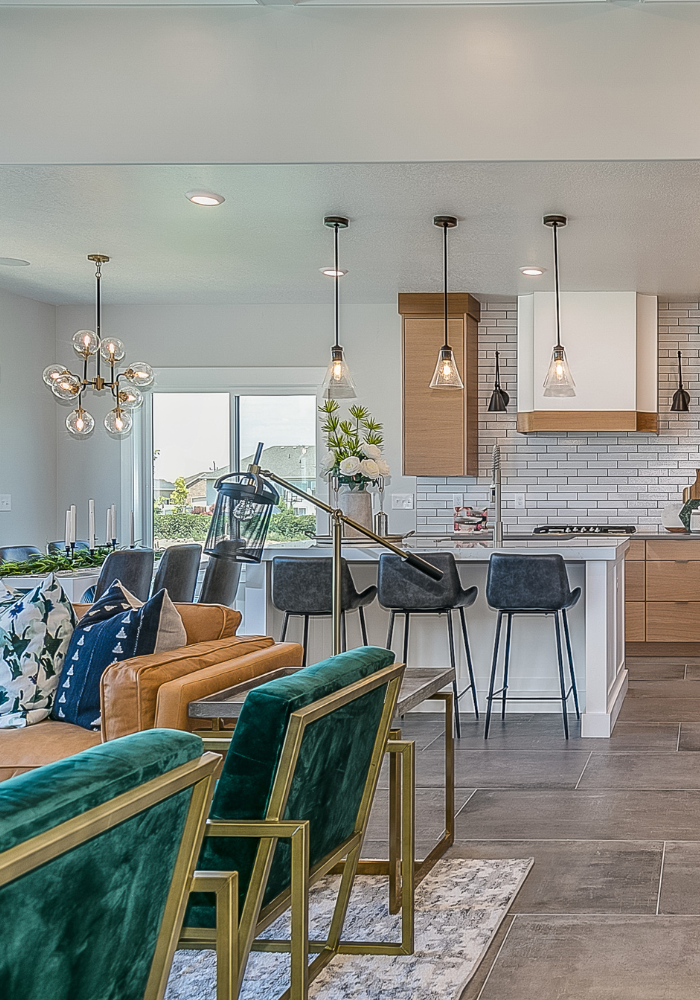
Over the years, I’ve watched confident, capable women freeze when it comes time to choose paint. They love color in theory — but feel anxious committing to it in their own homes.
The turning point always comes when they realize color isn’t about being bold or safe — it’s about being aligned.
Once we identify tones that support their natural temperament and lifestyle, something shifts. The room feels calmer almost instantly. The fear fades. Confidence returns.
Color becomes something they trust instead of something they dread.

How to Choose Peaceful Colors for Your Home
Peaceful color begins with clarity.
1| Choose Based on Your Personal Coloring
Choose your natural instinctive feelings, not trends, because they come and go.
Ask yourself how you want the room to feel — calm, cozy, airy, grounded. Soft, balanced tones tend to support peace. Highly saturated or sharp contrasts should be used intentionally and sparingly.
2| Create a Consistent Color Story
Homes feel cohesive when colors repeat gently from room to room. Select one primary neutral and a small range of supporting tones. This creates visual flow and emotional calm.
3| Let Accent Colors Support, Not Dominate
Accent colors should uplift the space without overwhelming it. Use them in artwork, textiles, and controlled moments. Allow negative space and neutrals to breathe so the room feels balanced.
When color is layered intentionally, it supports your nervous system instead of overstimulating it.
Genesis 9:13 (NKJV) reminds us that the rainbow was placed in the sky as a sign of promise, not excess.
Color in your home should comfort and affirm rather than compete for attention. Faith invites us to design with trust and restraint.
When your color palette reflects intention, it reflects peace.

CONCLUSION
Color does not need to feel intimidating, although it is a really big subject!
Colors, when chosen with clarity and consistency, become one of the most powerful tools for peace in your home. Accent colors are meant to be minimal and not overpowering.
Here is a loose formula for color in a room in your home.
Take one room.
Think of a color wheel. That will be your color scheme for the room.
⅔ of the circle is the base neutral color or colors. That leaves ⅓ remaining, and of that remaining ⅓, ⅔ of it should be 2 or 3 secondary colors, and ⅓ of the remaining ⅓ can be 2 or 3 accent colors. That is an extremely loose formula, but I hope it helps give you an idea.
So in other words, ⅔ is your base neutrals, and the other ⅓ is your secondary and accent colors that may be in furniture sometimes, area rugs, pillows, artwork, lamps, accessories, and things like that. Don’t forget that woods, metals, and plants have colors that need to be considered, too.
You can trust yourself to choose colors that you love and support your life, your faith, and your calm.
FAQ
Why does color feel so hard to choose?
Because it directly affects emotion, and most homeowners were never taught how to use it intentionally.
Is neutral always safer?
Neutral is peaceful when chosen thoughtfully — not when used out of fear.
How many colors should a home have?
A limited, consistent palette creates the most cohesion and peace.
Can color really change how a home feels?
Yes — often more than furniture or décor.
Resource
Take the Interior Design Personality Quiz to understand how your natural design tendencies shape your response to color. 👉 shereedouglasbrock.com (scroll down to take the quiz)
Get personalized guidance for creating peace in your home! Book now 👉 1:1 Interior Design Consult