

This is the week of the table.
Linens come out of the cupboard, extra chairs are carried in from every corner of the house, and women just like you are wondering where everyone is going to sit.
After years of open floor plans and forgotten formal rooms, something lovely is happening in home design. The dining room is making a comeback.
Homeowners are asking for rooms with purpose again, and the room built around the family table is leading the way.
Scripture gives us a beautiful picture of what a table can be.
“O taste and see that the LORD is good: blessed is the man that trusteth in him.”
There is a reason so many of the most tender moments in Scripture happen around a table. Jesus broke bread with His disciples, welcomed people others overlooked, and turned simple meals into holy encounters.
The table was never just about food. It was about presence, belonging, and grace.
When you design a dining room with care, you are preparing a place for that same kind of grace.
The comfortable chair, the warm light, the extra seat for the unexpected guest all become quiet expressions of love.
Every person who sits at your table can taste a little of God's goodness through the welcome you offer.
A beautifully designed dining room is not about impressing anyone. It is about creating space for the people God brings into your life and letting His love be felt in the way they are received.
This Thanksgiving week, as you gather around your own table, consider how your dining room could become that kind of place, not only for holidays, but for ordinary nights that turn into treasured memories.
A table set with love lets people taste God's goodness through yours.
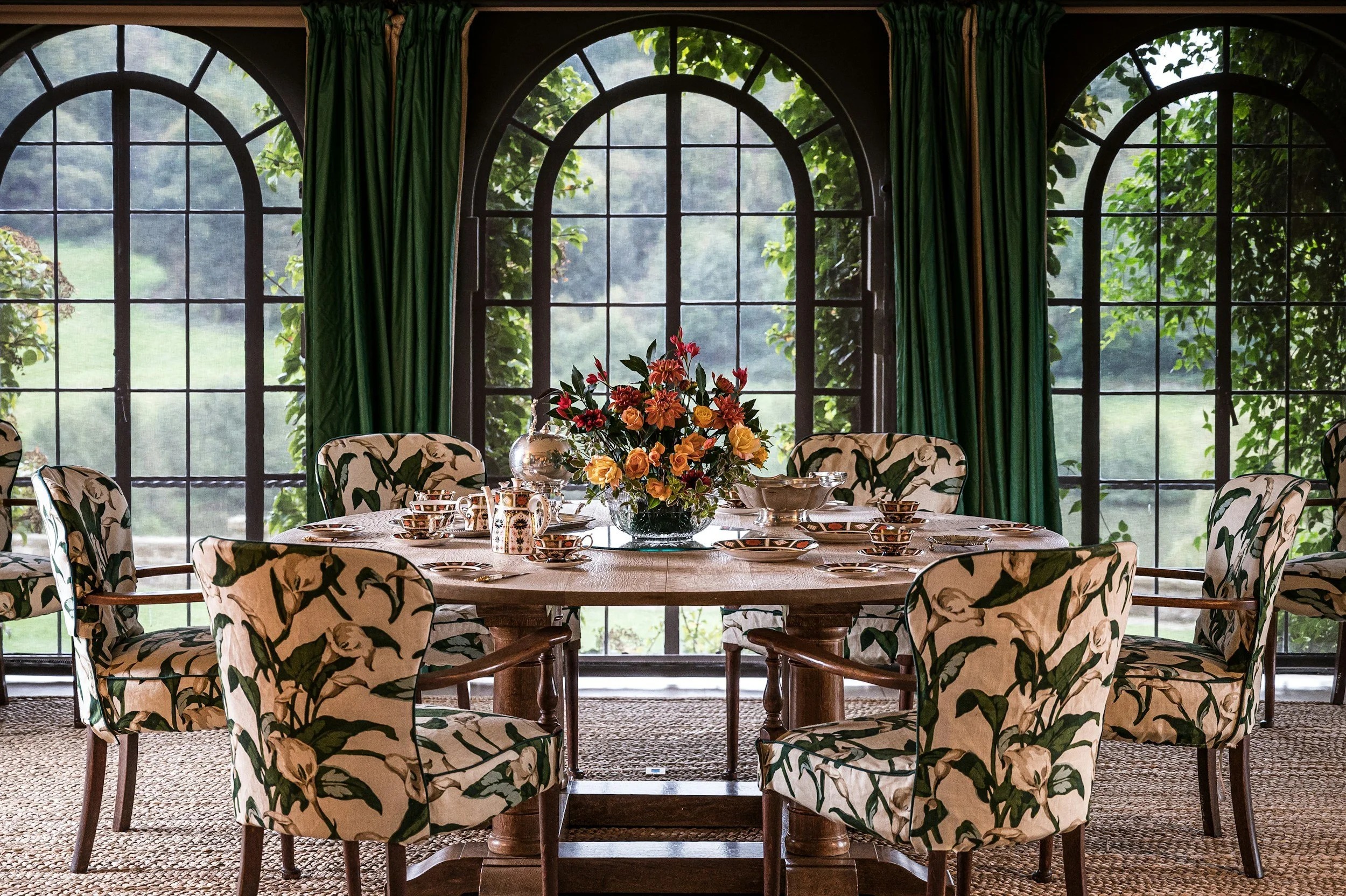
Sheree dining room with round table, performance fabrics on upholstered chairs, glass French windows
The Dining Room We Stopped Using
For a long season, the dining room was treated as the most expendable room in the house.
When open-concept living became the dream, walls came down, and kitchens flowed into family rooms.
The formal dining room was often the first space to be repurposed. It became a home office, a playroom, a spot for the treadmill, or simply a pass-through with a table nobody sat at.
Many homeowners told themselves they did not need it because they never used it.
But the reason the room went unused was rarely that families did not want to gather.
More often, the room felt stiff, dark, or disconnected from the way people live. Chairs were uncomfortable, the lighting was harsh, and the space felt reserved for an occasion that never came.
Meanwhile, the open great room that replaced it brought its own challenges.
One big space where everyone can see and hear everything can feel loud and scattered. There is no place that feels set apart for slowing down. Meals happen at the kitchen island, standing up, with screens glowing and conversations cut short.
Many women I talk with feel a quiet ache about this.
They remember Sunday dinners and holiday tables from their own childhood, and they want that same sense of belonging for their children and grandchildren.
They simply are not sure how to create it in the home they have, or how to plan for it in a remodel or new build.
That longing is exactly what is driving the dining room comeback.
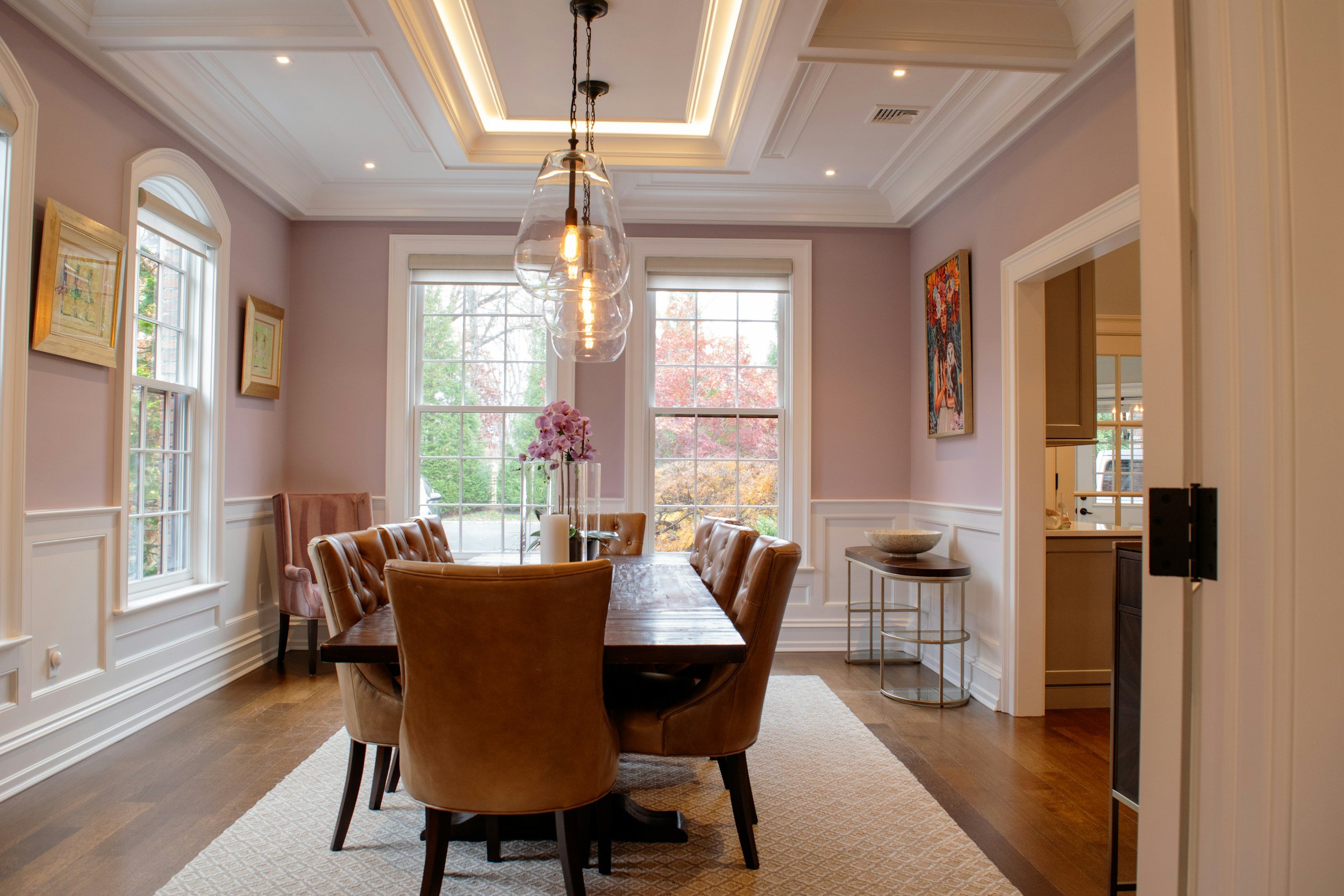
Sheree partially open plan dining room with cased opening and glass French windows
Bringing the Dining Room Back With Purpose
First, understand why the dining room is returning. Designers are seeing a strong shift toward defined rooms, spaces with walls, doors, or clear architectural boundaries that give each room a purpose.
After years of living in wide-open plans, many families discovered they wanted places to retreat, to focus, and to gather without distraction. The dining room is the natural heart of that shift because it is the one room in the home built entirely around connection.
When you have a dedicated place to sit down together, you are far more likely to use it. You light the candles on an ordinary Tuesday, you linger after the meal, and the table becomes the place where stories are told and memories are made.
The comeback of the dining room is really a comeback of the family table.
1. Choose a Dining Table That Brings Everyone Together
The second thing to understand is what makes a dining room feel like a place where everyone belongs. It is not formality. It is warmth, comfort, and welcome, and it begins with the table.
The size and shape of your table set the tone for the entire room. A round or oval table invites conversation because everyone can see each other, and it works beautifully in smaller rooms or for households that love to talk.
A rectangular table with a leaf offers flexibility, seating your everyday family comfortably and expanding generously when the holidays arrive.
Whatever shape you choose, the table should fit the room with ample space to walk around it so no guest has to squeeze behind a chair to find a seat.
2. Make Comfortable Seating a Priority
Seating comes next, and it may be the most overlooked part of a dining room.
Comfortable chairs for a two-hour meal are a gift to everyone who sits in them. Upholstered seats, supportive backs, and a pair of host chairs at the ends of the table instantly make the room feel more inviting.
A bench along one side can add a relaxed, family-friendly feel and make room for children and grandchildren to squeeze in together.
When people are comfortable, they stay at the table longer, and those extra minutes are where the best conversations happen.
3. Create Warmth With Lighting and Atmosphere
Light and atmosphere complete the feeling of welcome.
A chandelier scaled to the table rather than the room becomes the focal point of the space and anchors the gathering beneath it. Warm, soft light makes everyone look and feel their best, and candlelight adds a glow that no fixture can quite match.
If you want one quick win this week, put your dining room chandelier on a dimmer. It is one of the simplest changes you can make, and it turns an everyday meal into an occasion.
4. Add Personal Touches That Tell Your Family's Story
Finally, personality brings belonging.
Art that tells your family's story, a sideboard holding heirloom serving pieces, or a table runner passed down from your grandmother all say to your guests that they have been welcomed into something real.
Your dining room doesn't have to look like a showroom. It should reflect the people who live there and the memories you are making together.
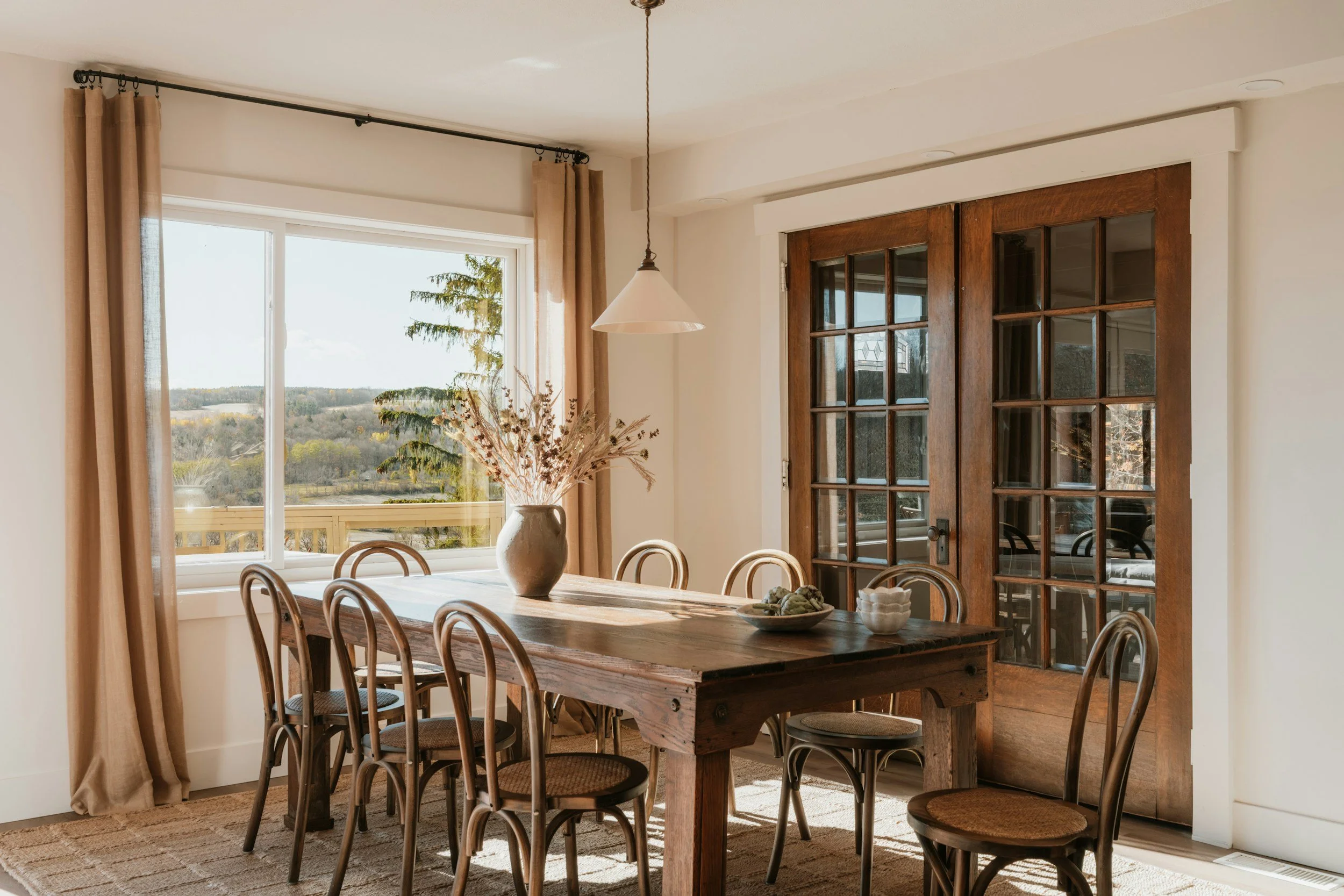
Sheree fully enclosed dining room with a French door and glass-paneled windows
Remodeling or Building New? Make These Dining Room Decisions Count
The third thing to understand is how remodel and new-build decisions bring the dining room back for good.
If you are renovating or building, this is your opportunity to plan a dining room you will use for decades. Let's look at the decisions that can make all the difference.
1. Decide How Defined You Want Your Dining Room to Be
Start by deciding how defined you want the room to be.
Some homeowners love a fully enclosed dining room with doors, while others prefer a partially open plan with cased openings, columns, or wide archways that give the room its own identity while keeping a connection to the kitchen.
Pocket doors and glass French doors are especially lovely because they allow the room to open for everyday life and close for a quiet dinner or a holiday meal.
2. Think About Dining Room Placement
Placement matters just as much.
A dining room close to the kitchen makes serving simple, and a butler's pantry or serving area between the two is a true luxury for anyone who loves to host.
Natural light from a generous window or doors that open to a patio brings warmth to daytime gatherings and makes the room feel alive rather than reserved.
3. Add Architectural Details That Give the Room Character
Architectural detail is where a dining room can truly shine.
A coffered or tray ceiling, paneled walls or wainscoting, a built-in buffet, or a beautiful wallcovering gives the room a sense of intention and occasion.
If you are working with a modest budget, choose one standout detail and let it be the star.
Wise stewardship means investing where you will feel it most, and in a dining room that is usually the ceiling, the lighting, and the walls that surround the table.
4. Choose Durable Materials for Real Family Life
Durability rounds out the plan.
Your dining room should be made for real life, not just for holidays. Performance fabrics on upholstered chairs, a table finish that can handle spills, and flooring that welcomes a rug beneath the table allow you to enjoy the room without worry.
A room that feels too precious to use is a room that sits empty, and the whole point of the dining room comeback is a room that is used, loved, and filled with people.
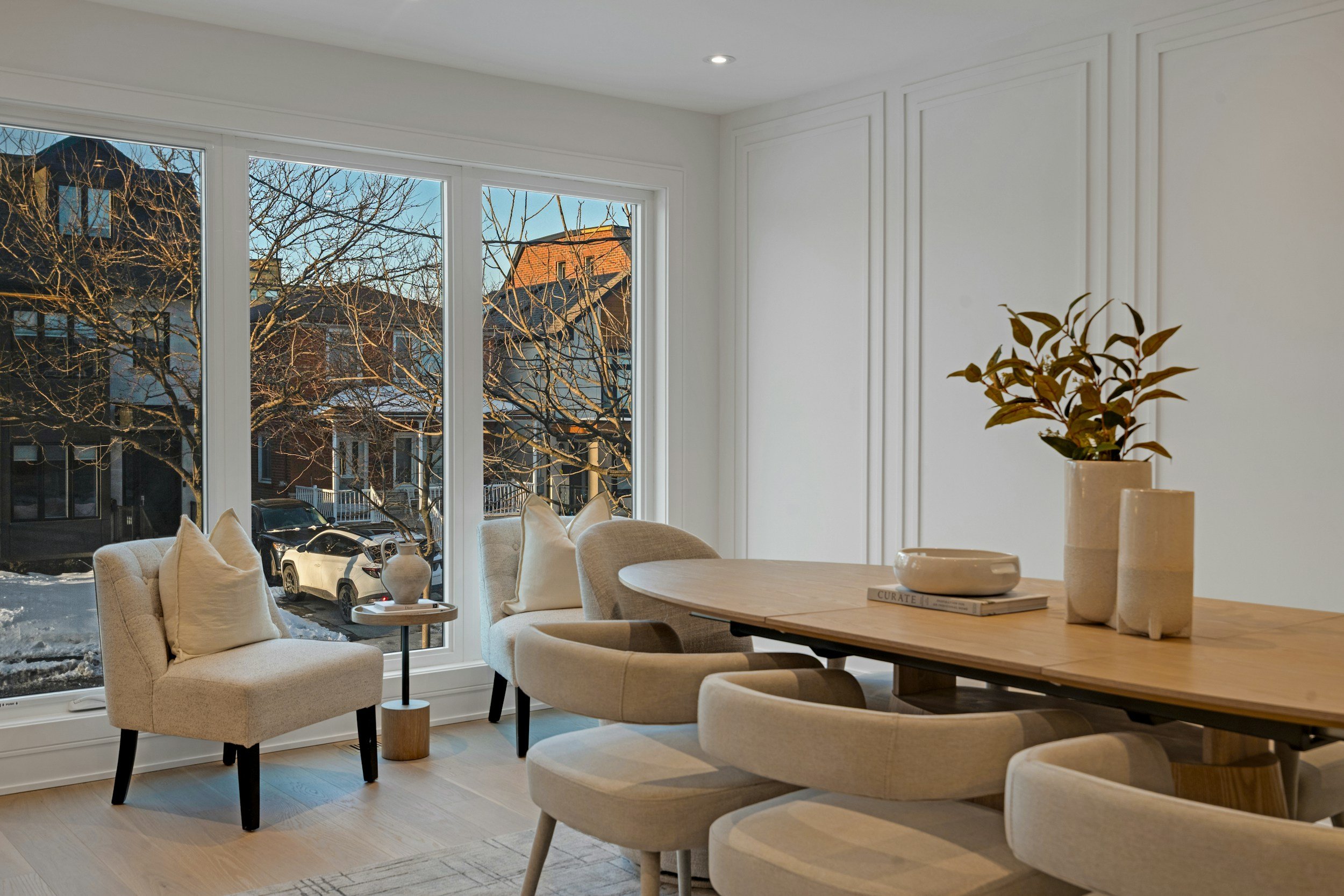
Sheree dining room with oval table, upholstered chairs, paneled walls
A Dining Room Your Family Will Love for Years
The dining room is coming back because families are hungry for connection, and the table has always been where connection happens.
Whether you are remodeling, building a new home, or simply looking at the room you already have with fresh eyes, you now know what makes a dining room feel like a place where everyone belongs.
The right table, seating that invites people to linger, warm and dimmable light, and thoughtful architectural choices all work together to create a room your family will use for years.
You do not need a lavish budget to make it happen. You need a clear vision, wise choices, and a heart for the people who will gather there.
Here's what I want you to remember: A beautiful dining room isn't about having a perfect space. It's about creating a welcoming place where your family and friends can slow down, share a meal, and make memories.
May your home be beautiful by design and blessed by God.
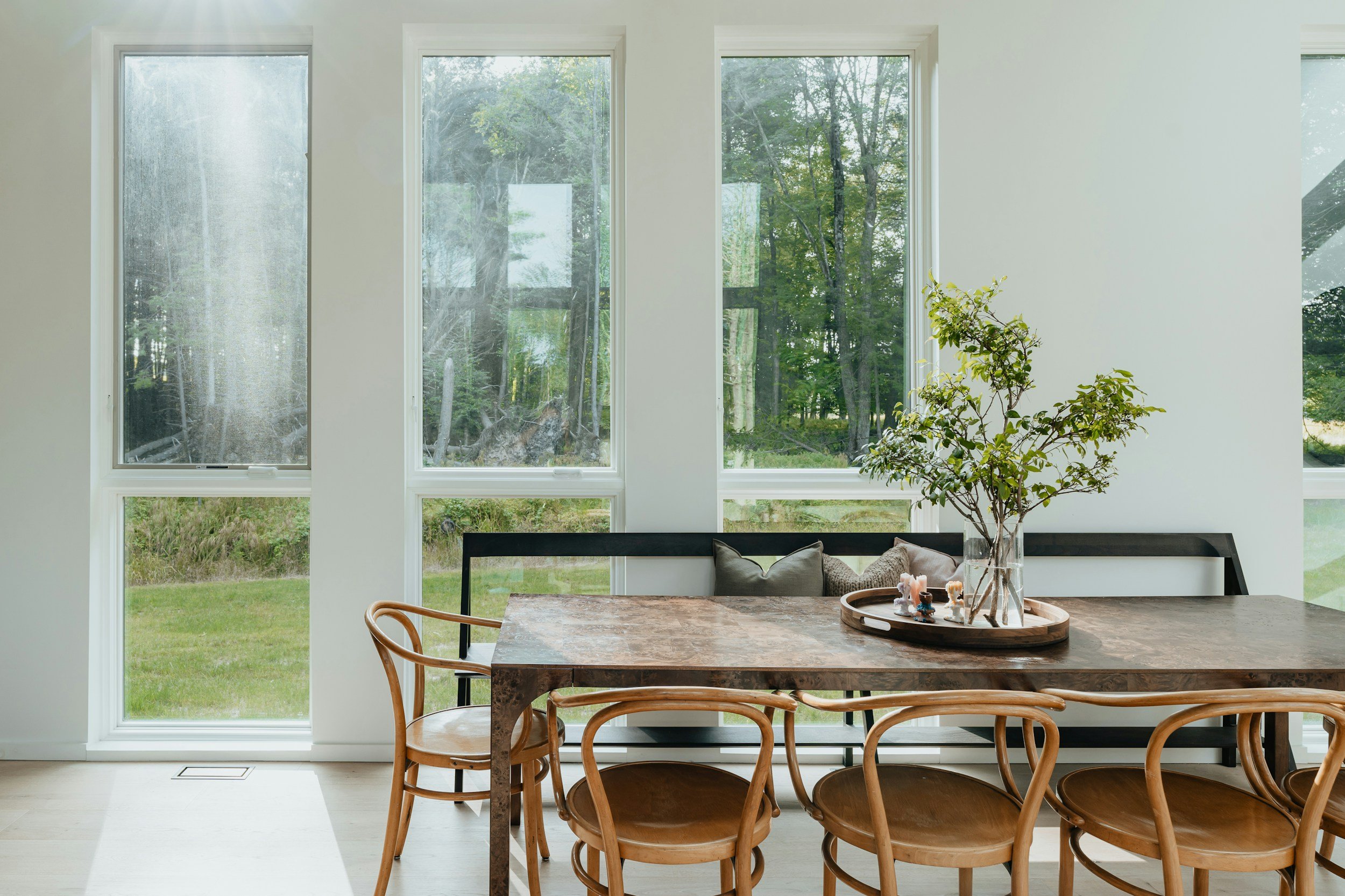
Sheree dining room with natural light coming from glass paneled window and with a bench for extra seating
Frequently Asked Questions
Is the formal dining room really coming back?
Yes. Designers are seeing a strong return to defined rooms after years of open floor plans, and the dining room is leading that shift. Today's dining rooms are less stiff and formal than in decades past, with comfortable seating, warm lighting, and personal touches that make them feel welcoming for everyday meals as well as holidays.
What table shape works best for a small dining room?
A round or oval table is often the best choice for a smaller dining room. It allows easier movement around the table, invites conversation because everyone can see one another, and softens the lines of a compact space. Many round tables also offer a leaf so they can expand for holiday gatherings.
Should I enclose my dining room in a remodel?
It depends on how you live and entertain. A fully enclosed dining room with doors offers quiet and a sense of occasion, while cased openings, columns, or wide archways give the room its own identity while keeping a connection to the kitchen. Pocket doors and glass French doors offer the best of both, letting you open or close the room as needed.
How can I make my dining room feel more inviting on a modest budget?
Focus on the changes you will feel most. Comfortable seating, a properly scaled chandelier on a dimmer, and one meaningful architectural or decorative detail can transform the room. Choosing a single standout feature and letting it shine is a wise use of your budget and often creates more impact than spreading funds across many smaller purchases.
Resource
Ready for a dining room that finally feels finished, warm, and ready for the people you love? The Beautiful Room Makeover Experience is Sheree's signature program that takes one room from scattered to beautiful, with her guiding every decision.
Find Out More about The Beautiful Room Makeover Experience.
Join the waitlist: God in the Home Ebook Collection